
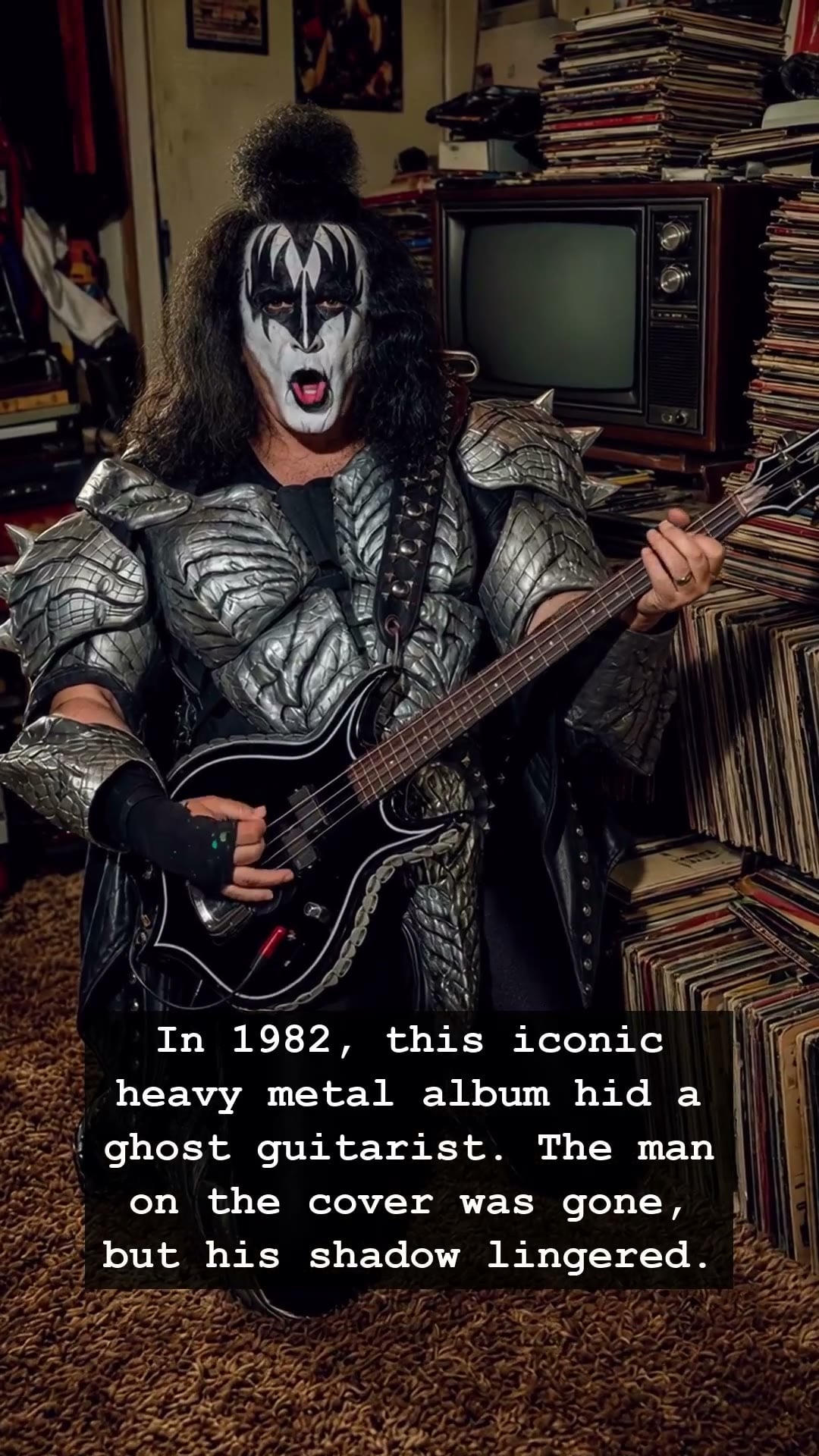
The year was 1982, an era defined by the neon glow of MTV, the rise of the Walkman, and the thundering evolution of hard rock. For Kiss, the face-painted titans of arena rock, it was a time of desperate transition. The band’s popularity was flickering like a dying spotlight, and the internal tension was thicker than the stage makeup they wore. When they released Creatures of the Night, fans were greeted by an album that sounded heavier and tighter than anything the band had produced in years. Yet, behind the iconic cover art featuring a lone, ominous visage, a quiet deception was unfolding. The world believed they were hearing the legendary licks of Ace Frehley, but the studio walls told a far more complex and hidden story.
Ace Frehley, the Space Ace, was physically present on the cover, but his soul had effectively left the building. Battling personal demons and a growing disconnect with his bandmates, Gene Simmons and Paul Stanley, Frehley was becoming a ghost in his own house. While the album art insisted on the classic four-piece lineup, the guitar tracks were actually a chaotic patchwork of session musicians. Most notably, the shredding talents of Bob Kulick and Steve Farris were brought in to perform the heavy lifting. These ghost players were the true architects of the album’s aggressive, metallic edge, yet their names were absent from the glory, leaving fans to blindly worship an illusion cast by the marketing machine of the early eighties.
The irony of Creatures of the Night is that it stands as one of the band’s most respected heavy metal achievements, despite the internal fracture that nearly tore the group apart. The sound was a desperate pivot away from the pop-disco experiments that had alienated their core audience, yet it was recorded during a period of deep dysfunction. It represents a classic moment of the era where image was king, and the mythology of the band was shielded from the harsh light of reality. We were listening to a band that was essentially falling apart, yet the music roared with a newfound, manufactured vitality that defined the heavy metal landscape of that decade.
Looking back, this secret serves as a poignant reminder of the price of stardom in the pre-internet age. We did not have social media to leak the truth; we only had our vinyl records, the liner notes, and the posters on our bedroom walls. That disconnect between the visual performance on the cover and the auditory reality inside the studio is what makes this story so captivating. It is a testament to the fact that even when the machinery of fame is grinding to a halt, the pursuit of a perfect, thunderous sound remains the ultimate goal.
Decades later, the legend of the ghost guitarist in Kiss continues to spark debates among die-hard rock historians and casual listeners alike. It remains a fascinating chapter in the story of rock and roll, proving that the most memorable records often have the most complicated backstories. As you spin those heavy riffs today, take a moment to listen past the familiar image and hear the echo of the men who secretly built the legacy of one of the greatest heavy metal albums ever recorded. Tell us, does knowing the truth change how the music hits your ears today?