
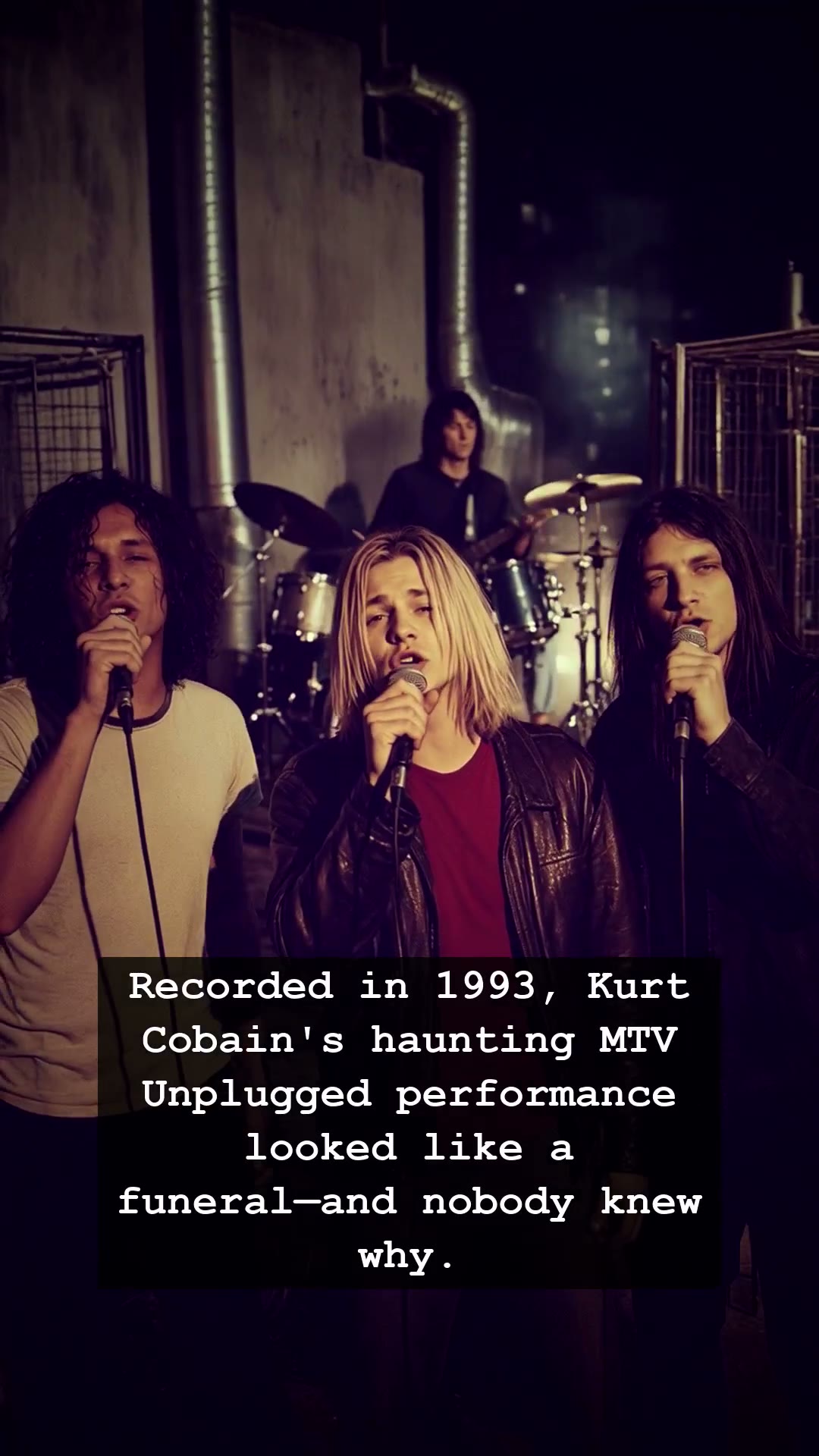
It was November 1993, and the air inside the Sony Music Studios in New York felt heavy, almost suffocating. While the world outside was transitioning from the neon-soaked excess of the eighties into the grimy, flannel-clad reality of the nineties, Kurt Cobain sat on a stool in a room filled with black candles and stargazer lilies. To the television audience, the set design looked artistic, perhaps a bit eccentric. But to those who truly knew the depths of the Nirvana frontman’s psyche, the stage resembled nothing less than a funeral parlor. It was a haunting, prophetic memorial that signaled the end of an era long before the final note of the acoustic guitar faded into the silence of history.
At the time, MTV Unplugged was the ultimate career-defining platform, a stage where rock gods came to strip away their electric armor and reveal their raw humanity. But Kurt Cobain was different. He didn’t want to perform a greatest-hits set; he wanted to expose the fragile, aching nerves beneath his celebrity status. Surrounded by those funeral lilies and playing his battered 1959 Martin D-18E acoustic guitar, he looked like a man already halfway to the afterlife. The tension in the studio was palpable, a stark contrast to the manic energy of the grunge movement that he had unintentionally birthed. The audience was mesmerized, yet they were witnessing a slow, beautiful unraveling.
The setlist choices were deliberate, opting for obscure covers and stripped-back versions of his own pain-filled anthems. When he launched into the final song of the night, a chilling rendition of Where Did You Sleep Last Night, the raw desperation in his voice reached a fever pitch. He wasn’t just singing lyrics; he was channeling decades of anguish. It is often forgotten that Kurt Cobain was battling profound physical pain and internal demons that no amount of platinum records or MTV airplay could soothe. The intimacy of that performance forced the world to look at him not as a grunge icon, but as a deeply wounded human being gasping for air.
Looking back, the performance serves as a tragic time capsule of the early nineties. It captured the exact moment when the grit of the Seattle scene collided with the polished machine of mainstream media. Kurt Cobain stood at the epicenter of this clash, and his reluctance to play the game was etched into every furrow on his brow. The candles flickered, the lilies wilted under the studio lights, and the man who defined a generation poured his remaining light into a few acoustic chords. It remains one of the most honest, uncomfortable, and transcendent hours in television history.
Even decades later, watching Kurt Cobain on that stage feels like a violation of privacy, yet we cannot look away. It resonates because it represents the ultimate sacrifice of an artist who gave everything until there was nothing left to give. The legacy of Nirvana is often tied to the noise of the distortion pedals, but it is in the quiet, candlelit shadows of that 1993 performance where we truly find the soul of the man. As the stage lights dimmed for the final time, it was clear that music had lost more than just a frontman; it had lost a poet of the broken.