
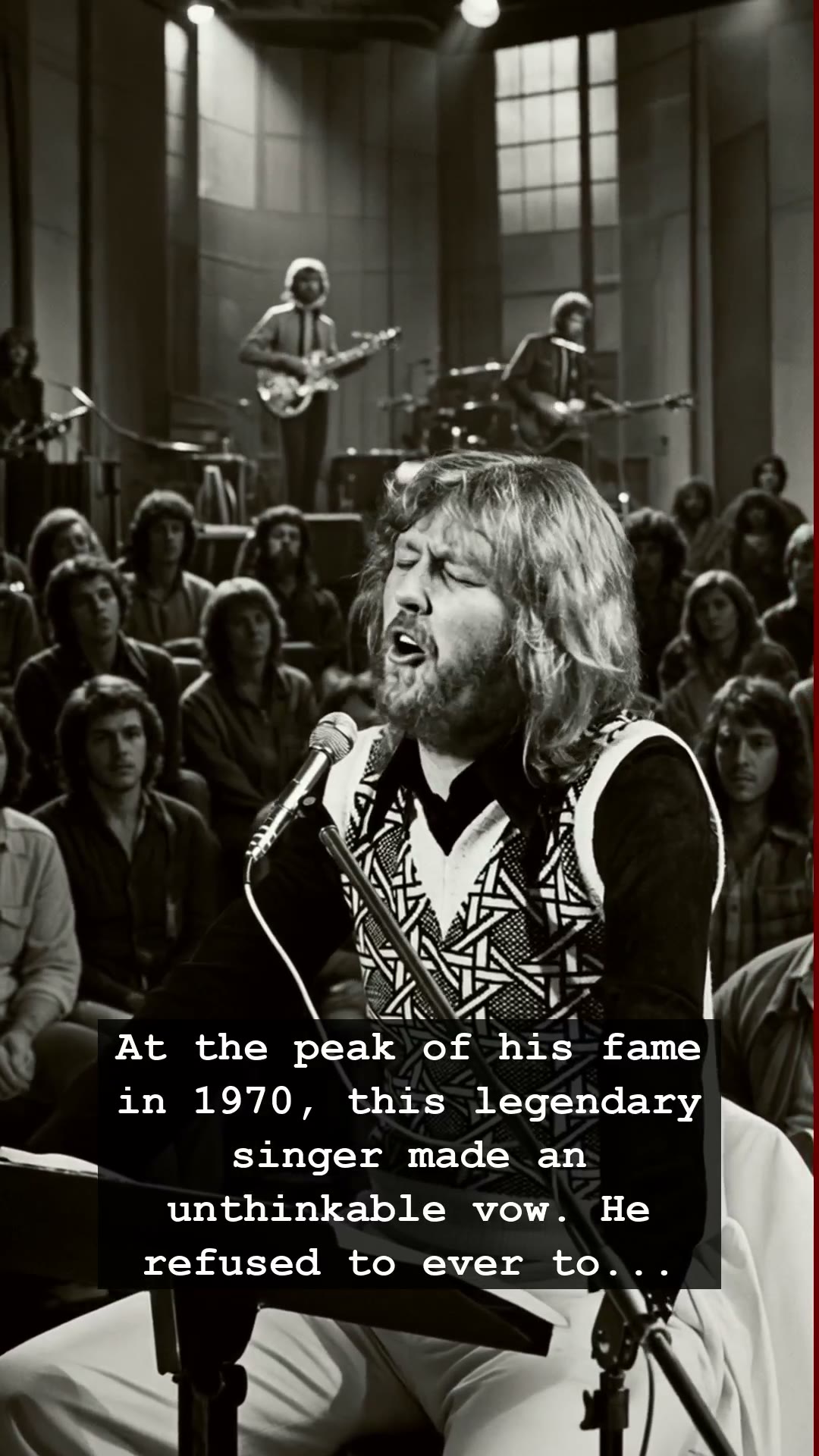
In the golden era of the late 1960s and early 1970s, the music industry operated like a runaway freight train. Every artist, from the Beatles to the Rolling Stones, was expected to endure the grueling, sweat-soaked rituals of stadium tours and promotional appearances. Yet, at the absolute summit of his artistic powers, one man did the unthinkable. Harry Nilsson, a voice that could crack a heart open with a single vibrato, simply looked at the machine of global stardom and walked away. While the world was obsessed with the spectacle of Woodstock and the frantic energy of the arena rock explosion, Harry Nilsson retreated into the shadows of the recording studio, vowing never to perform a live concert again.
To understand Harry Nilsson is to understand a rare breed of musician who prioritized the purity of the recording over the vanity of the stage. He was the songwriter’s songwriter, a man whose range and melodic genius were hailed by his peers, including John Lennon and Paul McCartney. Yet, despite his chart-topping success with hits like Without You and Everybody’s Talkin’, he suffered from a crippling, deep-seated stage fright that transformed the prospect of a microphone stand into a source of existential dread. He preferred the quiet, controlled sanctity of a studio booth, far from the screaming throngs and the flashing bulbs of the press, where he could tinker with harmonies until they reached a level of perfection that only he could hear.
This decision created an air of mystery that surrounded Harry Nilsson like a shroud. In an era defined by the rise of the Walkman and the obsessive fandom fostered by the early days of televised music promos, his anonymity felt like a rebellious act of defiance. He was the invisible legend, a phantom voice on the radio who seemed to exist purely in the ether rather than the physical world. His life became a mosaic of contradictions: a brilliant, jovial storyteller who battled the demons of his own insecurity while living through the excess and chaos of the Hollywood scene alongside stars like Ringo Starr and Keith Moon.
Beyond the glitz of the era, the story of Harry Nilsson is a poignant reminder of the heavy toll exacted by the music industry. His refusal to tour wasn’t just a quirk; it was a desperate attempt to preserve his mental health in a decade that chewed up and spat out those who couldn’t navigate the spotlight. He remained a man of deep contradictions, a sensitive soul caught in the turbulence of his own success. To listen to his music today, through the crackle of a vintage vinyl record, is to touch a fragment of his lonely, beautiful world.
Harry Nilsson left behind a legacy that transcends the typical rock-star narrative. He proved that you didn’t need to be a showman to be a legend, and that sometimes, the most profound impact is made by those who choose to step out of the light. If you listen closely to his haunting arrangements, you might just find the ghost of the man who chose the quiet, leaving us all to wonder what could have been if he had dared to take the stage.