
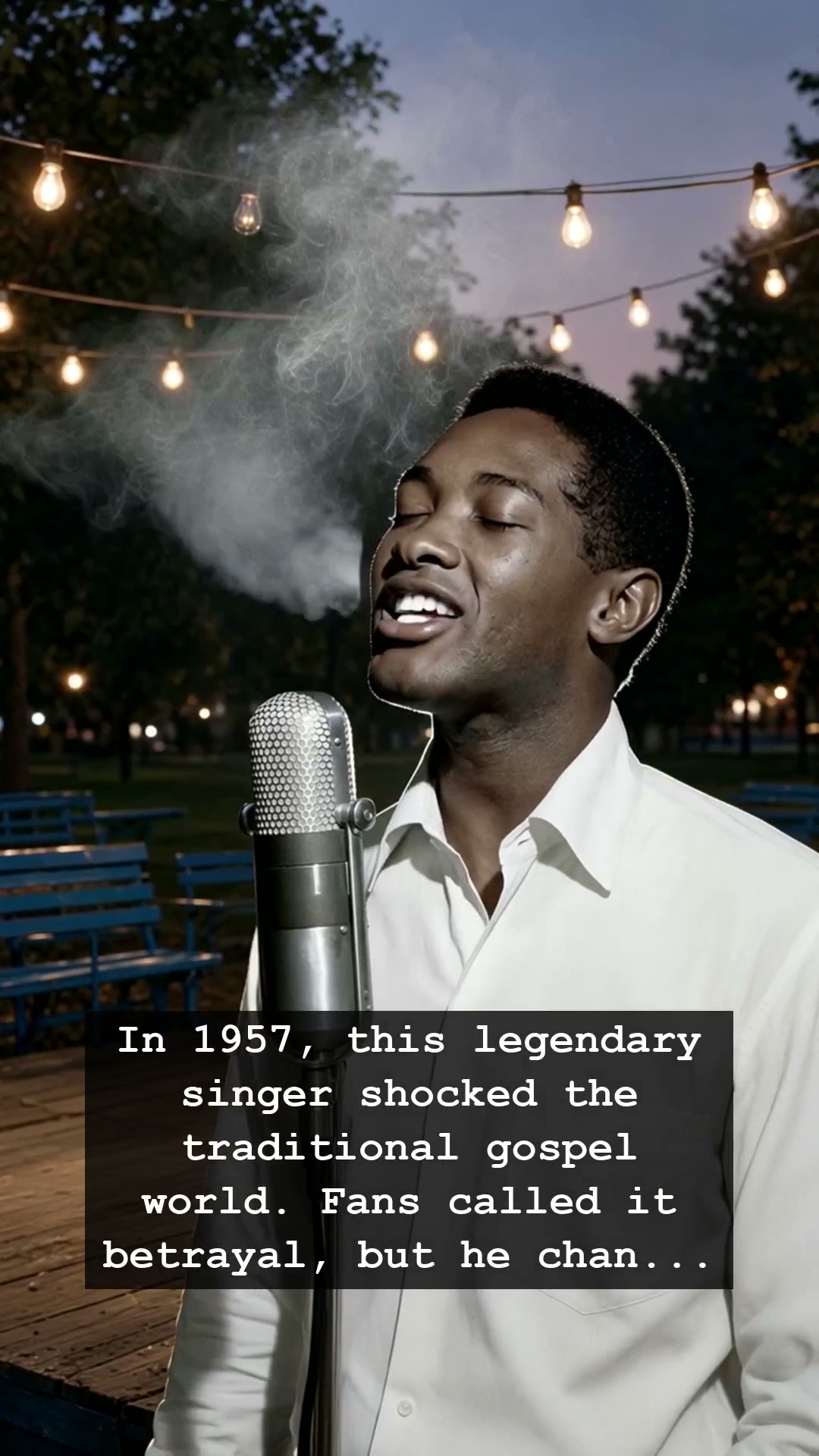
In the stuffy, velvet-draped churches of the 1950s, Sam Cooke was not just a singer; he was a deity of the gospel world. With a voice that seemed to vibrate with a heavenly, golden glow, he commanded the stage as the lead for the Soul Stirrers. He was the golden boy of the congregation, a man destined for a life of spiritual devotion through song. But in 1957, Sam Cooke committed what the devout labeled an unforgivable sin: he stepped out of the sanctuary and into the smoky, neon-lit world of secular pop. It was a betrayal that sent shockwaves through the American musical landscape, leaving his traditional fanbase in a state of mourning and fury. They believed he had traded his soul for the lure of the charts, but in reality, he was on the verge of igniting a revolution that would redefine the very fabric of American sound.
The transition was not merely a career move; it was a high-stakes gamble that bordered on artistic heresy. Back then, the divide between gospel and pop was a chasm that few dared to cross. To sing about love, dancing, and the trials of the human condition rather than the glory of the divine was seen as a descent into vanity. Yet, Sam Cooke possessed an intuitive understanding of the rhythm of the streets and the longing of the heart that the church could not contain. When he released his crossover hits, he wasn’t abandoning his roots; he was refining them, infusing the raw, emotional urgency of gospel into the catchy, rhythmic structures of early rock and soul. He was the bridge between the Sunday morning service and the Saturday night jukebox.
His voice was a masterpiece of control and warmth, a smooth, liquid velvet that could soothe a broken heart or ignite a room. Critics were baffled, and the church elders were vocal in their condemnation, but the public was transfixed. As he navigated the shifting tides of the late fifties and early sixties, Sam Cooke became the architect of the soul movement. He proved that you could have grit, heart, and commercial success simultaneously. His influence rippled through the decades, laying the foundation for the Motown explosion and the sophisticated R&B that would eventually dominate the airwaves of the eighties.
Looking back, it is impossible to imagine the landscape of American music without his influence. He stood at the edge of a cultural precipice and jumped, carrying the soul of the church into the living rooms of millions. Even as he walked the path of stardom, the weight of his decision followed him, a constant tug-of-war between his past and the new, uncharted territory of fame. He paved the way for every artist who felt the need to express their humanity beyond the confines of tradition. Today, when we listen to the timeless echoes of his hits, we are not just hearing a melody; we are hearing the sound of a man who chose to rewrite his own destiny, forever changing how we experience the power of the human voice.