
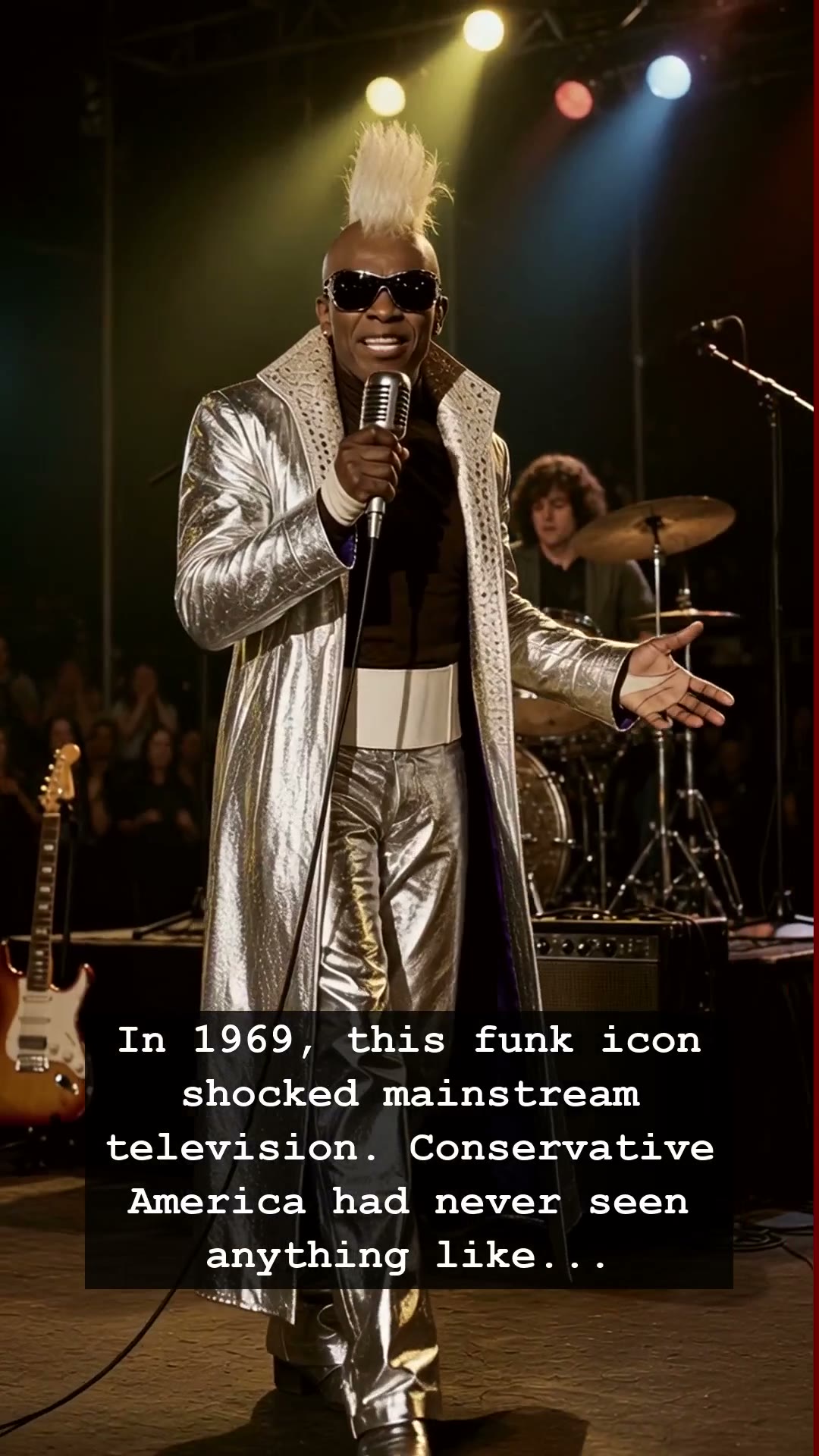
It was 1969, a year defined by the cultural upheaval of Woodstock and the fading echoes of the Summer of Love. Across living rooms in Middle America, unsuspecting families tuned their televisions, expecting the familiar, sanitized rhythms of mainstream variety shows. Instead, they were blindsided by a whirlwind of glitter, leather, and untamed sound. Sly Stone and the Family Stone didn’t just perform; they invaded the domestic tranquility of the era, bringing a raw, unapologetic brand of funk that conservative America was entirely unprepared to witness. For a society still clinging to the rigid aesthetic norms of the early decade, Sly Stone appeared like an alien force, a visionary disruptor who shattered every unspoken rule of television decorum.
Sly Stone was not merely a musician; he was the architect of a new sonic reality. By blending the soul of Motown, the grit of psychedelic rock, and the rhythmic complexity of funk, he created a sound that felt dangerous and liberating in equal measure. Watching him command the stage with his iconic, wide-brimmed hats and explosive energy, one could sense the tectonic plates of pop culture shifting. He challenged the racial and musical barriers of the time, demanding that the world catch up to his frenetic, multicolored vision. To his fans, he was a genius; to the mainstream establishment, he was a walking, talking subversion of the status quo.
Yet, the brilliance of Sly Stone was inseparable from the shadow of his own volatility. Behind the dazzling lights of the stage and the high-energy records that would later inspire generations of funk and hip-hop pioneers, the narrative was far more turbulent. The pressures of instant superstardom, coupled with the era’s pervasive access to substances, began to pull the tight-knit Family Stone apart. The same erratic intensity that made him a mesmerizing performer eventually turned inward, leading to missed shows, broken friendships, and a legendary reputation for unpredictability that haunted the latter half of his career.
Even decades later, the legacy of Sly Stone remains as provocative as ever. He stands as a reminder of an era when music was not just entertainment, but a catalyst for radical social change. His career serves as a cautionary tale of how the weight of cultural expectation can crush even the most brilliant of spirits. The image of him in 1969—unfiltered and defiant—remains etched in the collective memory of anyone who believes that music has the power to rearrange the world. We look back at those grainy, flickering television archives today not just for the nostalgia, but to remember a time when an artist could still genuinely startle a nation.
Today, as we listen to the grooves of his masterpieces, we are transported back to that pivotal moment in time. Sly Stone taught us that brilliance is often forged in the fires of conflict. His life was a high-stakes gamble with fame, a beautiful, messy, and undeniable contribution to the tapestry of American music history. Perhaps it is time you revisited those timeless rhythms and felt the same electricity that once sent a tremor through every living room in 1969.