
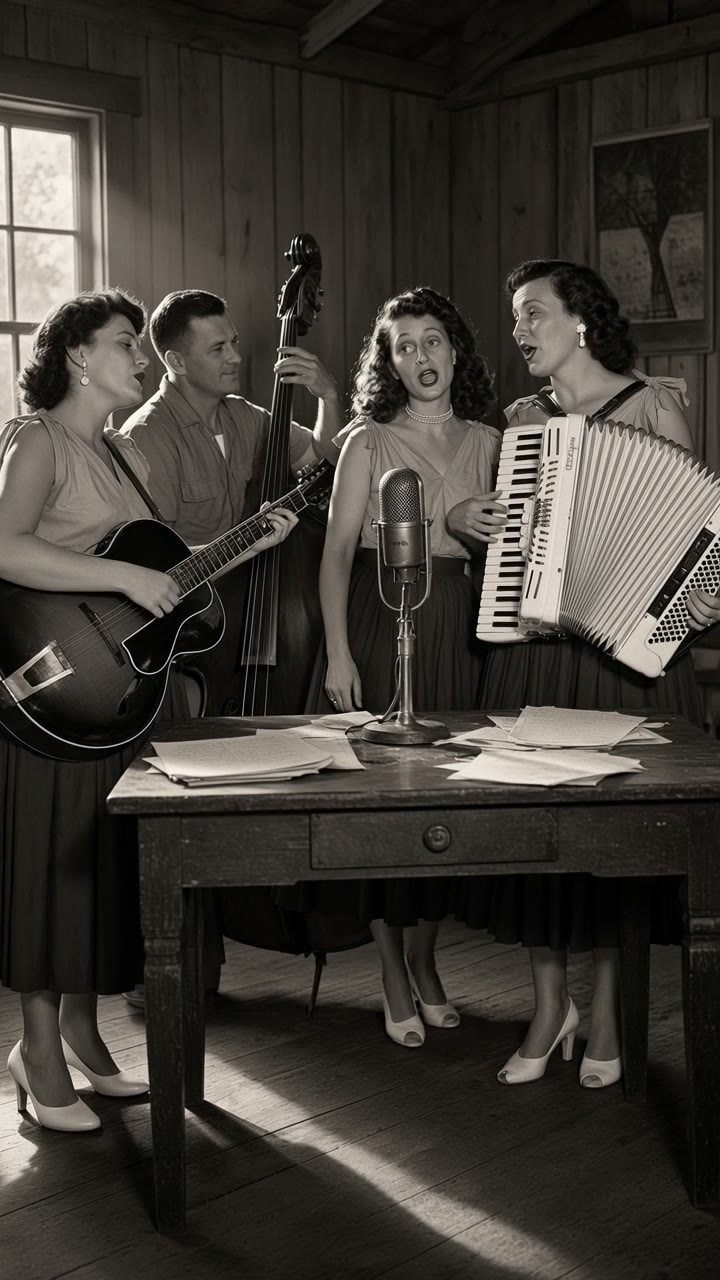
Imagine sitting in a dimly lit farmhouse in the late 1930s, the world outside swallowed by the vast, black emptiness of the Great Depression. You twist the dial of your bulky wooden radio, and suddenly, piercing through the static of the night, comes a hauntingly pure melody. It wasn’t coming from a regulated city station in the States. It was traveling across the border, beamed illegally from massive, high-powered Mexican radio towers. This was the ethereal, spine-chilling sound of The Carter Family, a group that didn’t just play music; they broadcasted the very soul of rural America from the shadows of a foreign land.
To understand the gravity of The Carter Family, you have to look at the lawless landscape of that era. When the U.S. government tightened restrictions on broadcasting power, these border blasters—known as XERA or XERF—took advantage of loose Mexican regulations to transmit at half a million watts. Their signal was so potent it reportedly caused the headlights of cars to flicker and could be picked up on barbed wire fences. For the millions of isolated listeners huddled in the dark, this was their lifeline to culture, their soundtrack to a hard life, and their introduction to the pioneers who would define the country genre forever.
A.P. Carter, his wife Sara, and his sister-in-law Maybelle were not typical radio stars. They carried the weight of the Appalachian mountains in their voices, blending traditional folk harmonies with a gospel-tinged melancholy that felt ancient and urgent all at once. When Maybelle developed her revolutionary guitar style—the ‘Carter Scratch’—she changed the course of music history. It was a rhythmic, thumb-driven technique that allowed a single guitar to act as both a melodic and percussive anchor. In an era before the digital studio, The Carter Family provided a raw, unfiltered authenticity that captured the hearts of a nation struggling to keep its head above water.
Yet, the story of The Carter Family was never just about the music. It was a saga of deep-seated internal tension and the crushing pressure of sudden, nomadic fame. Their lives were defined by endless travels, the heartbreak of A.P. and Sara’s crumbling marriage, and the grueling reality of touring the dusty circuits of the South. They navigated a world where the lines between art and commerce were permanently blurred by the necessity of survival. Even as they rose to become the first family of country music, they remained tethered to the simplicity of their roots, constantly fighting to preserve a tradition that the modern world was desperate to modernize.
Decades later, the echo of their influence remains undeniable. From the gritty storytelling of modern Americana to the intricate fingerpicking patterns heard in every corner of Nashville today, the legacy of The Carter Family is woven into the very fabric of American sound. They taught us that even in the darkest, most isolated corners of history, a song can bridge any border and reach across any distance. As we look back at their flickering radio signals, we aren’t just remembering a band; we are remembering the ghosts of our own past, still singing to us through the static.