
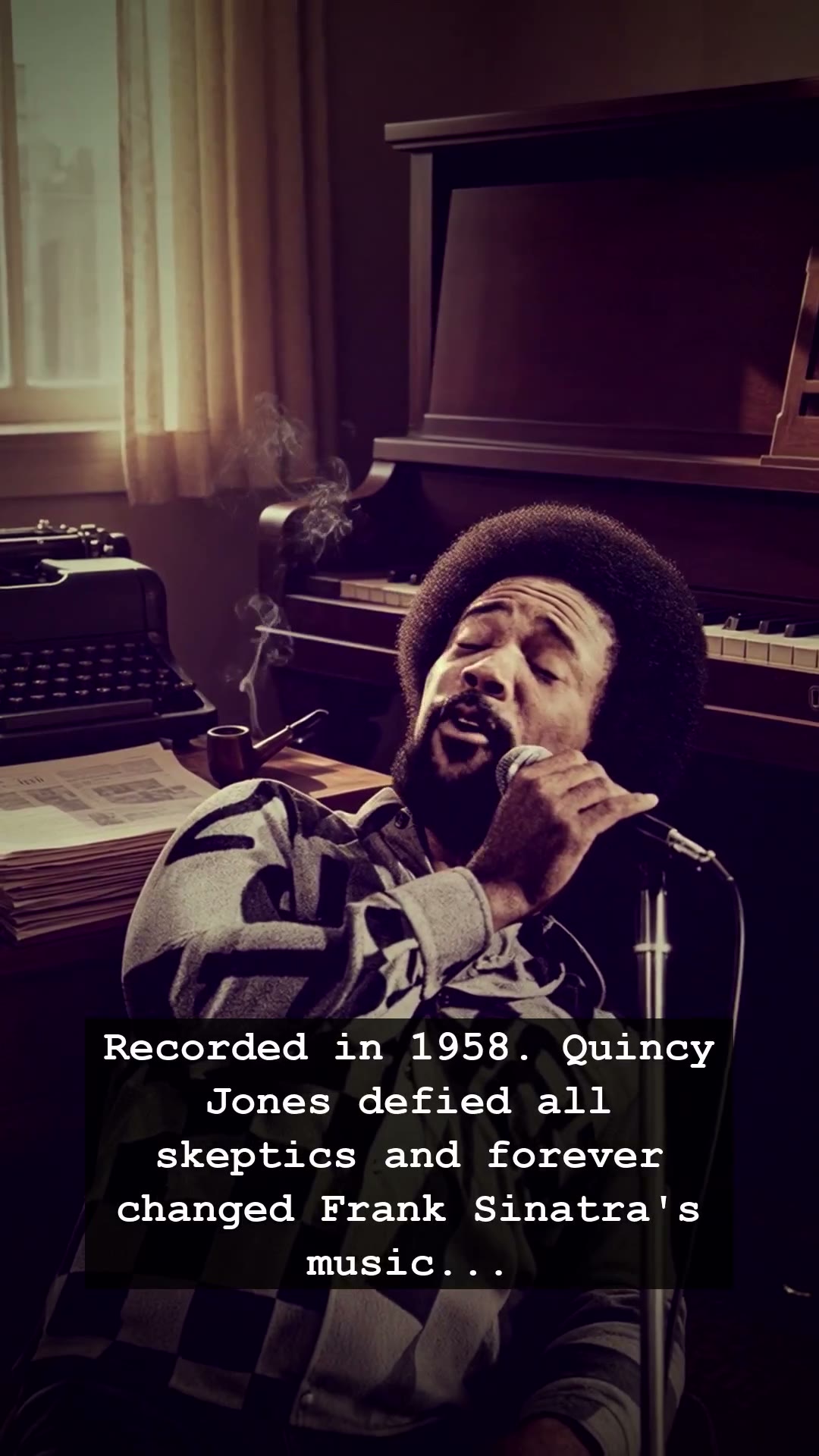
In the smoke-filled, high-stakes world of 1958 recording studios, a young Quincy Jones walked into the room carrying nothing but his genius and a vision that terrified the music industry elite. Frank Sinatra, already a titan of the American songbook, was looking for a new sound, but the suits in the room were skeptical. They whispered in the corners of the studio that a jazz man had no business orchestrating pop royalty. They believed that the grit of bebop and the polish of mainstream radio were oil and water, destined to never mix. Little did they know, they were witnessing the birth of a sonic revolution that would define the next several decades of American music.
Quincy Jones was barely in his twenties, yet he possessed an uncanny ability to hear the space between the notes. When he stood before the orchestra to arrange for Sinatra, the air in the room was thick with tension. The skeptics were waiting for him to falter, expecting the young musician to succumb to the immense pressure of working with a legend. Instead, he leaned into the swing, weaving complex, sophisticated jazz textures into the fabric of classic pop. He wasn’t just arranging music; he was crafting an atmosphere that felt like a late-night stroll through a rain-slicked city, turning every track into a cinematic experience that jumped right out of the jukebox.
This pivotal moment was more than just a successful collaboration; it was a defiant statement against the rigid musical boundaries of the late fifties. Before the golden era of the Walkman or the visual explosion of MTV, the recording studio was the true laboratory of culture. By trusting his instincts, Quincy Jones elevated Sinatra from a mere crooner to a musical titan whose influence would outlast the decade. This era was defined by this kind of bold risk-taking, where the clash of artistic egos and the ambition of innovators pushed the boundaries of what was commercially viable, forever changing the trajectory of pop music history.
Years later, as we look back through the lens of nostalgia, the collaboration between Quincy Jones and Frank Sinatra remains a masterclass in artistic tension. It captures that specific, electric feeling of the late 1950s, a time when jazz was finding its way into the hearts of the masses through the medium of pop. The drama behind the scenes—the whispered doubts, the cold stares from the old guard, and the triumphant playback of the final cut—is the stuff of legend, a testament to the fact that greatness is rarely achieved by following the rules.
Even today, the influence of that partnership echoes in the work of every modern producer who dares to blend genres. We still reach for those records because they carry the weight of a moment where history was rewritten. Quincy Jones proved that when you hold your ground against the skeptics, the music you leave behind becomes immortal. So, next time you drop the needle on an old Sinatra record, listen closely for the hand of the master at work, and remember the young man who dared to change everything.