
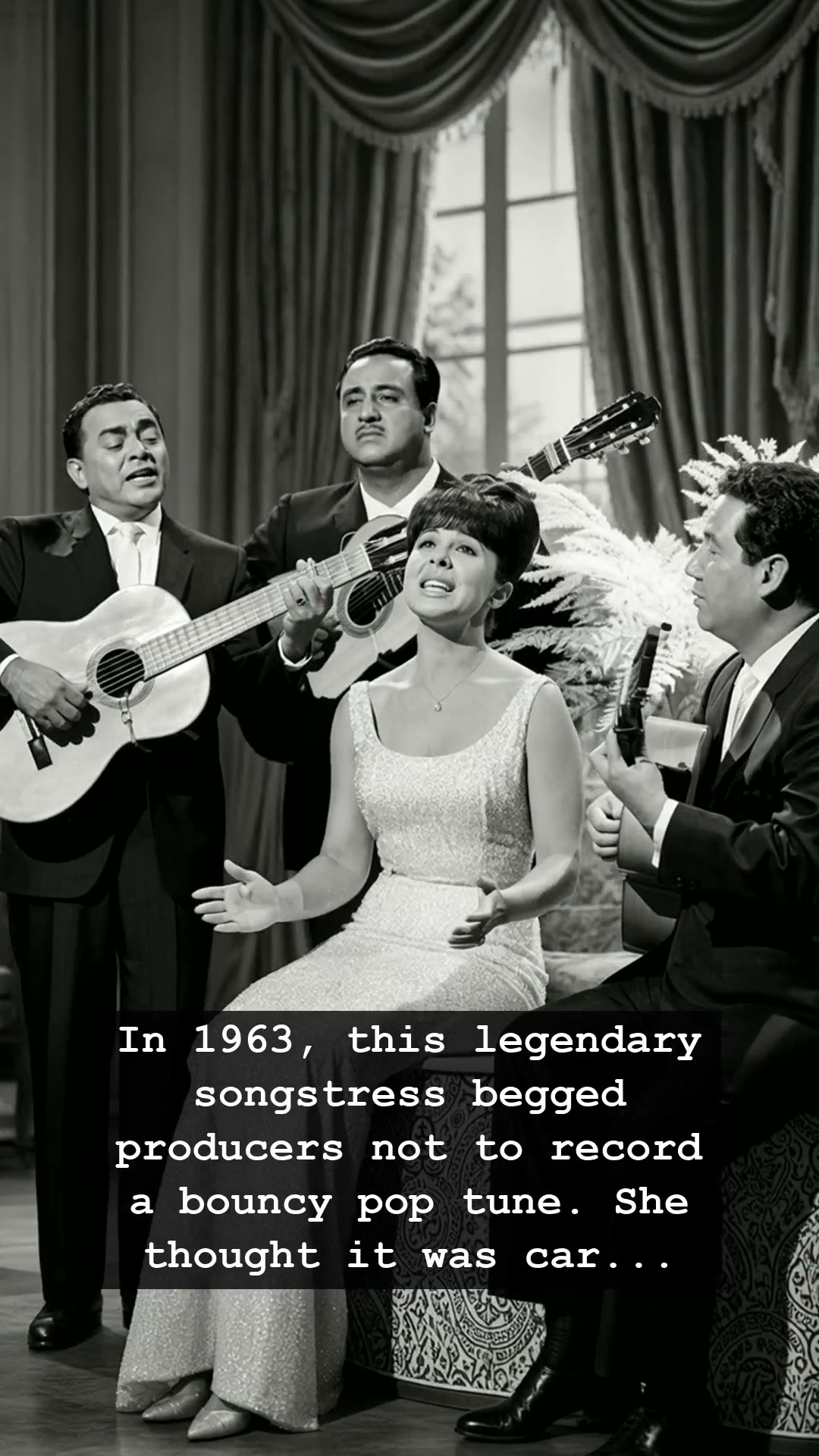
In the golden era of the early 1960s, the jukebox was the heartbeat of every American diner, and a smooth, polished vocal could catapult a singer into superstardom overnight. For Eydie Gorme, a seasoned songstress with a reputation for sophistication and vocal precision, the recording studio was meant to be a place of artistic control. Yet, in 1963, she found herself locked in a professional standoff. Her label heads insisted she record a bouncy, infectious pop tune that felt entirely alien to the sultry, jazz-influenced standards she preferred. To Eydie Gorme, this upbeat track felt like a gimmick, a direct threat to the classy persona she had spent years building. She truly believed that putting her name on this record would be career suicide.
There was a palpable tension in the studio as the clock ticked toward the session. Eydie Gorme wasn’t just annoyed; she was deeply distressed, convinced that the song’s rhythm and simple lyrics would make her a laughingstock among her peers. She begged the producers to reconsider, warning them that the track lacked the gravitas required for a serious artist. But in an industry driven by radio play and the whims of a rapidly changing youth culture, the pressure to deliver a hit was relentless. Reluctantly, she stepped up to the microphone, gave the song her professional best, and walked away expecting the worst.
What happened next remains one of the most ironic twists in music history. The song, Blame It on the Bossa Nova, didn’t just chart; it exploded. As the Bossa Nova craze swept through dance halls and living rooms across the nation, Eydie Gorme found herself with a massive, global smash hit on her hands. It was the irony of a lifetime: the very song she had feared would destroy her reputation ended up becoming the definitive anthem of her illustrious career. She had walked into the booth terrified of the spotlight, only to find the biggest success she would ever know.
Looking back at the music of 1963, the story of Eydie Gorme highlights the inherent drama of the mid-century music business. It was a time when artists often navigated a delicate tightrope between personal integrity and commercial necessity. The polished production of that era, captured through the iconic crackle of vinyl, still transports listeners to a world where a three-minute track could define an entire summer. For Eydie Gorme, the song served as a surprising lesson in the unpredictability of fame—a reminder that the audience often connects with the spark of joy rather than the artist’s rigid expectations.
Even decades later, hearing that familiar, rhythmic melody brings a wave of nostalgia for a simpler, high-fidelity world. Eydie Gorme eventually embraced the hit that she once detested, understanding that sometimes, the art we fight against is the very thing our legacy needs to endure. Her journey from defiance to chart-topping glory remains a captivating chapter in the history of American pop music. Next time you hear those opening notes, remember the woman who fought the song, only to be forever linked to the rhythm that enchanted the world.