
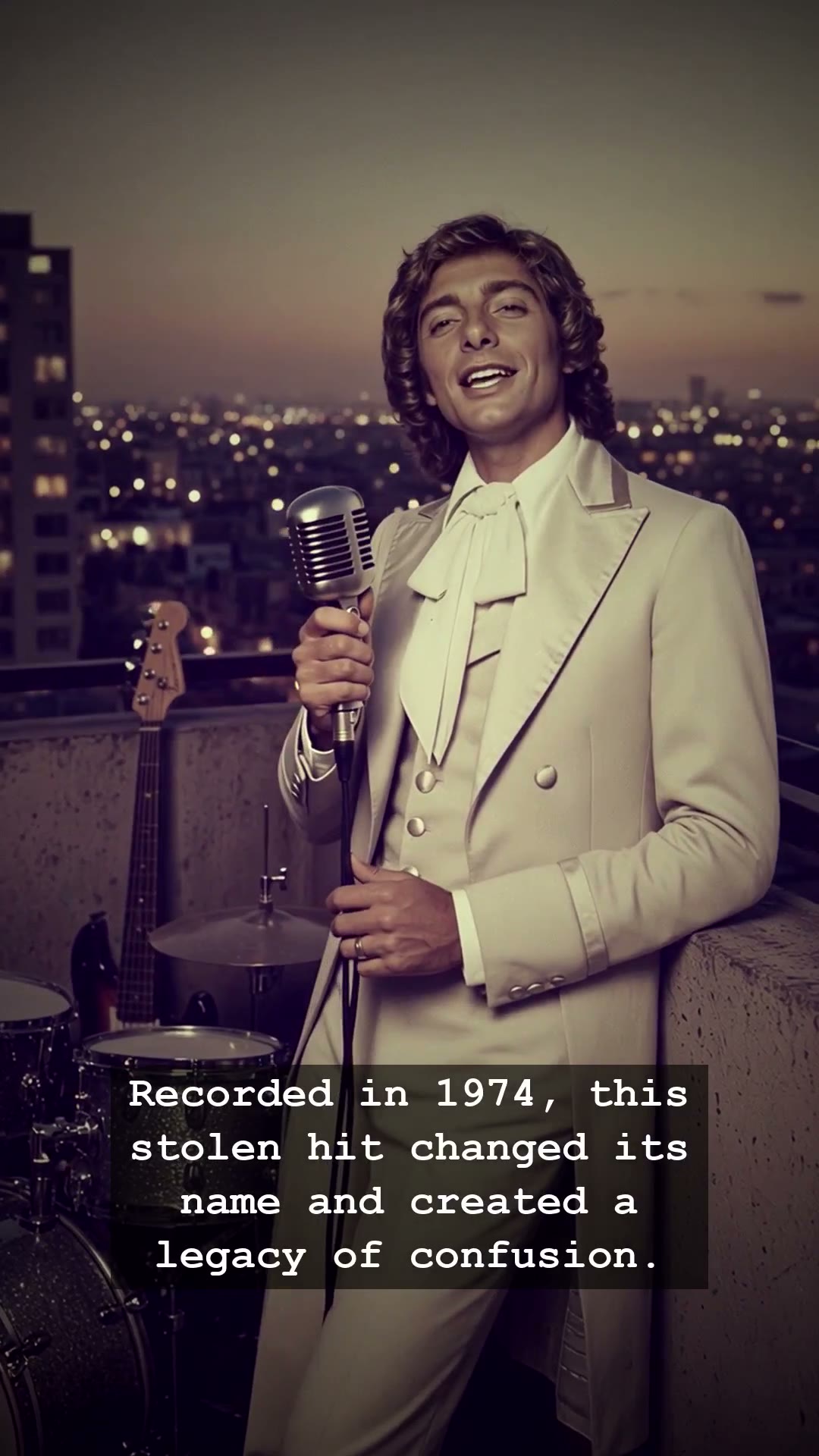
In the golden glow of 1974, when the crackle of a vinyl record on a warm turntable defined the soundtrack of our lives, one song emerged to capture the hearts of millions. It was a ballad of longing and lost love that seemed to define the era of radio airplay and velvet-voiced crooners. Barry Manilow, with his signature flair and undeniable charisma, stepped into the limelight with a track that would cement his place in music history. Yet, beneath the polished production and the sweeping melodies of the hit we know as Mandy, lies a forgotten battle over its true identity and origins.
The song was not born as Mandy. Originally penned by Scott English and Richard Kerr, it began its life in 1971 under the title Brandy. It was a different creature then—a melancholic reflection of a man mourning a love that slipped through his fingers. When Barry Manilow first encountered the demo, he recognized the raw, emotional weight buried within the composition. However, he felt a change was necessary to elevate the song from a minor success into a generational anthem. He took the track into the studio, restructured the arrangement, and made the bold decision to rename the titular character to Mandy. This simple alteration would trigger a quiet but lingering creative friction, as the original songwriters watched their transformed vision take the world by storm.
At the time, the music industry was a whirlwind of evolving sounds, shifting from the fading embers of the folk movement to the rise of pop-orchestral grandiosity. Barry Manilow was perfectly positioned to capitalize on this transition. As he poured his soul into the recording, he wasn’t just singing a pop song; he was tapping into a universal vulnerability that listeners in the mid-seventies desperately craved. The transition from Brandy to Mandy was more than just a marketing choice; it was a rebranding of heartbreak that allowed the melody to pierce through the static of every AM radio station across the United States.
Decades later, the legacy of this song remains a fascinating case study in artistic evolution and the often-contentious nature of authorship. While fans in the seventies were busy pinning posters of their favorite stars to bedroom walls and recording shows off the television, the drama behind the scenes remained largely obscured. It serves as a reminder that behind every legendary track that defined a decade, there is often a trail of revisions, studio debates, and the delicate ego of creators fighting to leave their mark on the cultural consciousness.
Today, when those opening piano chords strike, many are transported back to a time of simpler pleasures and deeper sentiments. Barry Manilow managed to craft a piece of work that transcended its origins, turning a dispute over a title into a cornerstone of American pop history. Whether you call it Brandy or Mandy, the resonance of the song persists, reminding us that even the most celebrated hits carry the hidden, often complicated, shadows of the past.