
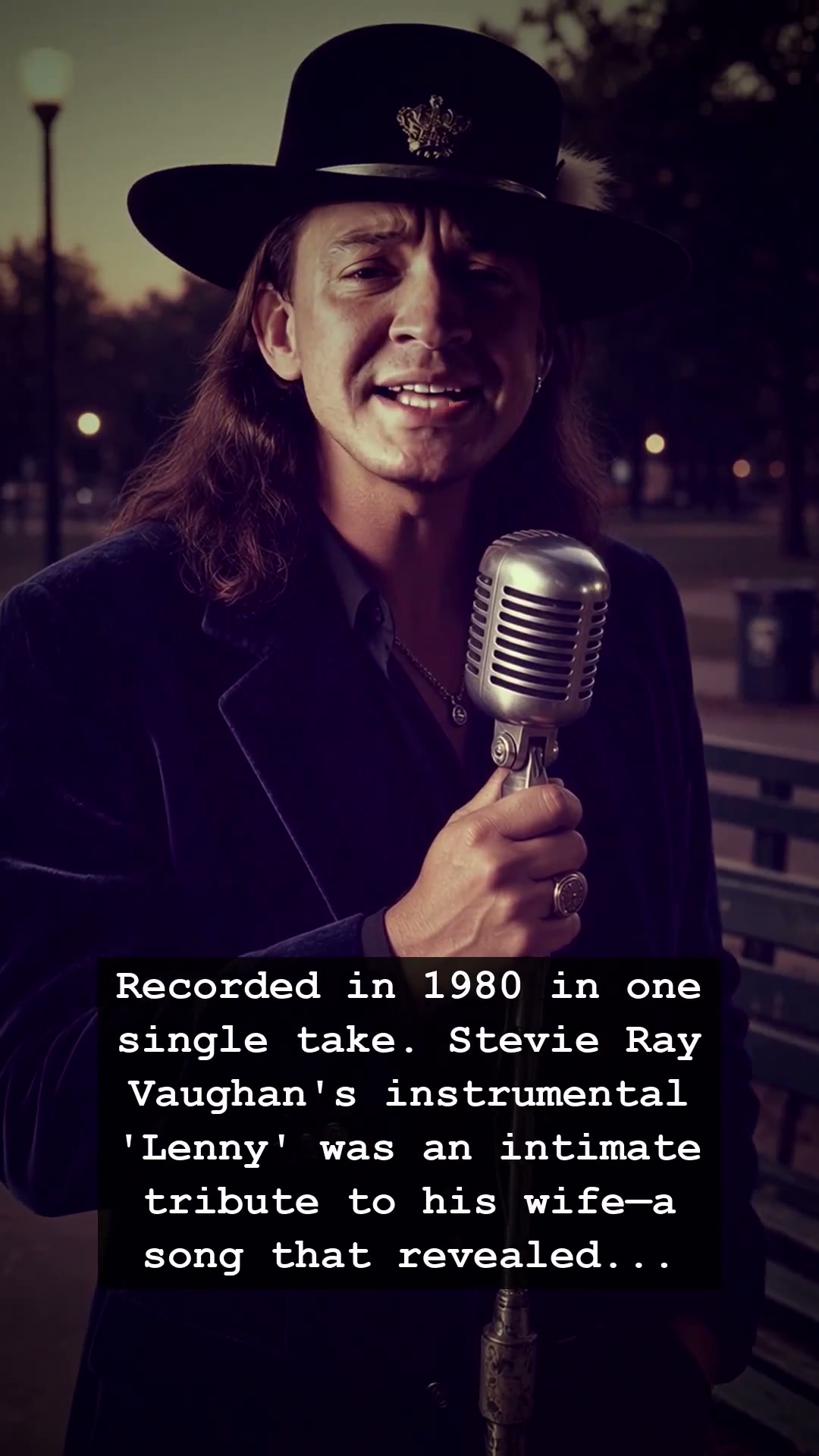
In the smoke-filled, whiskey-soaked air of the early 1980s, the blues was undergoing a desperate transformation. While the rest of the world was obsessed with the emerging neon glitz of MTV and the rigid beats of synth-pop, one man in Texas was holding a mirror to the soul of the guitar. That man was Stevie Ray Vaughan, and the year was 1980. Inside a recording booth, he did something that still haunts the ears of anyone who listens to it today: he recorded a track called Lenny in a single, breathless take. Without speaking a word, Stevie Ray Vaughan allowed his battered Stratocaster to weep, scream, and whisper, creating a love letter that transcended the limits of language.
Lenny was never meant to be a stadium anthem or a chart-topping hit. It was an intimate, fragile tribute to his wife at the time, Lenora. While most rock legends of the era were busy fueling their egos with excess, the dark side of fame, and the frenetic energy of the Sunset Strip, Stevie Ray Vaughan chose vulnerability. The track captures a rare moment of domestic stillness, a quiet Sunday morning captured in twelve-bar blues scales. Listening to it now, one can almost smell the old wood of his guitar and feel the weight of a man whose heart was tethered to a woman he adored, even as the whirlwind of superstardom threatened to tear everything apart.
The recording process itself is a testament to the raw talent that defined the blues revival. There were no digital edits, no overdubbing, and no artificial polish. It was just the man and his instrument. This authenticity is precisely why Stevie Ray Vaughan remains a titan of the genre decades after his tragic departure from the world stage. In an era often defined by high-gloss production and mechanical precision, the human tremor in his vibrato served as a stark, emotional anchor. He proved that you didn’t need a massive stage or a pyrotechnic display to move the soul; you just needed to be honest.
For those who grew up in the shadow of the eighties, listening to Stevie Ray Vaughan evokes a specific kind of longing. It reminds us of a time when the Jukebox was still the heart of the neighborhood bar and music felt like a living, breathing entity. The story of Lenny is not just about a song; it is a ghost story of love and loss. It serves as a reminder that behind the legendary performances and the rugged exterior of a blues icon, there existed a man capable of profound sensitivity.
Today, the legacy of Stevie Ray Vaughan continues to inspire a new generation of players who seek to find their own voice through the strings. Every time a young guitarist picks up a Stratocaster to mimic his tone, they are chasing the ghost of that 1980 studio session. As you spin the record tonight, let the melody of Lenny wash over you, and remember the man who dared to be vulnerable in a world that demanded he be nothing but tough.