
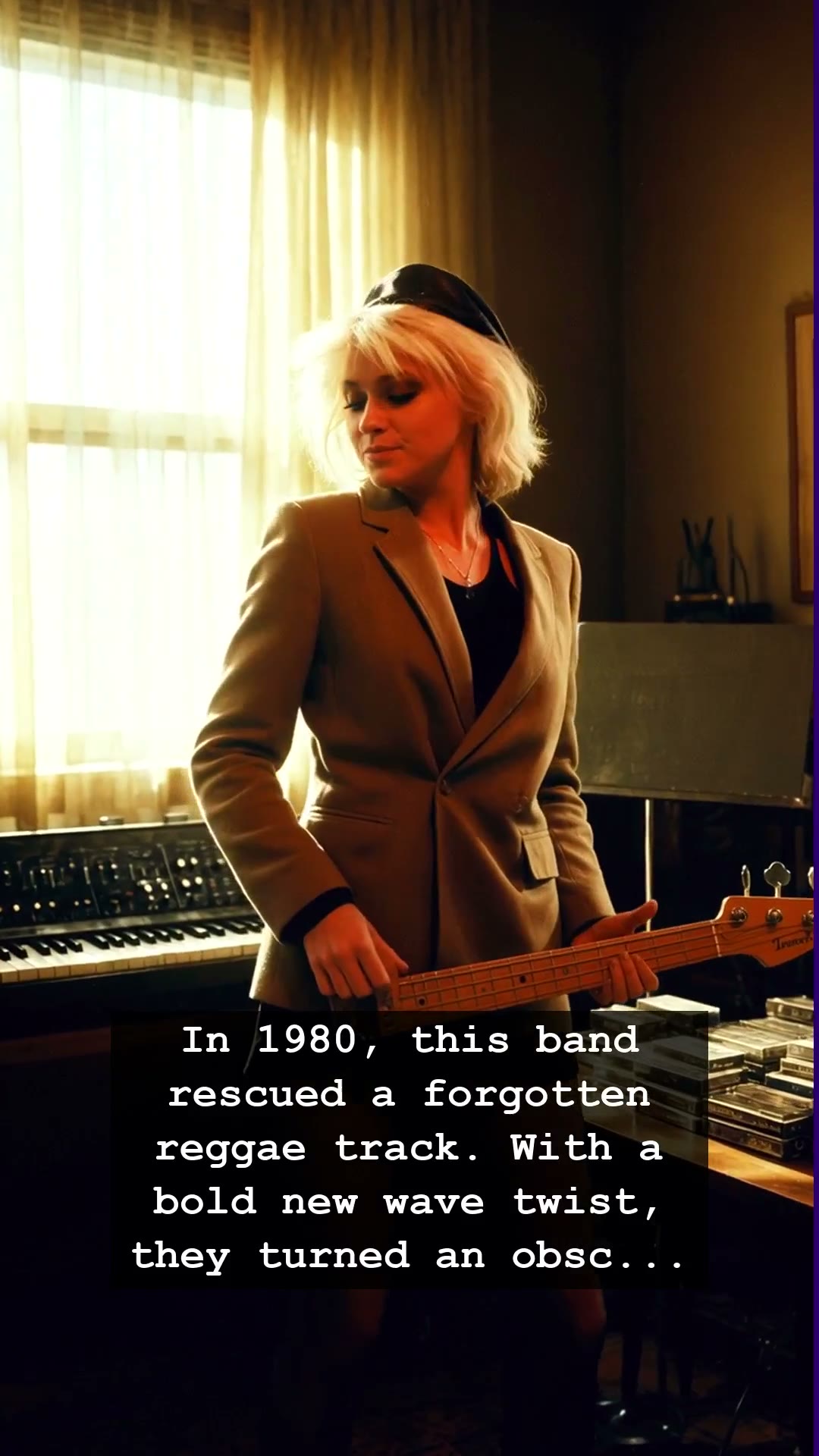
It was 1980, and the world was changing. The disco fever that had gripped Studio 54 was finally cooling off, and the airwaves were hungry for something sharper, leaner, and undeniably cool. Amidst this transition, a band from the gritty, bohemian streets of New York City stepped into the spotlight to pull off a musical heist that would define a generation. That band was Blondie, led by the enigmatic and iconic Debbie Harry. While the masses knew them for their punk roots, they were about to prove that their sonic palette was far wider than anyone dared to imagine.
Most fans remember the infectious, pulsating rhythm of The Tide Is High, but few realize that this chart-topping smash was not an original composition. In fact, it was a long-lost reggae deep cut from 1967, originally recorded by the Jamaican group The Paragons. It sat gathering dust in the archives of music history until Blondie decided to give it a daring new life. They stripped away the raw island instrumentation and injected it with their signature New Wave sensibilities, weaving in a lush, brass-heavy arrangement that turned a laid-back reggae groove into a global pop anthem.
This wasn’t just a cover; it was a masterclass in musical alchemy. By taking a forgotten piece of history and filtering it through their own urban lens, Blondie bridge the gap between Kingston and the burgeoning New Wave scene. The track became a sensation, blasting from every portable Walkman and filling dance floors from London to Tokyo. It was the perfect anthem for the early eighties—sophisticated, slightly mysterious, and undeniably danceable. For a brief moment, the world moved to the rhythm of Debbie Harry’s cool, detached delivery, proving that genre boundaries were meant to be broken.
Behind the scenes, the atmosphere was a mix of calculated risk and artistic intuition. The band was operating under the immense pressure of following up their massive success with Heart of Glass. The music industry in 1980 was a cutthroat place where you were only as good as your last hit, and the temptation to play it safe was overwhelming. Yet, Blondie chose to lean into an obscure reggae song, a decision that could have easily alienated their rock-focused fanbase. Instead, it solidified their status as visionaries who understood that great music, regardless of its origin, has a timeless quality that just needs the right touch to bloom.
Today, listening to the track transports us back to a time when MTV was just finding its footing and the cultural landscape felt like a vast, unexplored frontier. It serves as a reminder that the best hits are often hidden in plain sight, waiting for the right artist to recognize their potential. Blondie remains a cornerstone of that era, a band that mastered the art of being both punk outsiders and polished superstars. Their legacy isn’t just in the number of records they sold, but in their fearless ability to reshape the sound of their time. Do you remember where you were the first time that unmistakable horn section began to play?