
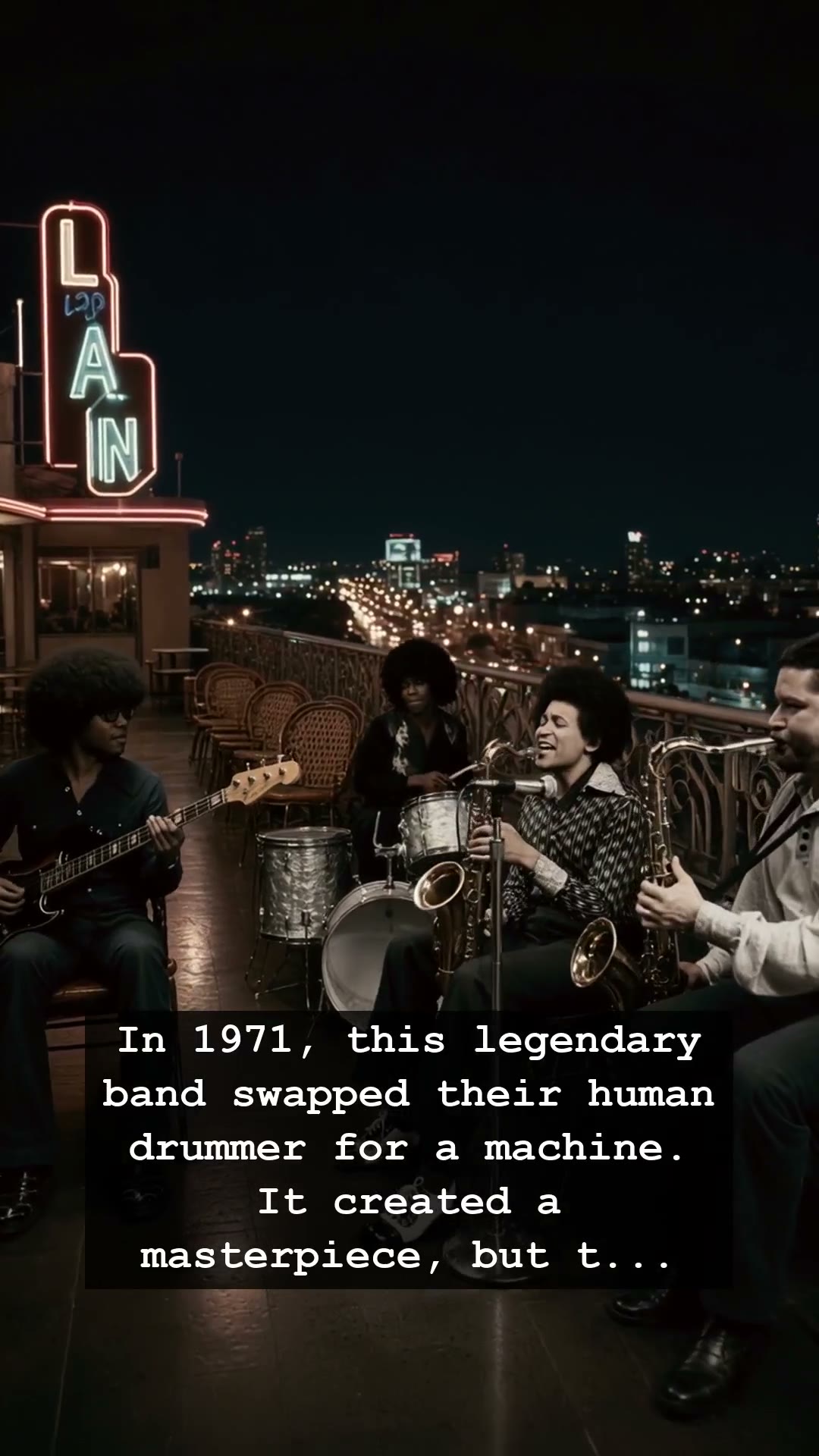
It was 1971, a time when the airwaves were dominated by the grit of the burgeoning soul movement and the neon promise of a changing musical landscape. Deep inside a smoky, dimly lit recording studio, Sly and the Family Stone were teetering on the edge of a creative precipice. Their leader, the visionary Sly Stone, was always looking for the next rhythmic evolution, a sound that could bridge the gap between human soul and the cold, unyielding precision of the future. He made a move that would shock the industry: he fired his human drummer and replaced him with the primitive yet hypnotic rhythm of a drum machine. This mechanical heart birthed the seminal album There’s a Riot Goin’ On, a record that defined a generation but whispered the beginning of a bitter, internal end.
To understand the gravity of this decision, you have to remember the era. Music in the early seventies was visceral, sweaty, and fundamentally human. Bands were organic organisms, thriving on the chemistry of live instrumentation and the erratic pulses of drummers who fed off the crowd at festivals like Woodstock. By introducing a mechanical element, Sly and the Family Stone were essentially breaking a social contract with the funk movement. The resulting sound was dark, layered, and undeniably ahead of its time, capturing the disillusionment of a decade that was waking up from the hippie dream of the sixties. Yet, beneath the innovative grooves, the band’s soul was fraying under the weight of Sly’s perfectionism and mounting substance abuse.
This sonic revolution came at a devastating personal cost. The drum machine, with its relentless, unforgiving cadence, became a symbol of the isolation that was quickly consuming the group. As the tracks were painstakingly looped and overdubbed, the spontaneous joy that once defined the band vanished, replaced by a claustrophobic atmosphere of tension. The machine didn’t just keep time; it replaced the collaborative heart of the ensemble. Members felt alienated, their individual musical contributions muted by the cold, calculated loops of the drum machine. The very tool that allowed them to chart number-one hits also served as the wedge that drove these legends into opposing corners.
Despite the drama, the impact of this transition was seismic. Sly and the Family Stone essentially invented a template for modern production. You can trace the lineage of electronic music, hip-hop, and modern R&B back to these sessions. Critics might point to the tension as a tragedy, but the work remains a masterpiece of musical defiance. It was a bold artistic statement that sacrificed the brotherhood of a band for the immortality of a sound.
Looking back, the story of Sly and the Family Stone in 1971 serves as a haunting reminder of the dual nature of progress. We look back at these records with nostalgic wonder, playing them on vintage players, yet we often forget the fragile human cost etched into every beat. The band may have been torn apart, but their legacy remains as heavy and resonant as that iconic, mechanical rhythm.