
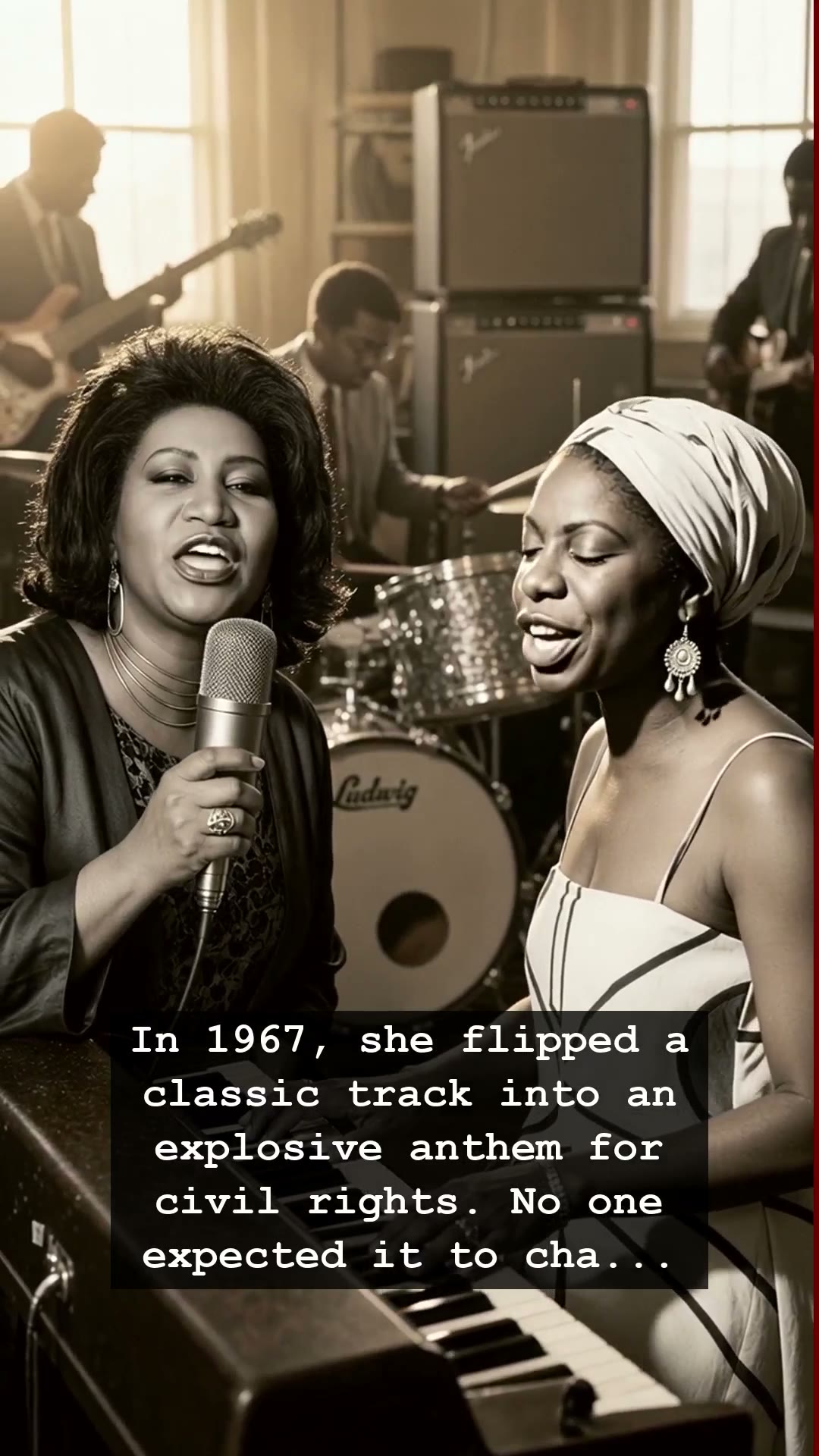
In 1967, the airwaves were buzzing with the polished sounds of Motown, but a tectonic shift was brewing in the heart of Muscle Shoals. Otis Redding had written a song about a man coming home to his woman, an ode to traditional domestic devotion. Yet, when the Queen of Soul, Aretha Franklin, stepped into the studio, she didn’t just sing the notes; she claimed them. With a flick of her wrist and a soulful growl that seemed to rattle the very foundations of the recording booth, she flipped the script entirely. She didn’t want the man’s home-front submission; she demanded respect. That single act of vocal defiance would soon echo far beyond the confines of a record player, morphing into an accidental civil rights anthem that would define a turbulent era in American history.
Aretha Franklin was already a force of nature, but with the release of Respect, she transcended the role of a pop singer to become a cultural beacon. The song became a rallying cry for the Civil Rights Movement, a movement that was demanding dignity in an America fractured by systemic inequality. As the track hit the airwaves, it was blaring from every jukebox in the country, from the grit of urban centers to the diners along Route 66. It was a time when the nation was grappling with intense social change, and Aretha Franklin provided the soundtrack for that struggle. Her voice was the grit in the gears of the status quo, turning a plea for personal recognition into a demand for social justice that resonated with millions of Black Americans who were tired of being ignored.
What made the transformation so jarring was how effortlessly Aretha Franklin commanded the space. She took a song that was previously tethered to a man’s ego and redefined it through the lens of a woman who held the power of a thousand suns. The way she spelled out R-E-S-P-E-C-T became more than just a catchy hook; it was a rhythmic reclamation of identity. It wasn’t just about a relationship anymore; it was about the fundamental right to exist with dignity in a society that too often denied it. The studio magic captured that day wasn’t just technical perfection—it was the sound of a woman asserting her place in the history books, changing the trajectory of popular music forever.
Even today, decades after that iconic recording session, the resonance of her performance remains undiminished. While we look back at the era of Woodstock and the birth of a new cultural consciousness, Aretha Franklin stands out as the ultimate anchor. She taught a generation that music is more than just entertainment; it is a weapon, a shield, and a mirror for the times. Whenever that classic horn section kicks in, the world seems to pause. It is a reminder of the raw, unfiltered talent that defined 1960s soul and the indelible mark she left on our collective memory. We are still listening, still learning, and still demanding the respect she fought so hard to broadcast to the world.