
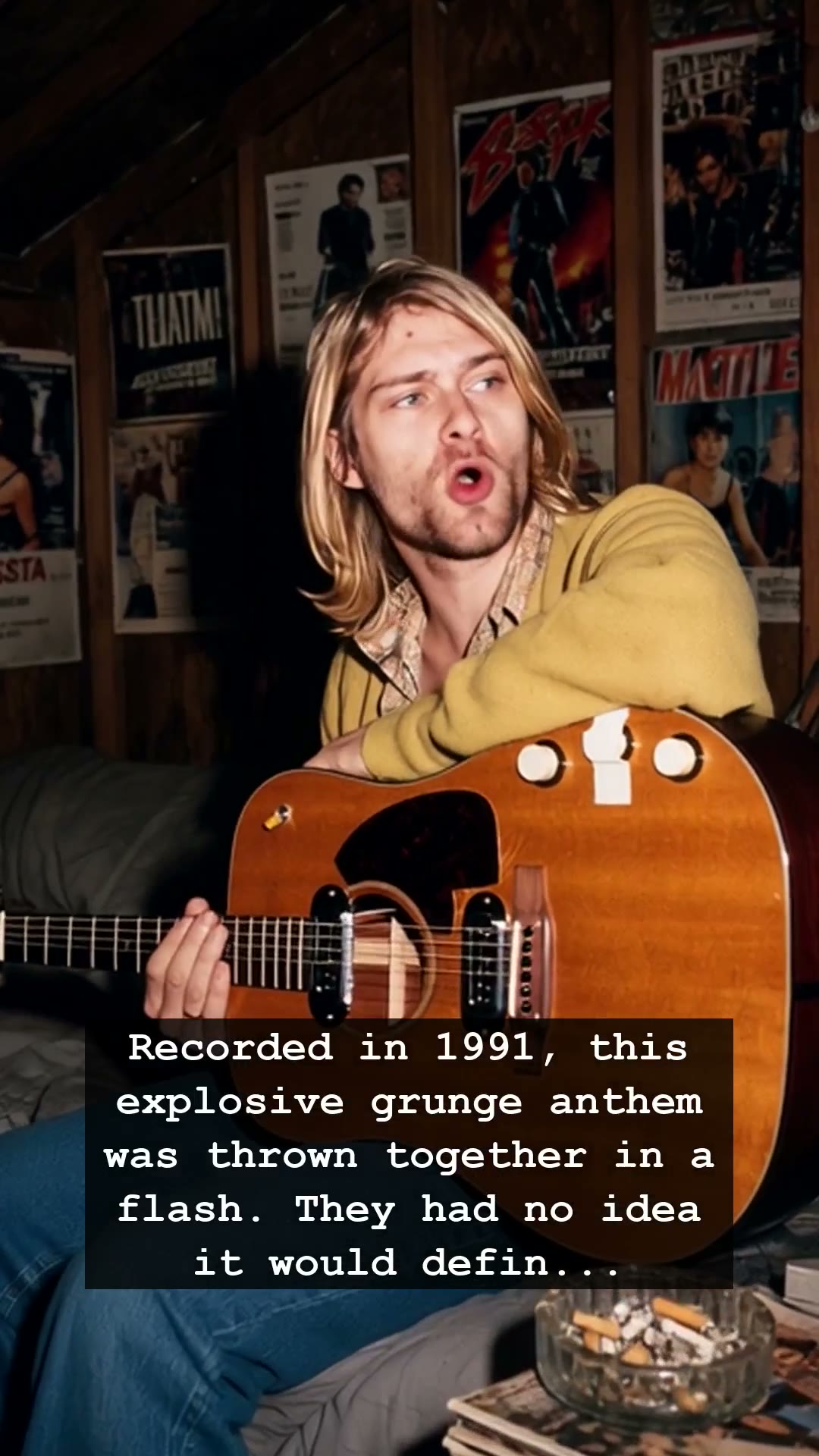
The year was 1991, and the air in the music industry was thick with the polished, synthesized sheen of arena rock. Then, like a sonic earthquake, a trio from Aberdeen, Washington, crashed through the walls of the status quo. Nirvana, led by the enigmatic Kurt Cobain, did not just record a song; they captured a volatile, restless energy that would define a generation. When they stepped into Sound City Studios, nobody expected the explosive anthem Smells Like Teen Spirit to become the soundtrack of the decade. It was a moment of accidental genius, born from turbulent sessions and a complete lack of pretense that shook the very foundations of pop culture.
The backstory of the track is as raw as the distorted guitar riffs that fuel it. Kurt Cobain had been obsessed with the idea of creating the ultimate pop song, something that mimicked the catchy, abrasive structures of the Pixies. When he brought the riff to Dave Grohl and Krist Novoselic, the magic didn’t happen through months of meticulous arrangement. Instead, it was thrown together in a flash, an impulsive collaboration that prioritized gut instinct over technical perfection. During these grueling recording sessions, the tension in the room was palpable, reflecting the internal angst that fueled Nirvana throughout their meteoric rise. They were capturing a spirit of apathy and frustration that resonated deeply with the disenfranchised youth who felt ignored by the mainstream.
To listen to Smells Like Teen Spirit today is to be instantly transported back to the golden era of flannel shirts, basement shows, and the unfiltered pulse of the early 90s. This was a time before the digital perfection of modern streaming, a time when a song had to bleed through the speakers to matter. Nirvana managed to bottle that lightning. The studio was a place of high drama and high stakes, where the abrasive, feedback-drenched guitars acted as a wall of sound against the polished expectations of the record labels. It remains a staggering paradox that a song birthed from such chaotic, messy origins became one of the most recognizable anthems in the history of rock.
The cultural impact was immediate and destructive. The song effectively signaled the end of the glam metal dominance, ushering in the grunge explosion that would eventually lead to the mainstreaming of alternative music. For millions, Nirvana became more than a band; they became a voice for the lost, a symbol of the authentic struggle against commercial machinery. Even decades later, the iconic power-chord progression feels just as urgent. It serves as a reminder of a fleeting, powerful moment when music was stripped to its barest, most painful, and most beautiful bones.
As you revisit the gritty, iconic sounds of 1991, ask yourself what it was about that specific era that demanded such raw honesty. Perhaps it was the looming uncertainty of the future or the death of classic rock idealism. Regardless, Nirvana left an indelible mark on our collective memory. Whether you were there wearing your first oversized sweater or you discovered it years later, the thunderous opening of Smells Like Teen Spirit still hits with the same force today. Do you remember where you were when the world finally stopped to listen?