
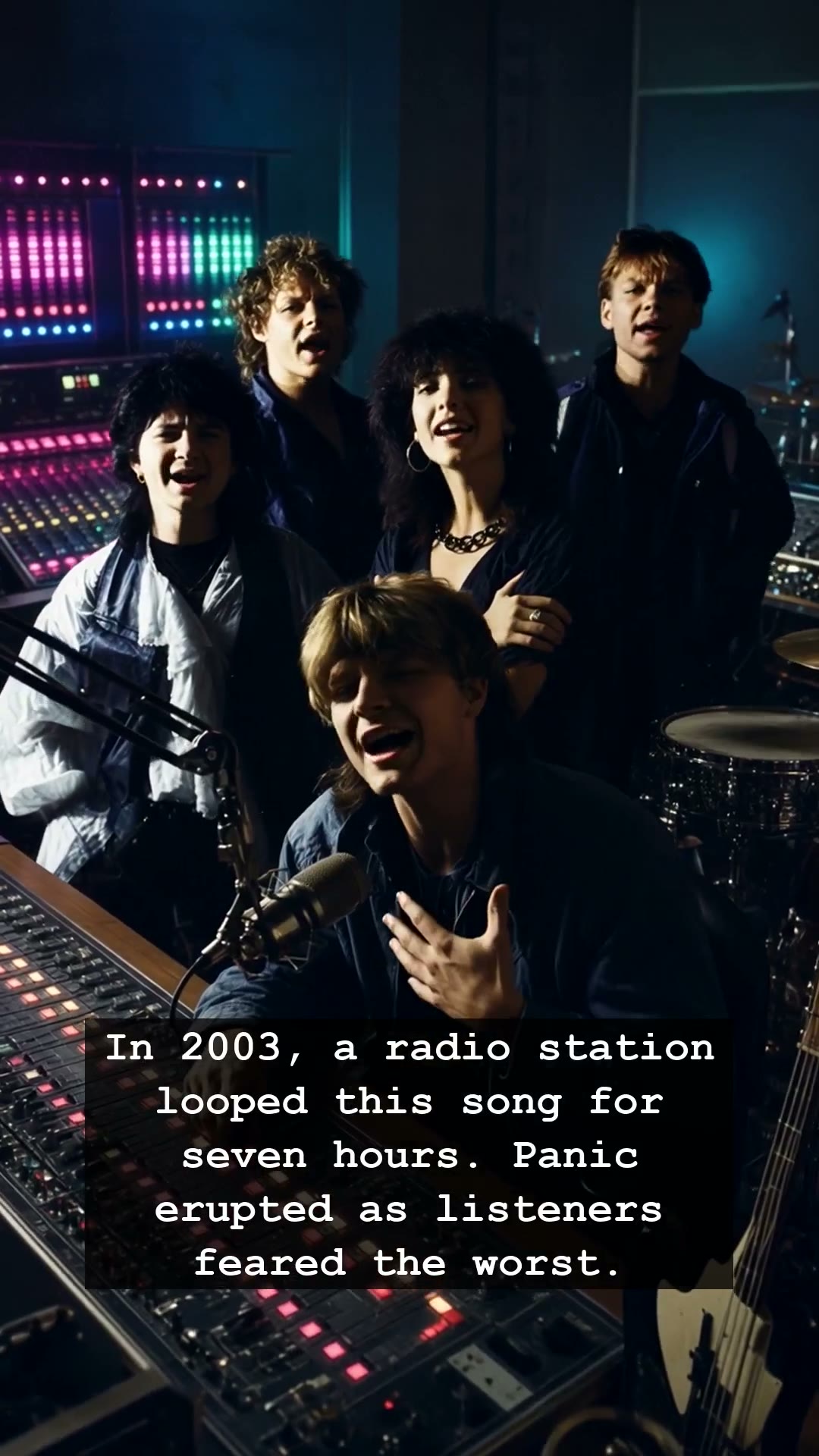
It was 2003, and the airwaves of a local radio station were supposed to provide the usual comfort of familiar synth-pop. Instead, listeners were plunged into a bizarre, real-time mystery that felt like a scene from a Cold War thriller. For seven agonizing hours, the iconic 1983 hit 99 Luftballons by Nena played on a relentless, unbreakable loop. As the minutes stretched into hours, the repetition stopped being a catchy earworm and turned into something far more sinister. Panicked citizens, fearing the loop was a coded signal for a national emergency or a catastrophic local event, flooded the police lines with desperate calls. It remains one of the most surreal moments in modern radio history, proving that even a pop classic can spark genuine dread when taken out of context.
To understand why this caused such hysteria, one must look back to the early 1980s, the golden era of the Walkman and the neon-soaked rise of MTV. Nena, the German band fronted by the charismatic Gabriele Susanne Kerner, burst onto the global stage with this anti-war anthem. While the world was caught in the geopolitical tension of the Reagan-Gorbachev era, 99 Luftballons captured a universal anxiety through a deceptive, upbeat synth-pop melody. It was a song about how a simple, innocent mistake—a stray cluster of red balloons—could inadvertently trigger an apocalyptic nuclear conflict. The irony of the 2003 incident is that a song intended to warn against the escalation of human panic ended up causing a miniature, localized panic of its own.
Nena herself was the face of this New German Wave phenomenon, bringing a raw, authentic energy that transcended language barriers. Even for those who did not speak German, the sheer urgency in her voice during the chorus made the message clear. The song became a quintessential staple of the 1980s, sitting comfortably alongside the biggest hits of the decade. Its production was a masterclass in tension, utilizing early electronic textures that gave the track a futuristic yet claustrophobic edge. When that seven-hour loop occurred decades later, it wasn’t just the melody that haunted listeners; it was the chilling, prophetic weight of the lyrics echoing over and over again.
The 2003 radio incident highlights our collective fascination with the power of media and the fragility of our sense of security. In an era before the instant fact-checking of social media, a radio loop had the power to paralyze a community. It reminds us that music is never just sound; it is a cultural anchor, a time capsule that holds our fears, memories, and historical anxieties. Nena provided the soundtrack for a generation concerned with the end of the world, and her masterpiece continues to resonate today, whether played on a vintage Jukebox or through a modern digital stream.
Decades later, the name Nena still summons a specific color palette of electric blues and sharp, synthesized stabs. That seven-hour loop was eventually revealed as a technical glitch, yet the memory lingers as a testament to the song’s enduring, eerie power. While the balloons have long since faded, the melody remains a haunting reminder of how easily we can be unsettled by the echoes of our past. Do you remember the first time you heard that opening synth riff, or did you encounter the mystery of the loop later on? Sometimes, the most iconic music is the kind that refuses to stop playing.