
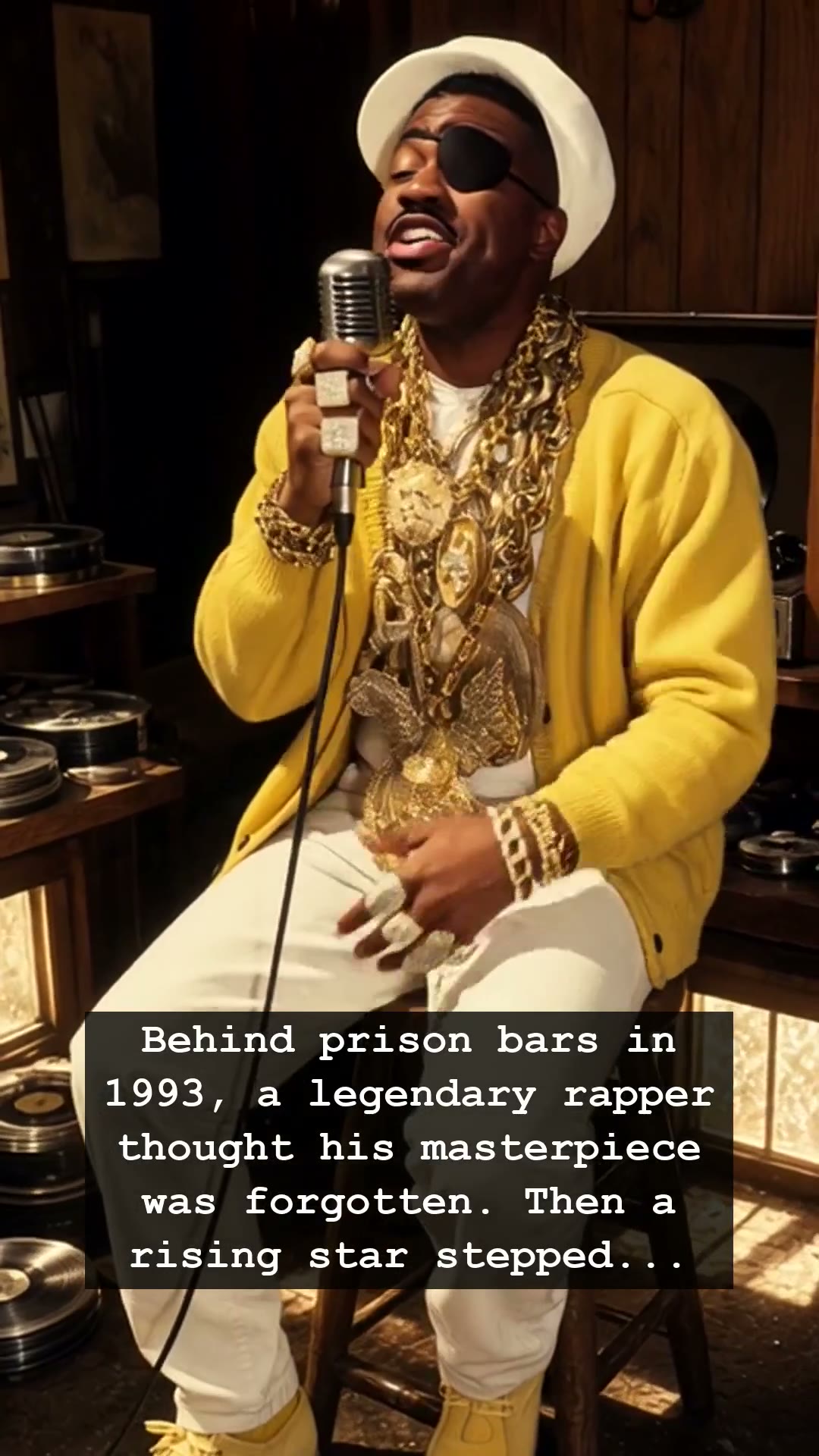
In 1993, the world of hip-hop was shifting rapidly toward the gritty, high-stakes atmosphere of the Gangsta Rap era, but one of its most innovative storytellers was suddenly silenced. Slick Rick, the man who brought a playful, theatrical, and uniquely British-accented charisma to the microphone, found himself staring at cold concrete walls instead of the bright lights of a recording studio. While the neon pulses of the early nineties were beginning to define a new generation, the legendary ruler of storytelling was facing an indefinite hiatus behind bars. For many, his career seemed destined to become a footnote in the rapidly evolving tapestry of American urban music.
Yet, even as he sat in his cell, the echoes of his brilliant narratives did not vanish. During his incarceration, the landscape of rap was undergoing a massive transformation, with MTV shifting the cultural dial and the Walkman ensuring that classic tracks remained in heavy rotation. It was a time when the industry often devoured its icons, discarding them as soon as their legal troubles mounted. But Slick Rick was not just a rapper; he was an architect of rhythm and rhyme, and his influence was etched too deeply into the culture to be erased by a prison sentence. His absence created a void that only his own legend could fill.
Then came a moment of unexpected salvation from an unlikely source. A rising star in the industry recognized the monumental debt owed to the man behind the eye patch. This artist didn’t just pay lip service to his idol; they meticulously crafted a tribute that functioned as a sonic lifeline. By recording and releasing a version of a track that pulled heavily from Slick Rick’s iconic style, this successor kept the legacy alive and the royalties flowing directly to the incarcerated star. It was a rare instance of industry loyalty, ensuring that the master storyteller could maintain his livelihood even while physically separated from the world he helped shape.
This act of solidarity provided a vital bridge for Slick Rick during his darkest hours. It served as a reminder that in the golden age of hip-hop, the community often operated with an unspoken code of respect for the pioneers. This story is more than just a footnote in legal drama; it is a testament to the enduring power of music to transcend physical barriers. Even while stripped of his freedom, the royalty checks and the continued radio play validated that his artistic contributions were timeless. He remained a king, even in exile, thanks to the reverence of those who grew up studying his flow.
Today, as we look back at the 1990s, we see the echoes of his influence in every rapper who prioritizes a narrative arc over mere punchlines. Slick Rick proved that storytelling could be a weapon, a shield, and a legacy all at once. Whether you remember spinning his records on a pristine Jukebox or first hearing him through the tinny speakers of a portable cassette player, the impact is undeniable. His journey through the prison system and back to the spotlight remains a powerful chapter in musical history, reminding us that true legends are never really gone.