
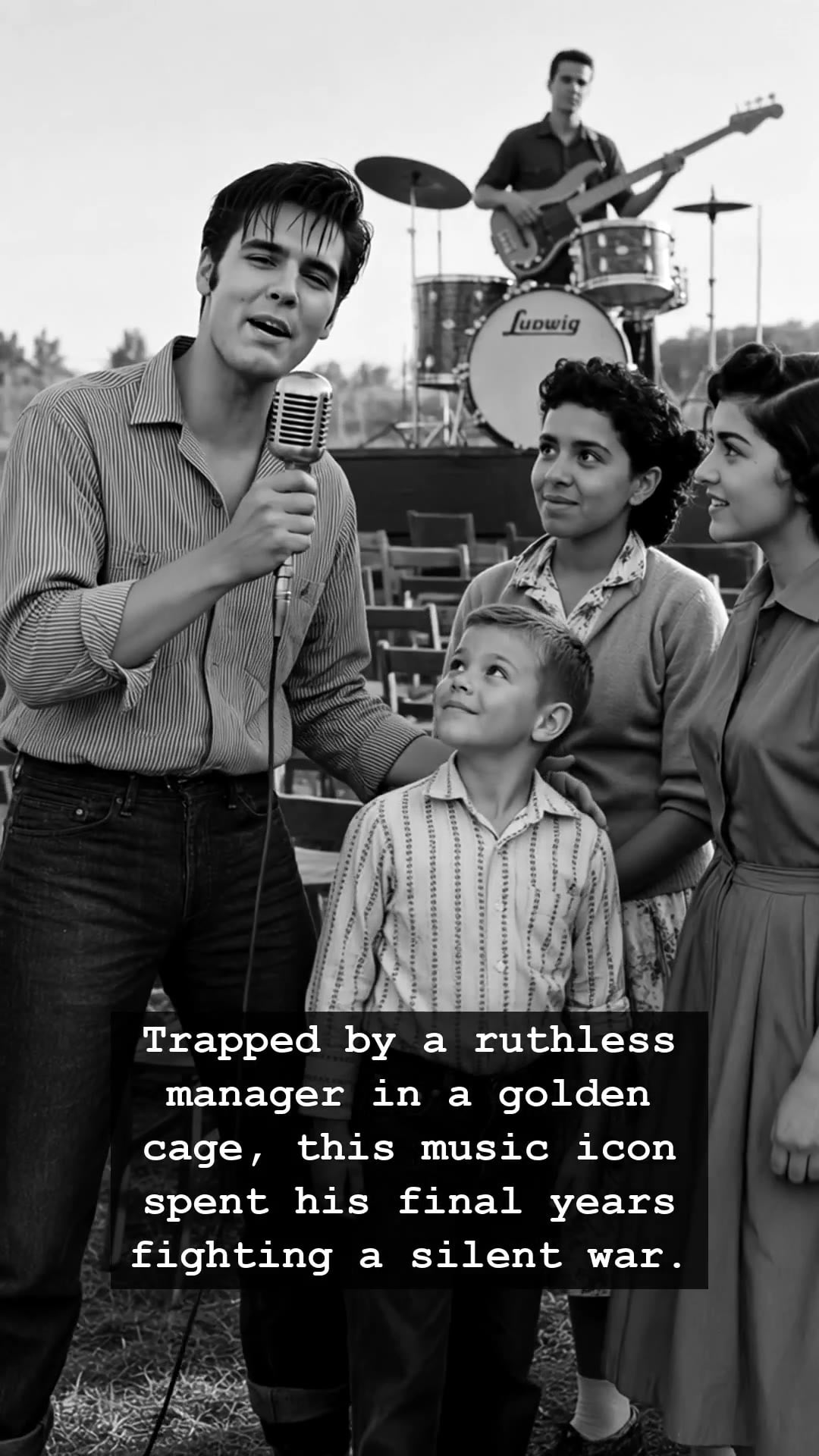
In the shimmering neon glow of the mid-1970s, the King of Rock ‘n’ Roll was not the free-spirited firebrand who had once shocked the world. Elvis Presley, the man who single-handedly redefined American culture, found himself locked in a gilded cage of his own making. While his iconic jumpsuits sparkled under the blinding lights of Las Vegas, behind the velvet curtains, he was fighting a desperate, silent war against the orchestrator of his professional life. The world saw a legend, but in the shadows of his suite, Elvis was a man hollowed out by relentless exhaustion and a management style that treated his very existence as a bottomless gold mine.
At the center of this tragedy was Colonel Tom Parker, a manager whose grip on Elvis Presley was so absolute that it bordered on total psychological enslavement. Parker was the master of the puppet strings, steering Elvis through endless tours and contractually mandated film deals, effectively isolating the star from the creative freedom he once craved. As the era of the jukebox shifted into the high-octane spectacle of arena rock, the demands grew monstrous. Elvis was forced to perform night after night, his health deteriorating under the weight of prescription cocktails meant to keep him moving when his heart and soul were screaming for rest.
This wasn’t just about music; it was a battle for autonomy. Elvis Presley wanted to explore the soulful blues and gospel roots that shaped him, yet he remained trapped in the repetitive cycle of Vegas residencies and repackaged hit records. The Colonel understood that a controlled Elvis was a profitable one, and he systematically alienated the singer from those who might have offered a lifeline. It was a classic tale of artistic exploitation where the fame became a suffocating mask, and the legend of Elvis Presley became a product rather than a person. The air was thick with the scent of hairspray and despair, a far cry from the electric rebellion of his early Sun Studio days.
Looking back, the tragedy of Elvis Presley resonates because it mirrors the ultimate cost of unchecked fame during an era when the industry was becoming a corporate monolith. The glamour of the seventies—the sequined capes and the sold-out arenas—hid the fraying seams of a man who was losing his identity to a machine he could no longer stop. We look at his final years now with a sense of profound sadness, realizing that the man who gave voice to a generation had been silenced by the very entity that profited from his roar. It serves as a haunting reminder of the darkness that often lurks behind the most luminous pedestals of stardom.
Decades after he left the stage for the last time, the story of Elvis Presley continues to pull at our heartstrings. We listen to his voice, still rich with emotion and raw power, and we find ourselves wondering what might have been had he escaped the cage. It is a cautionary tale of talent, power, and the high price of belonging to the world. As we spin his records today, let us remember the man behind the myth, forever searching for a freedom that remained just out of his reach.