
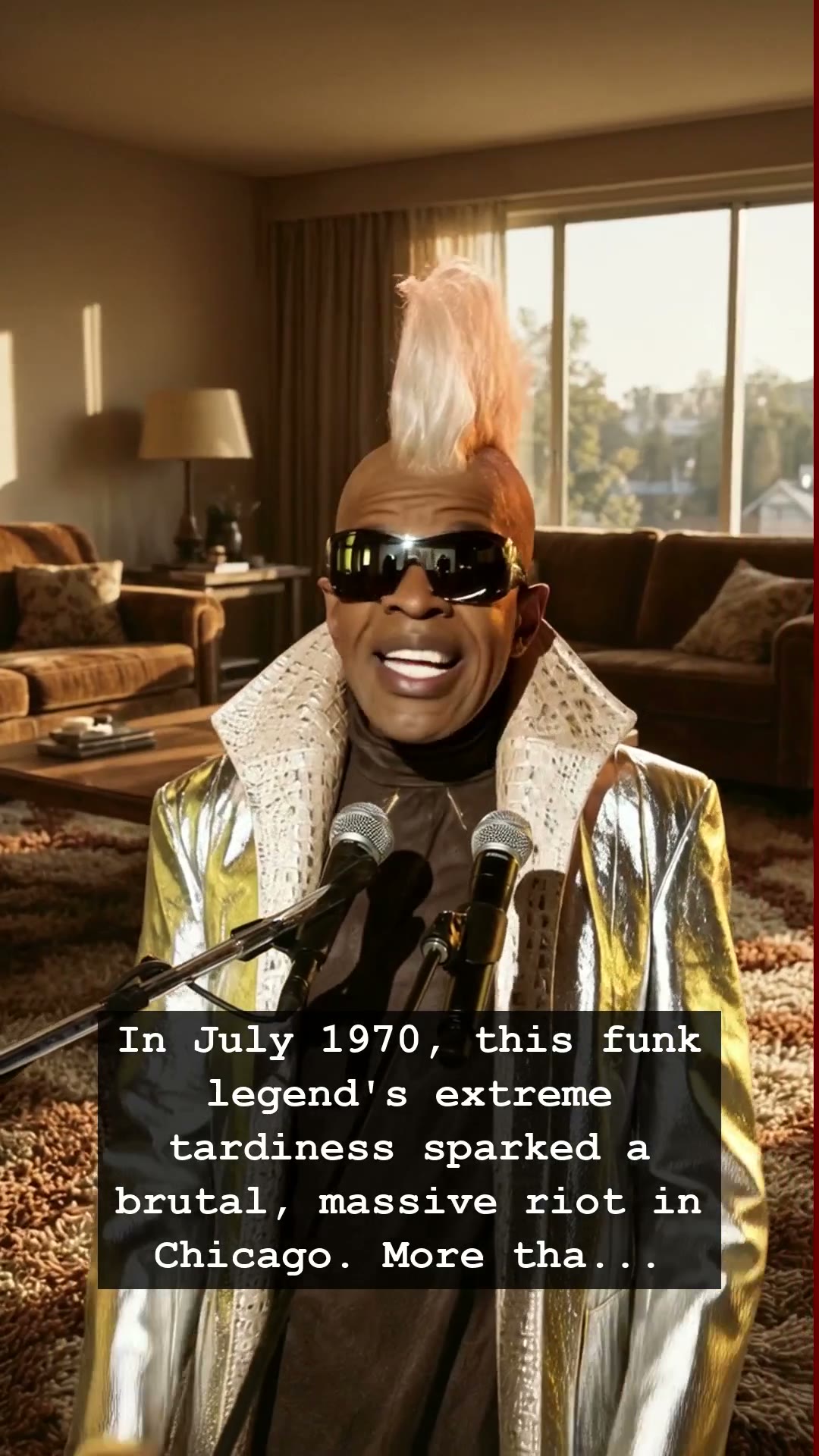
The summer of 1970 was supposed to be the season of flower power, peace, and the infectious, syncopated rhythm of Sly Stone. As the frontman of Sly and the Family Stone, he was the undisputed architect of the funk explosion, a man whose stage presence bridged the divide between soul and rock. But on a sweltering July night in Chicago, that promise of peace dissolved into shards of glass and screaming chaos. When the crowd at Grant Park realized that their idol was not coming, the humid air turned electric with frustration. A two-hour delay—a lifetime in the world of live music—pushed the restless, packed audience over the edge, transforming a celebration of music into a scene of pure mayhem that left over a hundred people injured.
To understand the gravity of that night, one must remember the culture of the era. The Jukebox was the heartbeat of every local diner, and Sly Stone was the radio king. His sound was revolutionary, a multi-racial, multi-gender collective that seemed to embody the optimism of the late sixties. Fans flocked to the park expecting a transcendent experience, a psychedelic journey into the heart of funk. Instead, they were met with an empty stage and a deepening silence that grew more menacing by the minute. The band’s habitual tardiness, often fueled by the excessive lifestyle and chemical indulgences that defined the rock star archetype of the time, finally hit a breaking point that no amount of smooth basslines could soothe.
As the minutes ticked by, the mood shifted from anticipation to agitation. When the realization settled in that Sly Stone would not be appearing, the collective energy of the crowd manifested as a violent force. Stones were thrown, equipment was shattered, and the park turned into a battlefield. It was a stark reminder of the fragile contract between an artist and their audience. The darkness of the post-Woodstock era was setting in; the naivety of the decade was being systematically replaced by the stark, unforgiving reality of fame’s darker side. The riot was not just about a delayed performance; it was a symptom of a generation that felt betrayed by its own icons.
Decades later, the tragedy of the Chicago riot remains a cautionary tale about the volatility of the Arena Rock era. It is a piece of history that contrasts sharply with the vibrant, euphoric tracks like Dance to the Music that once brought the world together. Sly Stone eventually faded from the limelight, his legacy complicated by his descent into the shadows of the industry, but that night in July serves as a haunting snapshot of his influence. It reminds us that even the most innovative musical geniuses were often prisoners of their own erratic spirits, capable of inciting both ecstasy and despair.
Today, we look back at the funk legends of the 1970s with a mix of reverence and melancholy. The music remains timeless, but the human cost behind the myth of Sly Stone is a story that refuses to be ignored. Do you recall the roar of the crowd before it turned into a scream, or does the history of that night feel like a distant, chaotic echo of a bygone world?