
In the smoke-filled blues joints of the early 1980s, one name pierced through the static of the synthesized pop charts like a lightning strike: Stevie Ray Vaughan. While the world was obsessed with the shiny allure of MTV and the neon pulse of synth-pop, this man from Austin, Texas, brought the raw, jagged soul of the blues back to life with a battered Fender Stratocaster. He was not just a musician; he was a conduit for a pain so profound that it felt like he was playing directly on the nerves of anyone listening. Yet, behind the blistering solos and the wide-brimmed hats, there was a quiet, domestic heartbreak that birthed one of the most intimate instrumentals in rock history.
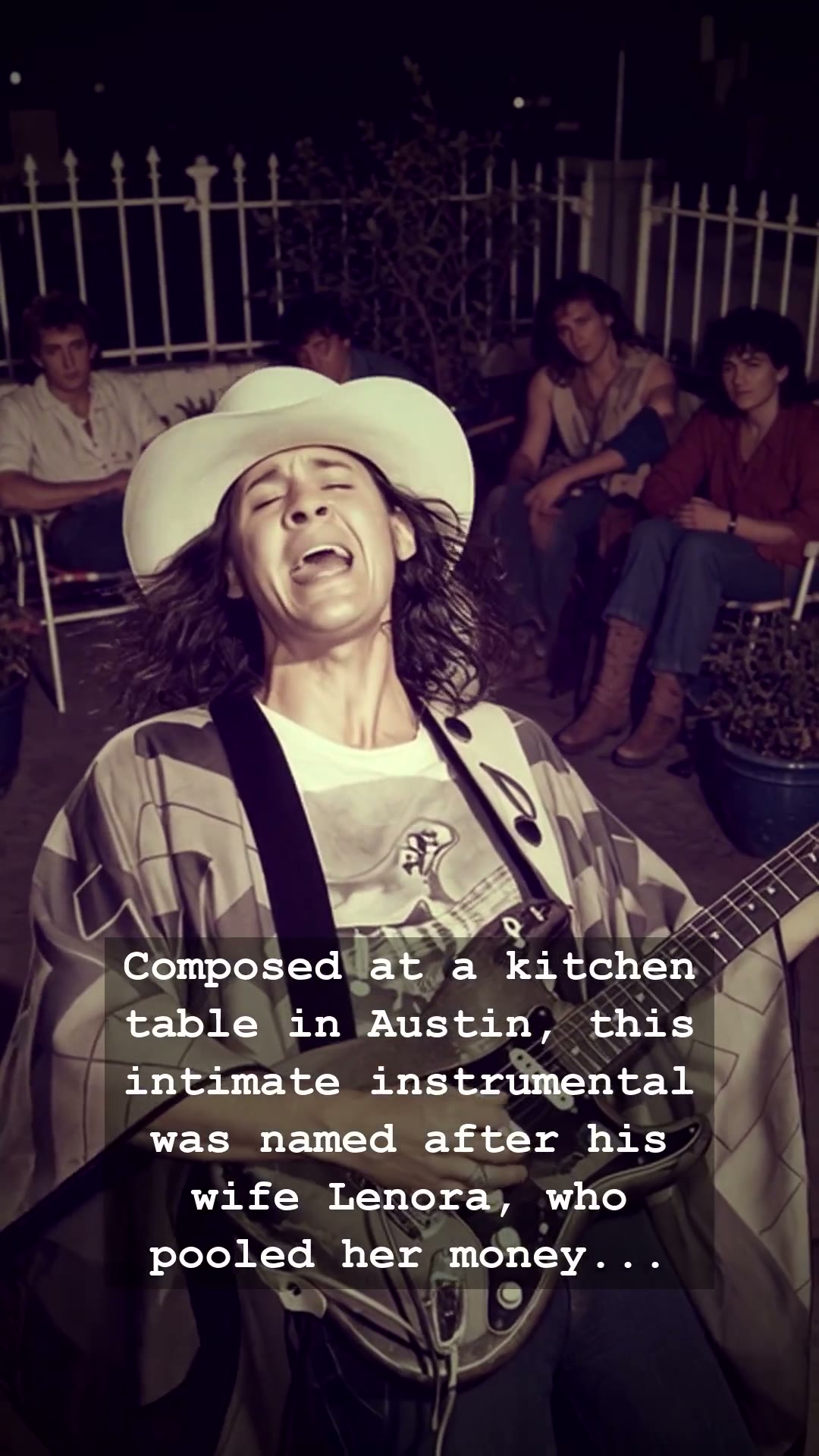
It all began at a humble kitchen table in Austin. Before the global tours and the accolades, Stevie Ray Vaughan was just a man chasing a sound that lived in his head. His muse and anchor was his wife, Lenora. She understood his obsession better than anyone, even when the bills were piling up and the dream seemed miles away. In a gesture of pure, unwavering devotion, Lenora pooled her meager savings to buy him his iconic guitar. It was a worn-down, beaten-up instrument that looked like it had survived a war, but in the hands of Stevie Ray Vaughan, it sang with a voice that could make a grown man weep. This guitar became an extension of his own soul, a piece of wood and wire that carried the weight of their shared struggle.
That kitchen table became the birthplace of the track Lenny. Unlike the explosive, fire-breathing blues numbers that defined his stage persona, this piece was a whisper. It was an instrumental love letter, a melody that felt like a quiet Sunday morning in a city that usually demanded nothing but volume. When he played it, you could hear the sincerity of his gratitude and the vulnerability of a man who knew he owed his life to the woman standing by his side. It was a stark contrast to the excess of the era, standing as a testament to the fact that true art often stems from the simplest, most human moments.
Years later, when the fame had reached its zenith and the pressures of the industry began to pull at the seams of his life, that melody remained a haunting reminder of where he came from. The tragedy of Stevie Ray Vaughan is that his light burned out far too quickly in that devastating helicopter crash in 1990, leaving the world to wonder what other secrets he would have shared. But through his music, the story of that kitchen table and the woman who believed in him lives on. It is a piece of history that cuts through the noise of the decades, reminding us that behind every legend, there is always a human heart waiting to be heard.
Today, when you drop the needle on a record or stream that familiar, clean tone, you are not just hearing a guitar; you are hearing a conversation between a man and his soul. Stevie Ray Vaughan might have been the master of the electric blues, but with this song, he became the master of the heart. It serves as a permanent, sonic monument to love, sacrifice, and the raw power of six strings. As the final notes fade away, we are left with the lingering echo of a man who gave everything he had to the music he loved so dearly.