
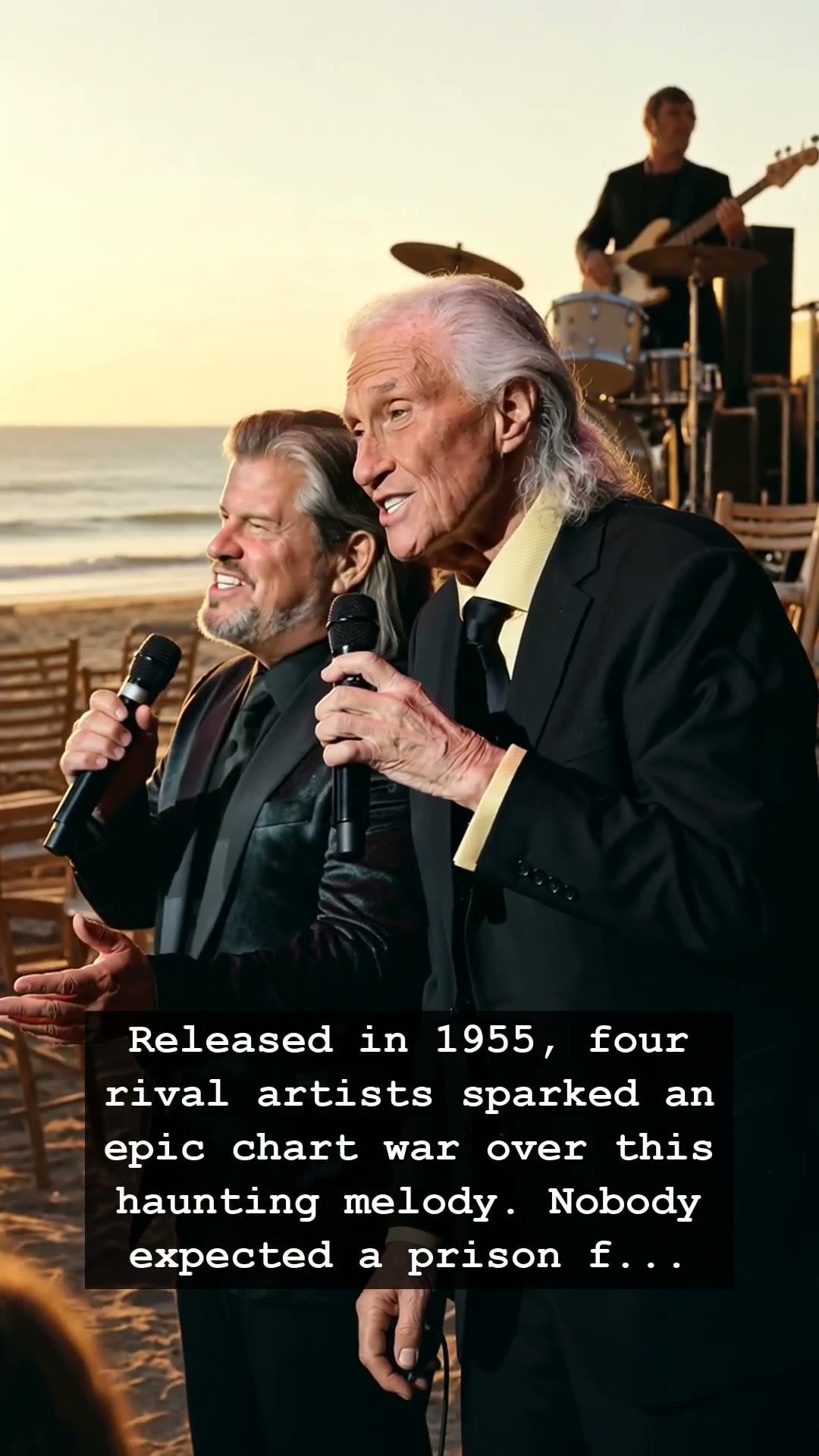
It was 1955, a time when the crackle of a jukebox in a local diner felt like the heartbeat of a nation. While the airwaves were crowded with the birth of Rock ‘n’ Roll, a single, haunting melody began to weave its way into the collective consciousness, eventually igniting one of the most unexpected chart wars in music history. The song was Unchained Melody, originally written for the low-budget prison film Unchained. What started as a modest soundtrack piece quickly exploded into a multi-genre phenomenon, with four different artists fighting for airplay simultaneously. It was a chaotic, beautiful collision of styles that defined the era of vinyl and radio dominance.
At the center of this storm was the soulful power of The Righteous Brothers. While other artists took their own stabs at the track, it was the 1965 rendition by The Righteous Brothers that ultimately carved the melody into stone. Bill Medley and Bobby Hatfield possessed a vocal chemistry that felt almost dangerous in its intensity. When you listen to the soaring falsetto and the brooding, gravelly baritone layered over that sweeping orchestral arrangement, you aren’t just hearing a song; you are hearing the sound of heartbreak itself. Their version turned a simple prison lament into an anthem of eternal devotion, setting a bar that few have reached since.
The era was a melting pot of ambition and raw talent. Back then, before the digital age sanitized our music, success was measured in the heat of a 45-RPM record spinning on a turntable. The Righteous Brothers operated in an age where studio polish met genuine grit. They navigated the cutthroat world of the mid-sixties with an authenticity that made them legends. Their success wasn’t just about the vocal range; it was about the vulnerability they laid bare. They brought the blue-eyed soul movement to the mainstream, creating a bridge between the doo-wop foundations of the fifties and the sophisticated pop sensibilities that would dominate the late sixties.
Yet, the story of this song isn’t just about success; it is a testament to the power of human endurance captured in art. Why does this track still haunt our memories today? Perhaps because it transcends the era of the Walkman and the influence of MTV. It tapped into something universal—the feeling of longing—that stays relevant regardless of how technology changes. The Righteous Brothers delivered a masterpiece that felt both intimate and grand, an echo from a time when music didn’t just entertain us; it demanded our full attention.
Looking back, we see that the battle for the charts was merely the opening act for a legacy that refused to die. The Righteous Brothers proved that when you strip away the studio gimmicks and the industry posturing, all that remains is the soul. As the needle lifts from the groove, you are left with the silence, heavy and lingering. Do you still feel the shiver when those first notes hit the air?