
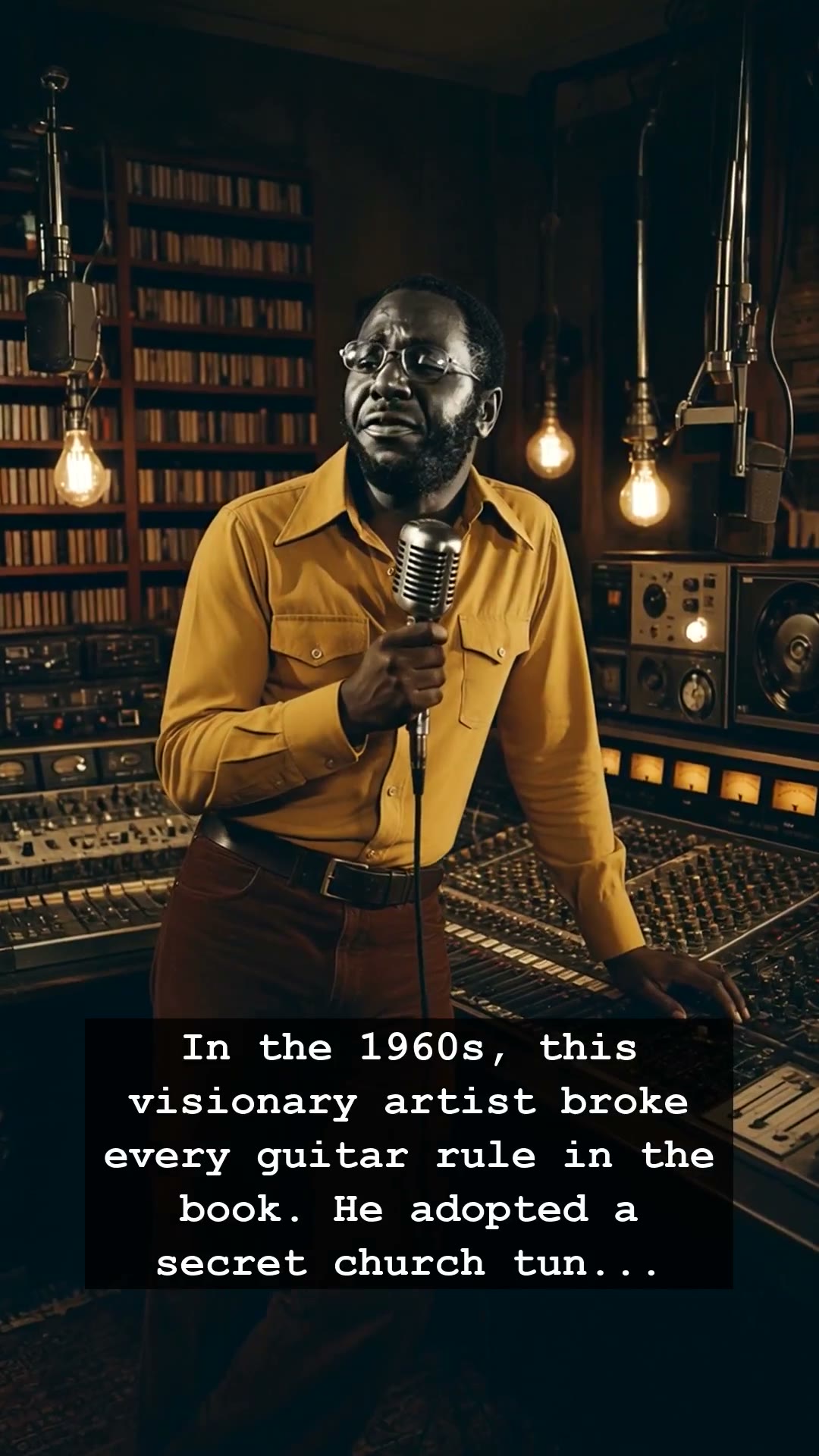
It was the golden era of the 1960s, a time when the hum of a jukebox was the heartbeat of every corner store in Chicago. While the radio waves were crowded with polished pop hits, one man was quietly hiding a sonic weapon in his guitar case. Curtis Mayfield did not just play the guitar; he reinvented it. By adopting a secret, unconventional tuning rooted deep in the traditions of the Black church, he bypassed the standard rigid music theory of his contemporaries to create a shimmering, ethereal sound that would eventually define the Chicago soul movement.
Most guitarists at the time were chasing the sharp, aggressive twang of rock and roll, but Curtis Mayfield was chasing something far more celestial. By tuning his strings to the black keys of a piano, he unlocked a haunting, open resonance that felt like a gospel hymn caught in a summer breeze. This technique was his creative fingerprint. Traditionalists in the studio were often baffled, viewing his methods as technically incorrect, yet the sound he produced was undeniably magnetic. It was a raw, soulful texture that gave his tracks a gravitational pull, grounding the listener in a space where pain and triumph lived side by side.
This sonic shift was more than just a stylistic choice; it was a revolution against the status quo of the industry. As the 1960s churned through civil rights battles and cultural upheavals, Curtis Mayfield became the voice of a generation, using his guitar not just for melody, but as a vessel for social consciousness. His songs, ranging from the smooth grooves of his work with The Impressions to his later cinematic solo career, carried the weight of history. He turned the guitar into a bridge between the sanctuary and the street, proving that music could be both politically biting and incredibly beautiful.
Think back to the days of Woodstock or the rise of the Motown machine; in that crowded landscape, the sound of Curtis Mayfield stood apart because it felt lived-in. It was a sound born from the grit of Chicago’s South Side, yet it possessed the elegance of a symphony. He didn’t rely on the high-gain distortion or the arena-ready theatrics of his peers. Instead, he relied on the delicate, shimmering chime of his open-tuned strings to tell stories of love, struggle, and resilience. It was this authentic, unvarnished approach that allowed his music to transcend the era, influencing everyone from Jimi Hendrix to the modern soul revivalists of today.
The genius of Curtis Mayfield lies in how he made the complex feel simple. Even today, when you listen to those classic tracks, you can still hear the shimmer of that secret tuning—a haunting reminder of a man who refused to play by anyone else’s rules. His legacy remains a cornerstone of American music, a testament to what happens when an artist dares to listen to the whisper of their own soul instead of the loud demands of the industry. Does that iconic, shimmering chord still echo in your memories?