
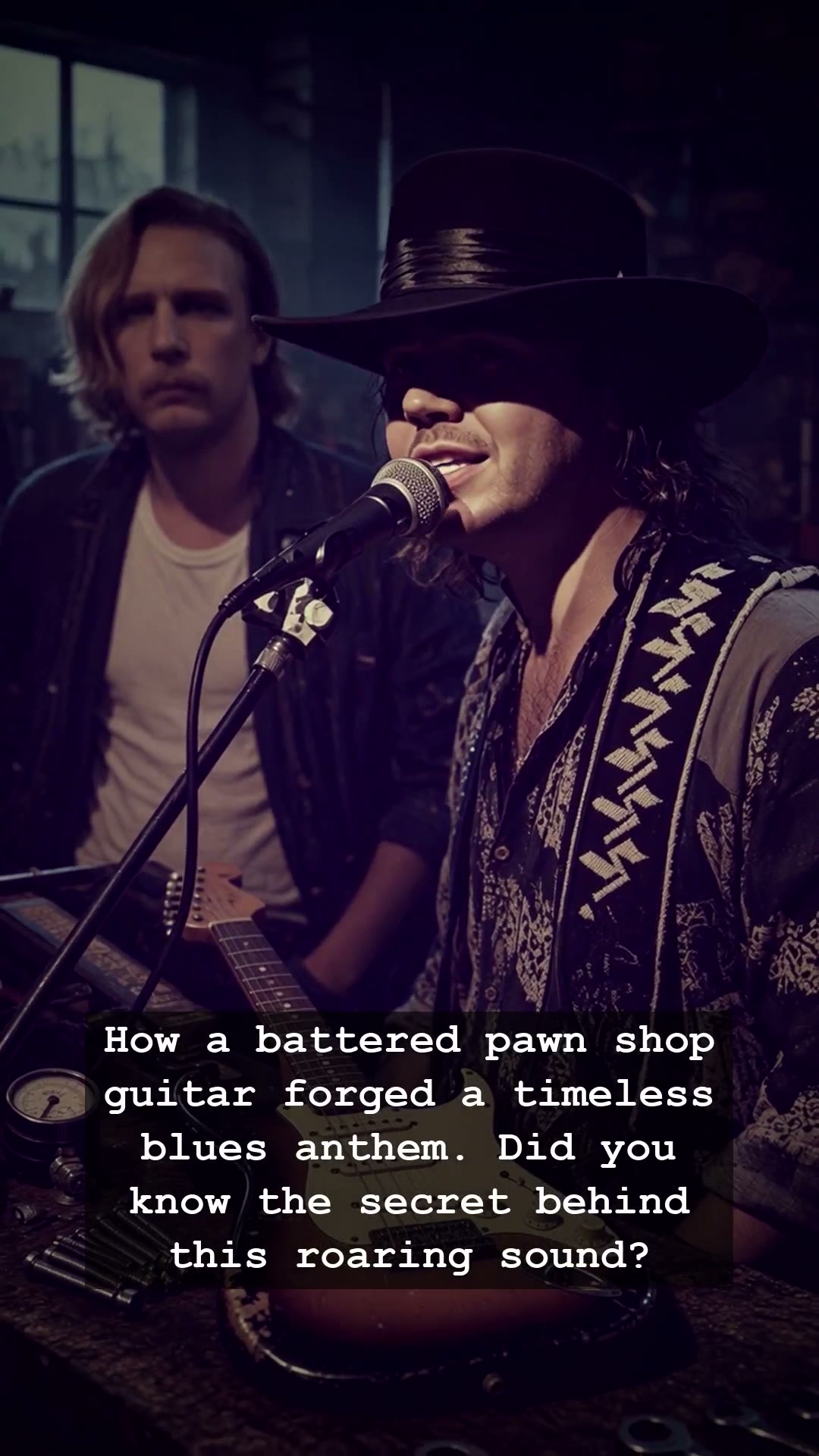
It was 1974 when a young, hungry musician walked into a dingy Texas pawn shop, unaware that he was about to lay his hands on the Holy Grail of blues history. Most guitarists chase the shiny, high-end gear promised by expensive endorsements, but the man who would become the titan of Texas blues, Stevie Ray Vaughan, saw greatness in the wreckage. The instrument in question was a battered, worn-out 1963 Fender Stratocaster. It was ugly, scarred, and arguably ready for the scrap heap, yet when Stevie Ray Vaughan touched those strings, he heard a roar that would eventually define a generation. This wasn’t just a piece of wood and wire; it was the birth of a sound that would reclaim the soul of the blues during the polished, synth-heavy era of the 1980s.
To understand the magic of Stevie Ray Vaughan, you have to picture the era. While the rest of the world was obsessed with the cold, programmed beats of early MTV and the neon glitz of pop radio, Stevie Ray Vaughan arrived like a hurricane. He didn’t rely on digital effects or studio trickery. Instead, he treated his ‘Number One’ Stratocaster with a violent, beautiful intensity. He famously used heavy gauge strings—thick as bridge cables—and tuned them down, creating a raw, physical resistance that would shred any ordinary guitarist’s fingertips. The result was a thick, syrupy, and incredibly powerful tone that felt like a punch to the gut and a caress to the spirit simultaneously.
The secret behind the roaring sound was never in a clean boutique amplifier or a complex pedalboard. It was the friction between his sheer, relentless force and that beat-up, pawn-shop relic. Stevie Ray Vaughan played with a grit that mirrored his own turbulent journey through the dark side of fame and substance abuse. Every note he squeezed out of that guitar felt like a confession. In a time when the music industry was becoming increasingly manufactured, he stood as a stark reminder of what happens when a musician pours their literal blood, sweat, and tears into the wood of their instrument. That worn neck, smoothed by years of his aggressive bending, became an extension of his own nervous system.
Even today, in our world of digital perfection and artificial audio polish, the music of Stevie Ray Vaughan cuts through the noise with haunting clarity. It is the sound of human imperfection turned into high art. When you listen to tracks like Pride and Joy, you aren’t just hearing a blues anthem; you are hearing the echo of a man who found his voice in a neglected bargain-bin guitar. He dragged the blues out of the dusty corners of history and forced the mainstream to pay attention, proving that passion will always outlast trends.
Stevie Ray Vaughan left us far too soon, but the legacy of that battered pawn shop guitar remains etched into the fabric of rock and roll history. It serves as a timeless testament to the idea that the greatest art doesn’t come from perfection, but from the scars we carry. The next time you find yourself lost in the soulful bends of a blues record, take a moment to listen for the ghost of that 1963 Stratocaster. It is still out there, ringing through the ages, reminding us that all you really need to change the world is a little bit of soul and the right beat-up instrument.