
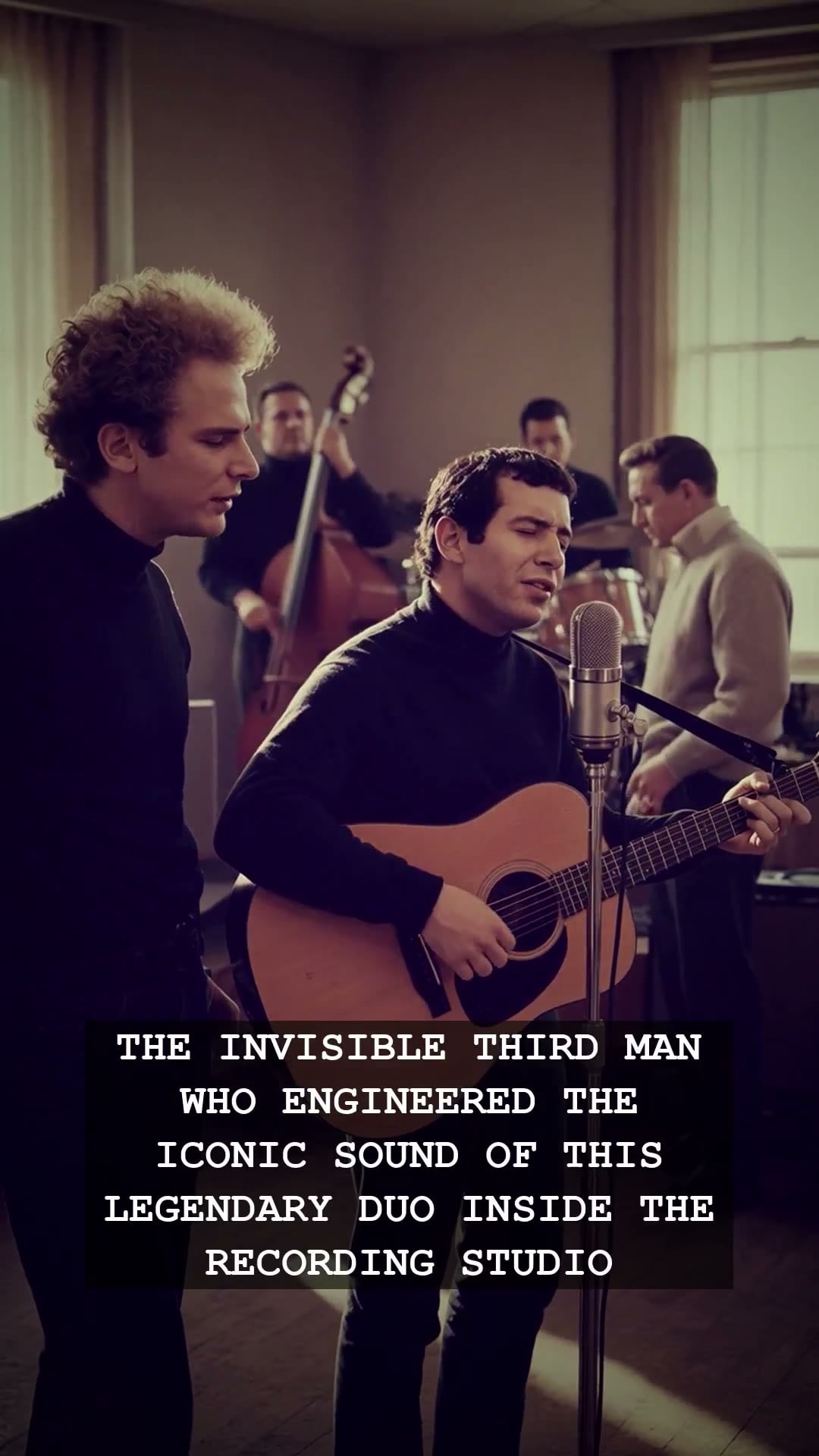
In the golden era of the 1960s, the crystalline harmonies of Simon and Garfunkel defined a generation, drifting from transistor radios and the budding influence of early FM broadcasts. To the world, it was the perfect marriage of Art Garfunkel’s angelic, ethereal tenor and Paul Simon’s gritty, introspective songwriting. Yet, behind the velvet curtain of the recording studio, the duo was often a ticking time bomb of creative friction and mounting ego. Standing in the center of this volatile storm was Roy Halee, the invisible third man whose sonic mastery quite literally engineered the pristine acoustic textures that made Simon and Garfunkel sound like a dream brought to life.
While the public obsessed over the duo’s public persona, the real magic happened in the insulated quiet of the studio. Halee was not just a technician; he was a silent diplomat and an architectural genius of sound. During the sessions for the landmark album Bridge Over Troubled Water, the air was thick with the suffocating pressure of superstardom. The partnership was already fracturing under the weight of their differing ambitions, but when the tape rolled, Halee’s ears were the only thing that mattered. He understood how to capture the intimacy of an acoustic guitar pluck and the soaring reach of a vocal line, creating a soundscape that felt both deeply personal and larger than life.
It is difficult to overstate how much of the Simon and Garfunkel legacy is actually a testament to Halee’s patience. As the duo moved from the folk clubs of Greenwich Village to the massive scale of stadium tours, the tension between them became public fodder. Paul Simon’s perfectionist obsession with lyrics often collided with Art Garfunkel’s desire for sonic grandeur. Halee served as the buffer, the mediator who translated their conflicting artistic visions into the smooth, polished tracks that dominated the late 60s charts. He brought out the warmth that defined the era, turning their personal discord into melodic harmony.
Without Halee’s steady hand at the mixing board, the haunting echoes of The Sound of Silence might have remained a thin, unremarkable recording. Instead, he crafted a dense, atmospheric landscape that paved the way for the folk-rock movement. His work reflects a time when recording was a visceral, tactile craft, long before the digital polish of modern software. To listen to these records today is to hear a snapshot of a fading decade, preserved in the amber of an engineer’s dedication. The tracks feel as though they are breathing, a direct result of the specific, analog techniques employed during those legendary studio sessions.
As we look back at the history of popular music, we often focus on the icons in front of the microphone. But the story of Simon and Garfunkel is incomplete without the man who held the pieces together. The next time you drop the needle on a vintage vinyl and hear that iconic, crisp guitar intro, remember the invisible architect who made it possible. Though the duo would eventually walk away from one another, the soundscapes they left behind remain timeless—a testament to a partnership that, for a few fleeting years, changed the world.