
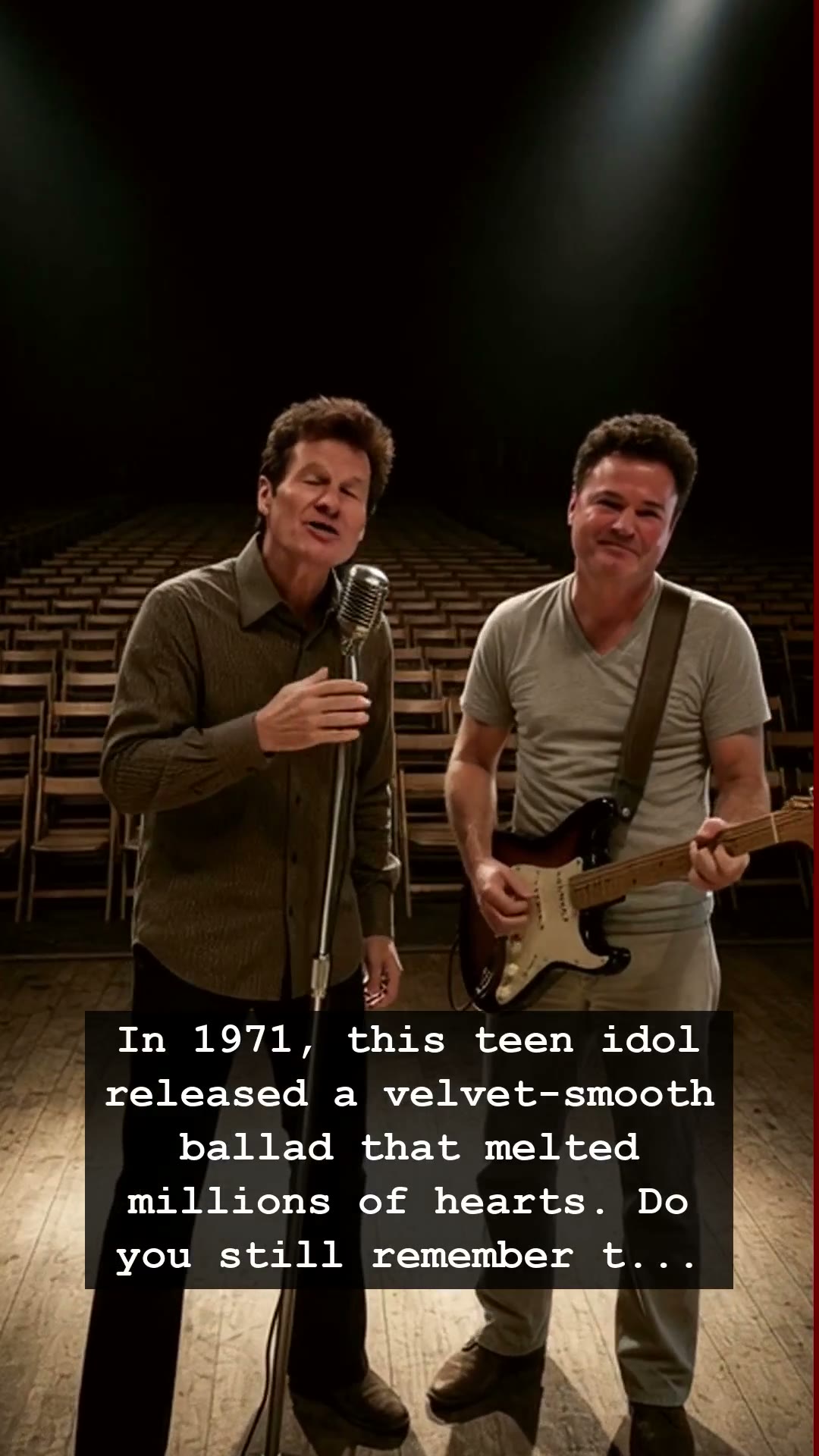
It was 1971, a year when the airwaves were still vibrating with the remnants of psychedelic rock and the dawn of a more polished, synthesized future. Amidst the chaos of a changing America, one voice cut through the noise like a needle on a pristine vinyl record. Donny Osmond, barely a man but already a titan, released a ballad that would serve as the heartbeat for millions of teenagers. With velvet-smooth vocals that seemed to defy the angst of the era, he transformed into the ultimate teen idol. But beneath that meticulously coiffed hair and the dazzling, wholesome smile lay a reality far more complex than the jukebox romances he sang about, a narrative of immense pressure and the fleeting nature of adolescent stardom.
The song, a rendition of ‘Go Away Little Girl,’ became an anthem of teenage longing, echoing from bedroom record players across the suburbs. To the casual listener, Donny Osmond was the boy next door, the face plastered on every Tiger Beat magazine cover, a symbol of pure, unadulterated innocence. However, the music industry of the early seventies was a predatory machine. While fans were busy swooning over his charm, Donny was navigating the suffocating expectations of being the clean-cut poster child for an American family values image that was quickly becoming a relic. The behind-the-scenes drama was a stark contrast to his public persona, filled with grueling studio schedules and the relentless demand to remain the perfect idol in an increasingly rebellious cultural landscape.
Looking back, it is impossible to separate Donny Osmond from the specific cultural fabric of that time. He was a product of the pre-MTV age, a world where the power of a voice and a face could create a national phenomenon overnight. This was a time when the Jukebox was the heartbeat of every diner, and to have a hit record was to be woven into the very soul of the youth. His success was not just about the melody; it was about an escape. For a generation caught between the shadow of the Vietnam War and the encroaching cynicism of the seventies, Donny provided a moment of absolute, sentimental comfort. He offered a sanctuary of harmony in a decade that was rapidly turning toward disco and heavy, distorted arena rock.
Yet, the price of this adoration was profound. The life of a child star is often marked by a loss of self, and Donny Osmond was no exception to the rule. The velvet coating on those records hid the grinding exhaustion of a life spent in the spotlight. When we hear those tracks today, we aren’t just listening to music; we are unlocking a vault of personal memories. The crackle of the record, the smell of old paper, and the visceral feeling of young love all rush back. It is a testament to the power of the era that even decades later, the sweetness of his 1971 peak remains a ghost that still haunts our collective musical memory.
Donny Osmond survived the inevitable shift in musical tastes and the harsh spotlight of his own fame, evolving into a seasoned entertainer who refused to fade away. While his contemporaries in the glam and soul scenes were chasing the next big hit or falling into the traps of the studio lifestyle, Donny maintained a bridge to that golden age of teen pop. Even today, the legacy of his early ballads stands as a reminder of a simpler, albeit more performative, moment in American history. Do you still find yourself drifting back to the melody that defined your teenage years whenever you hear that unmistakable voice?