
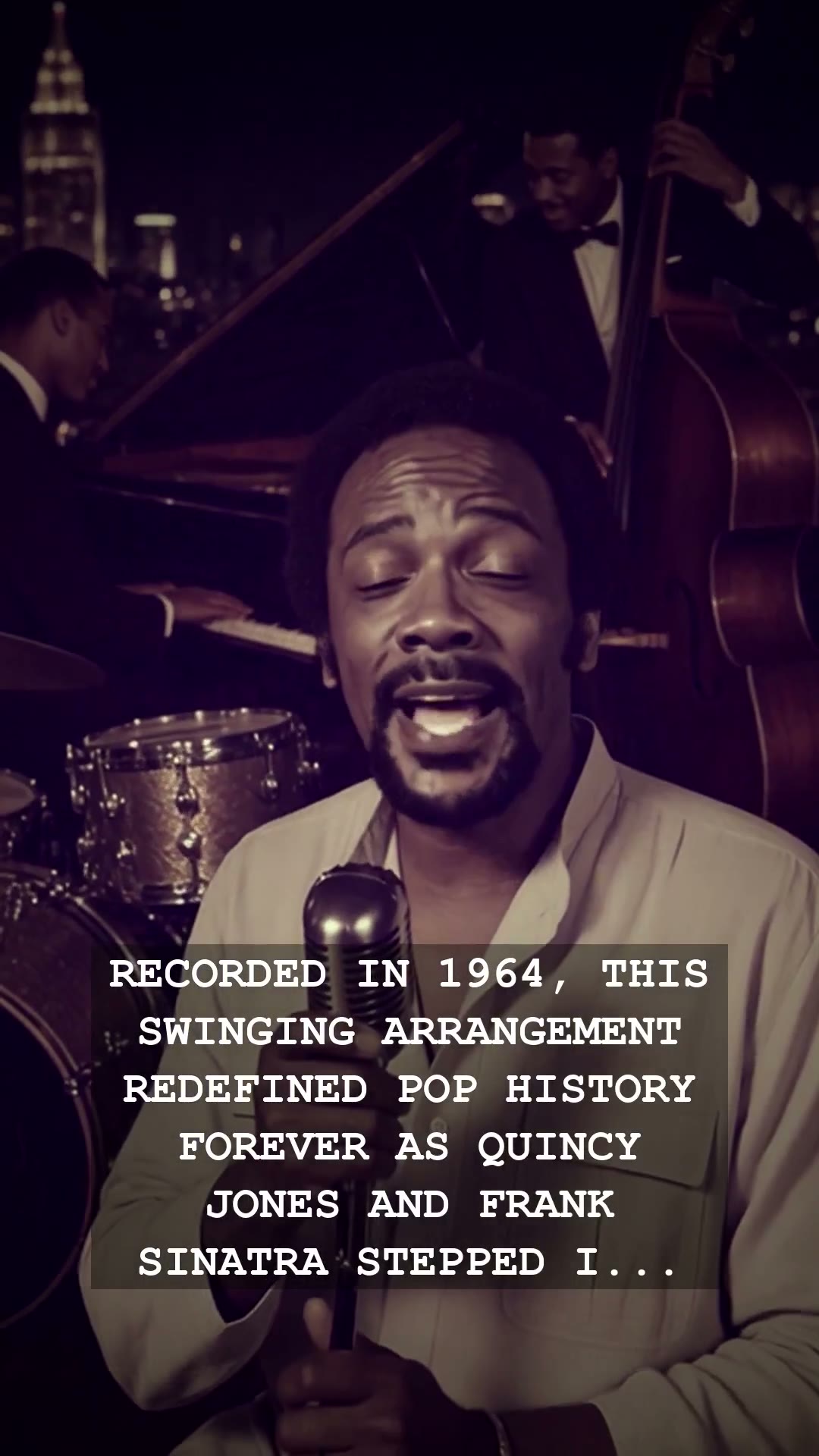
It was 1964, a year defined by the shifting tectonic plates of culture, and inside a dimly lit recording studio, two titans of sound were about to rewrite the history of American music. Frank Sinatra, the undisputed monarch of cool, stood before the microphone, while a young, ambitious Quincy Jones stood at the helm of the arrangement. The air was thick with the scent of expensive cologne and cigarette smoke, a classic atmosphere of a golden-era Jukebox dream. When they finally hit record, they didn’t just capture a song; they captured lightning in a bottle, creating a swinging, brass-heavy masterpiece that would forever define the mid-century sound.
At the time, the music industry was bracing for the British Invasion, but Frank Sinatra remained an immovable force. However, he needed a fresh perspective to keep his sound vital in an era where the world was changing rapidly. Enter Quincy Jones, a man who possessed a visionary ear and the unique ability to marry the complexity of jazz with the accessibility of pop. Their collaboration was not merely a professional contract; it was a collision of two worlds. Sinatra provided the effortless, velvet-toned charisma, while Quincy Jones introduced a slick, modern sophistication that turned every arrangement into a cinematic experience.
To listen to those 1964 tapes today is to be transported back to a time of sharp suits and late-night studio sessions. You can almost hear the tension and the electricity in the room as they pushed each other toward perfection. It was a time when the human element was the only thing that mattered—no digital fixes, just raw talent meeting meticulous preparation. Quincy Jones famously described Sinatra as a man who demanded absolute focus, and in return, the singer delivered performances that felt like a private conversation with the listener, despite the massive orchestral swell behind him.
This era was the final peak of the classic American pop tradition before the psychedelic rock revolution completely swept the charts. While the youth were starting to tune into the radio in search of something louder and grittier, Sinatra and Quincy Jones were busy perfecting the art of the swing. Their partnership proved that even as times shifted toward the age of television and MTV, there would always be a place for the impeccable, high-fidelity arrangements that they pioneered. It was the last great stand of an era that valued musical craftsmanship above all else.
The legacy of that 1964 meeting resonates today, reminding us that true greatness is never an accident. It is the result of restless creators refusing to settle for the status quo. Even decades later, the collaboration between Frank Sinatra and Quincy Jones stands as a towering monument to a time when music felt like a grand, sophisticated adventure. As we look back through the lens of nostalgia, we aren’t just listening to notes on a page; we are hearing the heartbeat of a legend, immortalized in the grooves of a record that truly swung for the moon.