
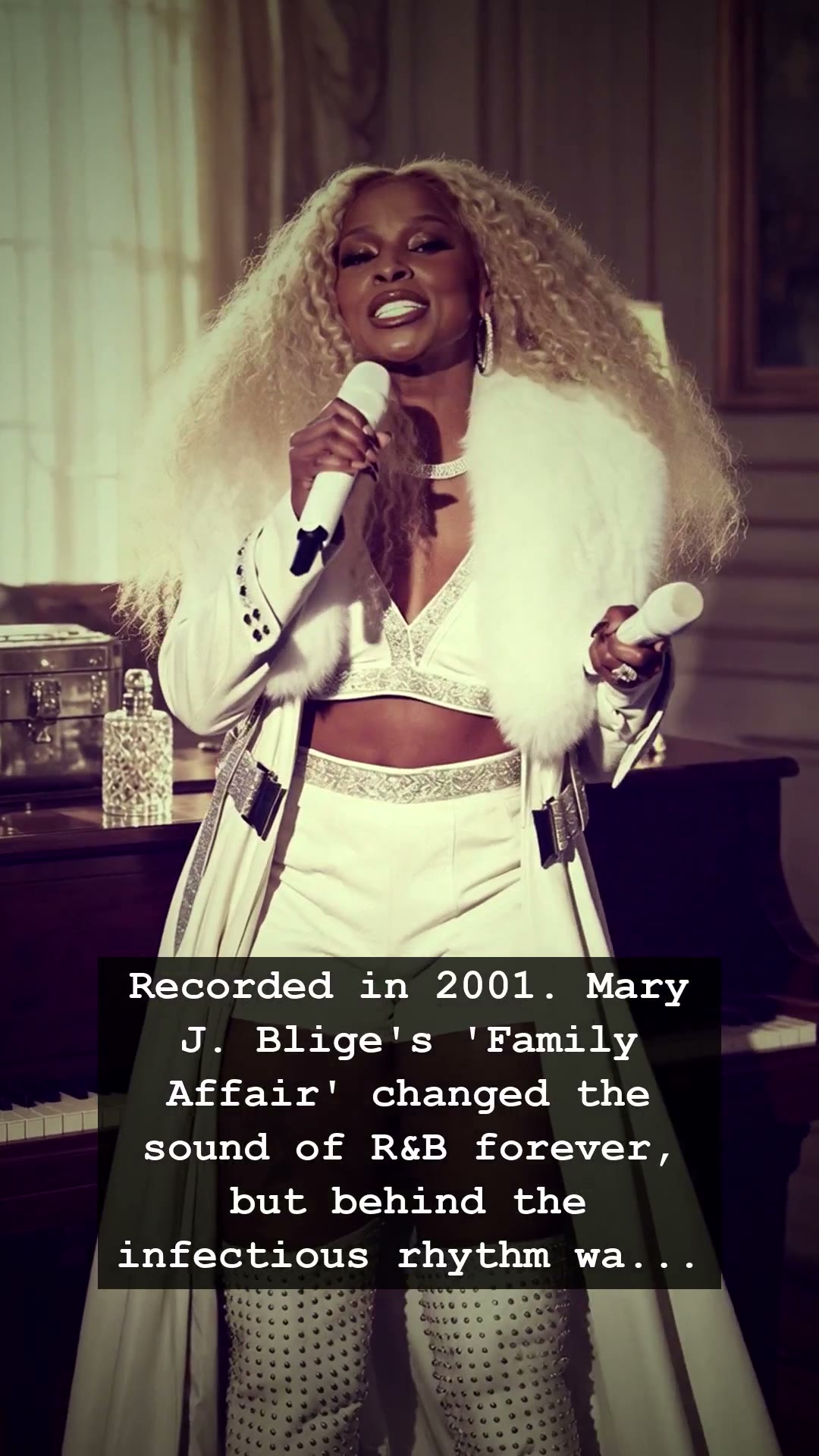
It was 2001, and the world felt like it was shifting beneath our feet. As the dust settled on the neon-drenched chaos of the nineties, a new sonic landscape was emerging. Amidst the rapid evolution of MTV and the fading influence of the traditional R&B power ballad, one track hit the airwaves with the force of a tectonic plate shift. That song was Family Affair. To the casual listener, it was just another infectious club beat, a Dr. Dre production destined to dominate dance floors. But for Mary J. Blige, this was not just a hit—it was a battle cry for survival, crafted during one of the most tumultuous periods of her legendary life.
At the turn of the millennium, Mary J. Blige was already a titan, yet she was fighting demons that would have crushed a lesser soul. Behind the scenes, the Queen of Hip-Hop Soul was navigating the wreckage of toxic relationships and the suffocating pressure of a fame that demanded perfection while she was spiraling in private. When she entered the studio with Dr. Dre, the energy was thick with tension. Dre’s heavy, crisp basslines were the perfect canvas for a woman who was tired of hiding her pain. Every note of Family Affair wasn’t just a recording; it was a desperate attempt to reclaim her autonomy in an industry that had historically chewed up and spat out talent like her.
What made the track so revolutionary was its jarring, minimalist grit. It didn’t need the ornate production of the previous decade. Mary J. Blige stripped away the excess, delivering vocals that were raw, unfiltered, and deeply human. While the world danced to the beat, those who looked closely could hear the exhaustion and the resilience in her voice. It was a paradox that defined the era: the sound of a party that served as a camouflage for the internal war she was waging. This wasn’t just music; it was a testament to the resilience of a woman refusing to let her history define her future.
The legacy of this moment is undeniable. By transforming a club anthem into a manifesto of survival, Mary J. Blige cemented her status as an icon who transcended genres. The song remains a bridge between the classic soul of our past and the aggressive, honest production that would come to define modern music. It reminds us of a time when the Jukebox and the Walkman were being replaced by digital revolutions, yet the hunger for authentic storytelling remained the same. Mary J. Blige gave us the beat, but she also gave us her soul.
Even today, whenever the opening chords of that iconic track hit the speakers, there is a collective recognition of the struggle it represents. It is the sound of moving forward when the world tells you to stay still. As we look back at the golden eras of our musical history, we realize that the most powerful songs are often the ones born from the hardest fights. Mary J. Blige did more than record a hit in 2001; she reminded us all that no matter the chaos, we are capable of finding our own rhythm again.