
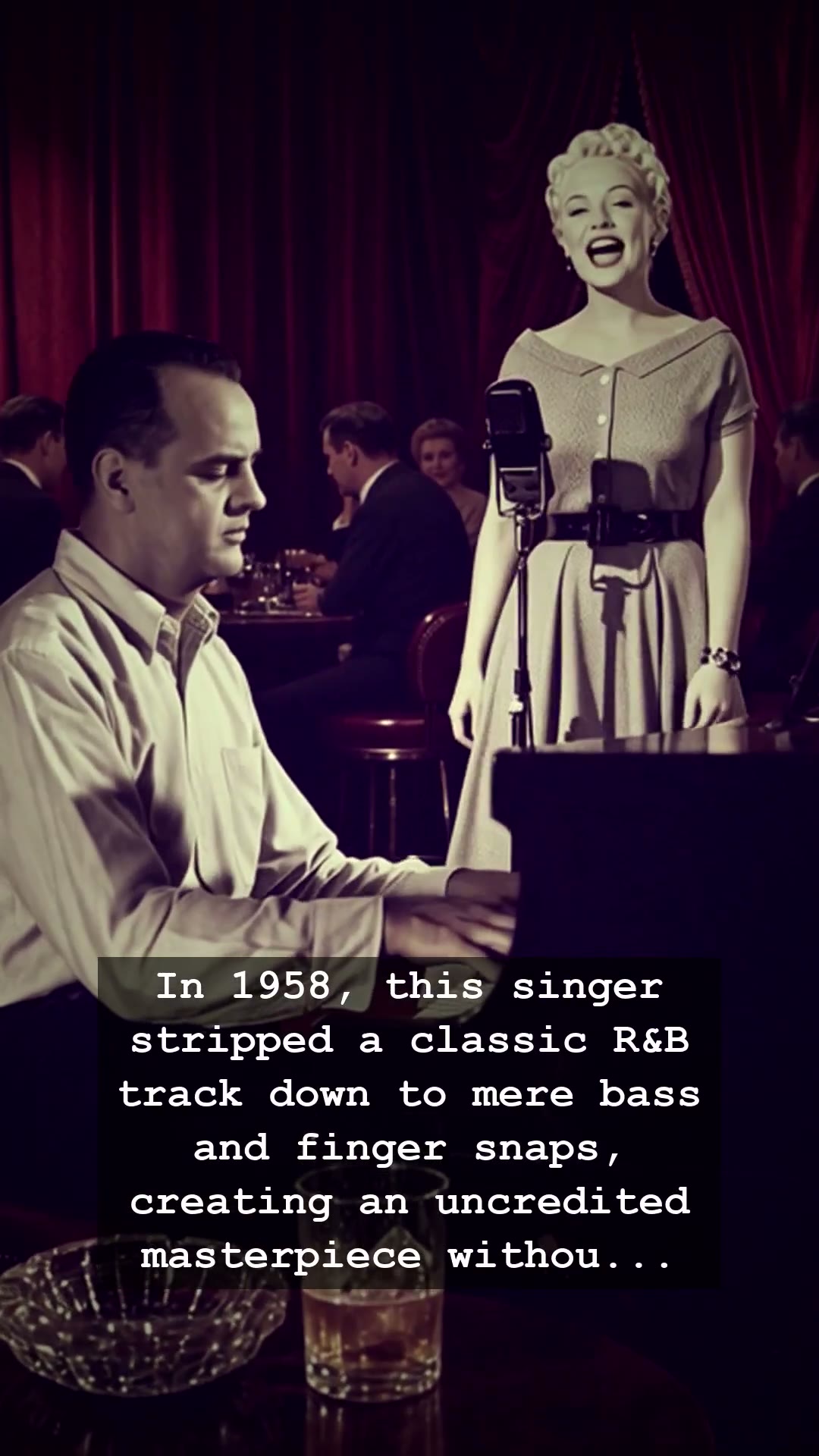
The year was 1958, a time when the jukebox was the heartbeat of every roadside diner and the crackle of a vinyl record felt like a sacred ritual. Amidst the polished pop production of the era, one woman dared to strip the world of sound down to its very skeleton. Peggy Lee, a chanteuse known for her velvet voice and piercingly intelligent eyes, walked into Capitol Records and did something that would baffle industry executives and change the course of pop music forever. She took a track that had been done before, removed the orchestration, and left behind nothing but a pulsing bass line and the sharp, rhythmic snap of fingers. It was a masterclass in minimalism that defied every rule of the decade.
The song was Fever, a track that had originally been recorded as a frantic R&B number, yet in the hands of Peggy Lee, it transformed into a smoldering, dangerous confession. There were no soaring orchestral arrangements or wall-of-sound production tricks to hide behind. Just the cool, detached irony of her delivery and that iconic, infectious snap. Curiously, despite her radical reinvention, Peggy Lee did not receive a songwriter credit for the additional verses she penned, which added a layer of gritty, existential sass that wasn’t in the original. It was an uncredited masterpiece that proved she was far more than just a performer; she was an architect of atmosphere, capable of holding an entire room captive with just a breath.
To understand the magnitude of this moment, one must remember the culture of the late fifties. This was a time when television was beginning to loom large and rock and roll was rattling the cages of the establishment. In this high-stakes environment, Peggy Lee brought a sophisticated, noir-inspired edge that felt like a glimpse into a smoke-filled lounge at three in the morning. She understood that silence was just as musical as a symphony, and by peeling back the layers, she allowed the tension of the song to become a physical presence. It wasn’t just a hit record; it was a psychological experience that would eventually influence generations of minimalist artists.
Yet, the story of Peggy Lee is as much about the shadow of fame as it is about her genius. Behind the cool exterior of her public persona lay the internal struggles common to many mid-century icons who were pushed to the brink by the relentless demands of the studio system. She navigated a world where artists were often treated as products, yet she remained fiercely protective of her creative vision. Her version of Fever remains a testament to the power of artistic conviction, a haunting reminder that sometimes, less is truly more.
Today, we look back at that 1958 recording with a sense of wonder. Whether it is played on a high-fidelity turntable or through modern speakers, the snap still rings out with the same chilling clarity. Peggy Lee reminds us that true legendary status isn’t about how loud you shout, but about the secrets you hold in the spaces between the notes. As we explore the annals of music history, her influence remains a glowing ember, refusing to be extinguished by the passage of time. Next time you hear those iconic finger snaps, listen closely; you are hearing the heartbeat of a woman who shaped the soul of American pop.