
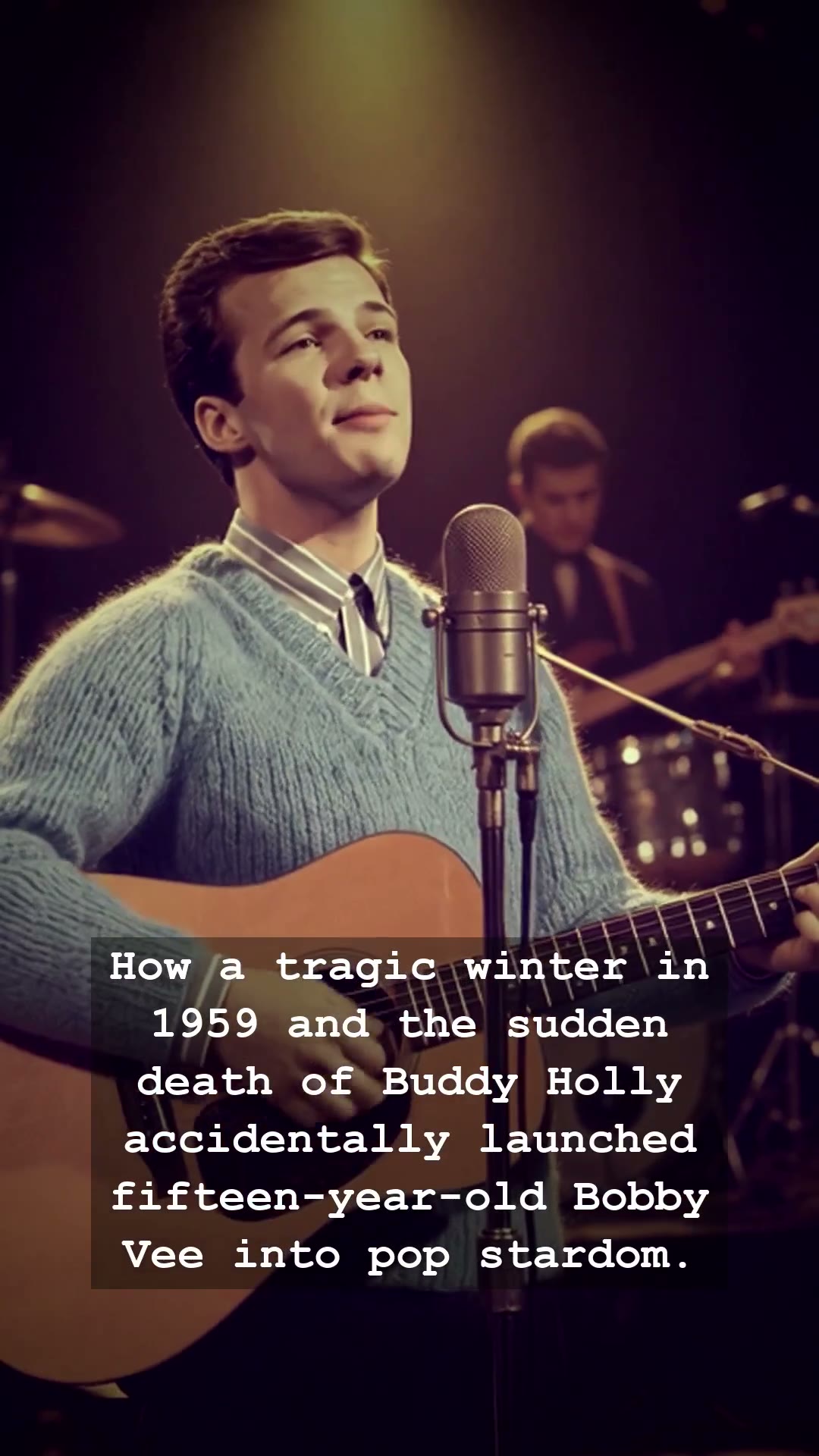
It was February 3, 1959, a date forever etched in the collective psyche of music history as the day the music died. When a Beechcraft Bonanza plane spiraled into a frozen Iowa cornfield, it didn’t just take the lives of Buddy Holly, Ritchie Valens, and The Big Bopper; it tore a hole in the fabric of the American dream. Amidst the shock and the sudden, deafening silence across the airwaves, a local concert in Moorhead, Minnesota, was left in absolute chaos. The headline act was gone, and the local radio stations were desperately calling for talent to fill the void. This is where fifteen-year-old Robert Velline, soon to be known as Bobby Vee, stepped into the spotlight of destiny.
At the time, Bobby Vee was nothing more than a skinny kid with a guitar and a handful of friends who barely knew three chords. They didn’t even have a name for their band, but they did have the audacity of youth. When the call went out for performers, young Bobby Vee grabbed his friends and marched to the stage, performing under the name The Shadows. It was a chaotic, trembling debut born out of tragedy, yet it captured a raw energy that the audience, still mourning their lost icons, desperately needed. That freezing night in a dimly lit hall, the transition from local schoolboy to national sensation began with a single, trembling set.
The story of Bobby Vee is one of those cinematic accidents that feels scripted by fate. He wasn’t looking to replace a legend; he was simply filling a space left behind by a catastrophe. The irony is palpable: the very plane crash that devastated the world of rock and roll paved the way for a teen idol who would go on to define the early 1960s with hits like Rubber Ball and Take Good Care of My Baby. While the tragedy of 1959 represents the death of innocence for the rock and roll generation, Bobby Vee represented the resilience of the music itself, proving that even when the heroes fall, the melody finds a way to endure.
Beyond the charts and the screaming teenagers, Bobby Vee remained a symbol of that transitional era. He bridged the gap between the rough-and-tumble rockabilly energy of the late 50s and the polished pop production that would eventually take over the airwaves. Every time you drop a needle on a vinyl record from that time, you can almost feel the chill of that Minnesota winter and the nervous hum of a fifteen-year-old kid clutching his guitar, standing in the shadow of giants, waiting to write his own history.
Decades later, the legacy of Bobby Vee reminds us how fragile the industry of fame truly is. We often forget that behind every major hit was a human story of survival and serendipity. Whether you remember the hum of the jukebox or the static on your first transistor radio, the music of this era remains a time capsule of our shared past. Bobby Vee wasn’t just an accident of history; he was the heartbeat that kept playing when the world thought the music had finally stopped.