
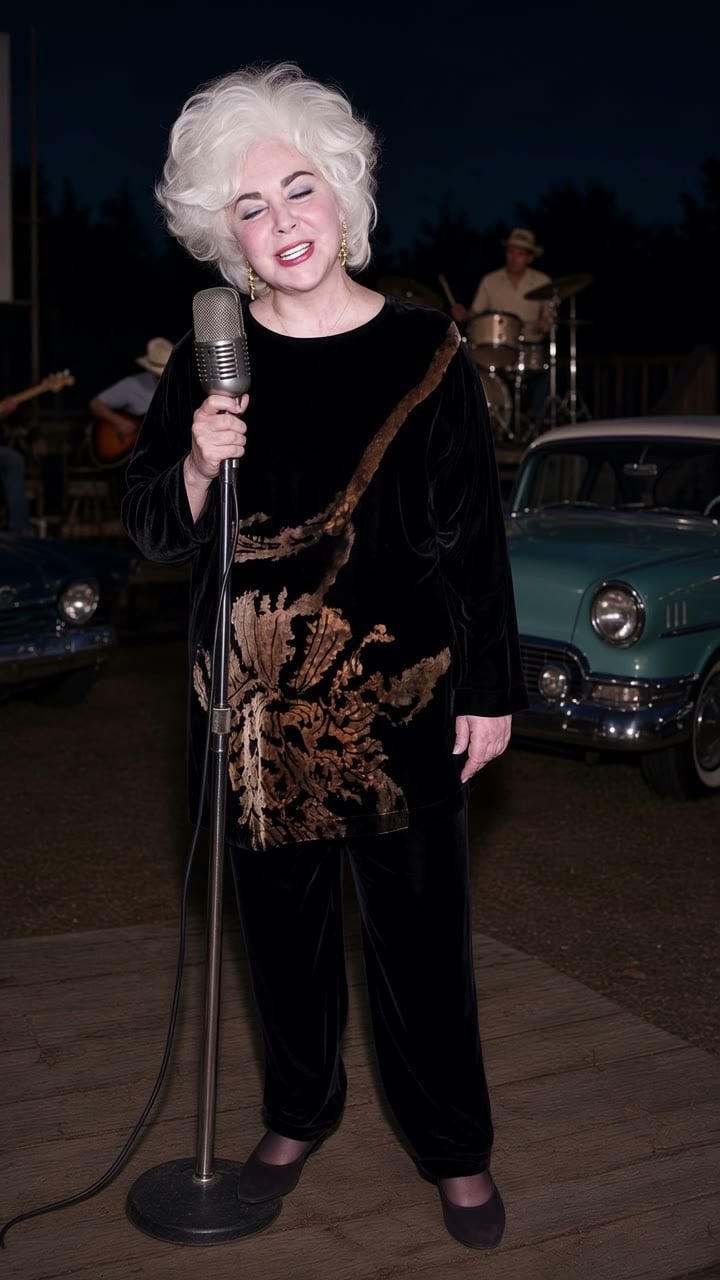
There is a specific kind of magic found in the flickering grain of vintage 35mm film, a quality that captures not just light, but the very essence of the human spirit. For those of us who grew up in the golden age of cinema, few names evoke as much awe and admiration as Elizabeth Taylor. She was the crown jewel of Hollywood, a woman whose violet eyes seemed to hold the secrets of every character she inhabited. Yet, her most profound performance did not take place under the bright lights of a movie set, but on the stage of the 1961 Academy Awards, a moment that remains etched in the hearts of film lovers across generations.
To understand the weight of that evening, one must look back at the harrowing months that preceded it. In early 1961, the world held its breath as Elizabeth Taylor fought a life-threatening battle with severe pneumonia. She was more than a star; she was a cultural icon whose presence on the silver screen defined the era. When she stood on the brink of mortality, fans worldwide felt a collective vulnerability. The fragility of such a legendary figure reminded us that even the brightest stars are tethered to the same human struggles as the rest of us. Her recovery was nothing short of miraculous, a testament to a resilience that matched her undeniable talent.
When she stepped onto the Oscar stage that night to accept the award for Best Actress, the atmosphere in the room shifted. It was not merely an industry celebration; it was a profound moment of collective relief and profound respect. Seeing her, radiant and composed despite the recent shadow of illness, remains one of the most emotional highlights of the Golden Age of Hollywood. Her tearful victory was a bridge between the myth of the untouchable celebrity and the reality of a woman who had fought to return to the art she lived for. It was a victory for the tenacity of the human spirit.
Throughout her illustrious career, from her early days as a child star to her transformation into a serious dramatic powerhouse, Elizabeth Taylor mastered the art of screen presence. She did not just act; she embodied. Whether navigating the complexities of the Method Acting era or holding her own in the lavish blockbusters that defined mid-century cinema, she brought a raw, unvarnished truth to every frame. Her work remains a cornerstone of American culture, serving as a reminder of a time when movie stars were larger than life, yet possessed a grounding humanity that feels rare in today’s landscape.
Even now, watching clips of that 1961 night brings back a wave of nostalgia for a simpler, perhaps more earnest, era of entertainment. Elizabeth Taylor serves as a symbol of that transition—a bridge between the classic studio system and the modern age. Her legacy is not just in the VHS tapes lining our shelves or the films that play on late-night cable, but in the memory of a woman who could command a room with a single glance. As we look back at her journey, we are reminded why we fell in love with the movies in the first place: for those fleeting, perfect moments where life and art become indistinguishable. May we always remember her with the same grace and adoration she brought to the silver screen.