
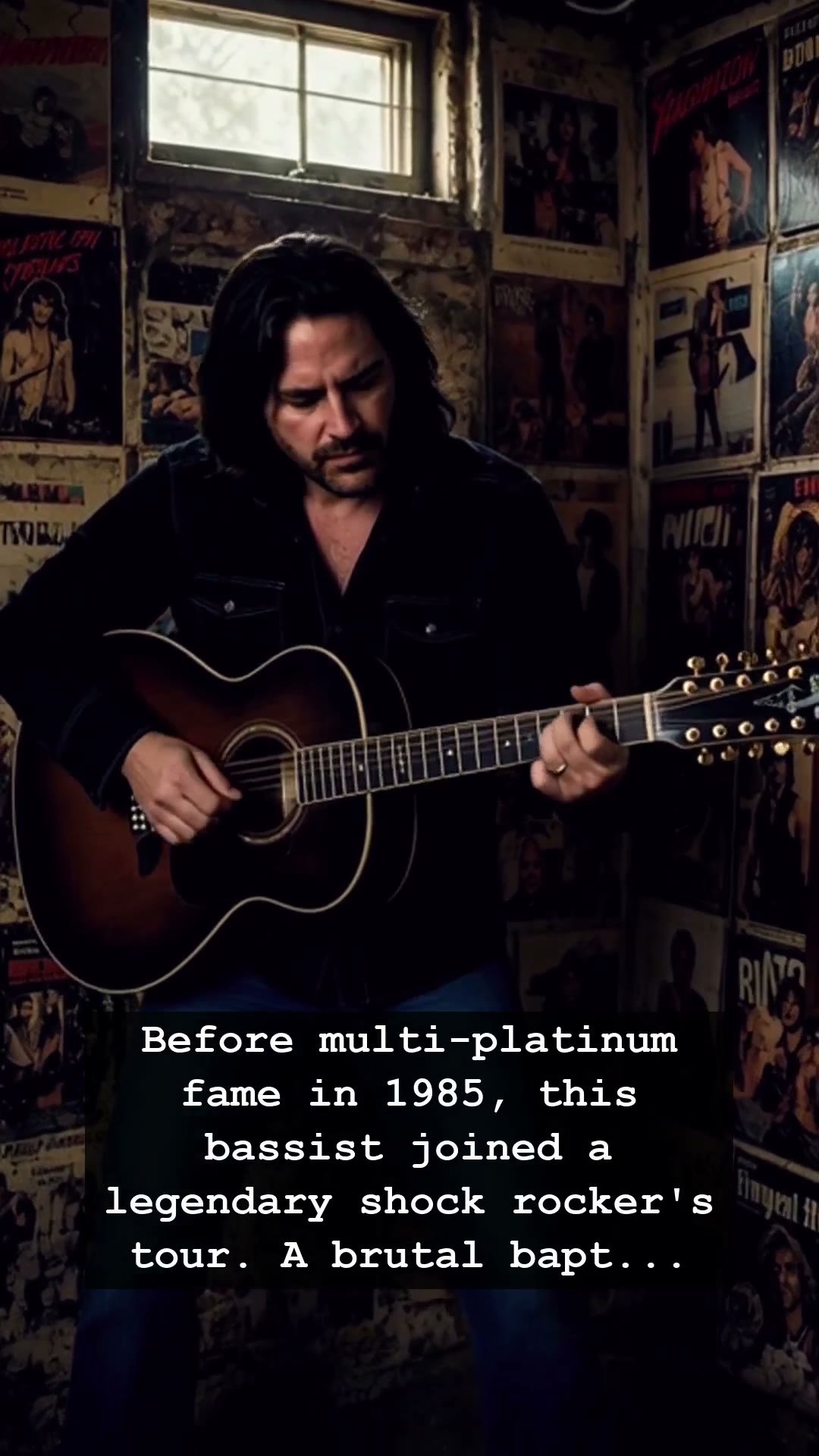
In the neon-soaked chaos of 1985, the rock world was a place where danger was just as important as the melody. Before he became the poster boy of multi-platinum hard rock and the face of his eponymous band, a young, virtuosic Kip Winger was learning the ropes in the most terrifying school of rock imaginable. Long before his signature sound climbed the Billboard charts, he was thrust into the dark, theatrical, and unpredictable world of the legendary shock rocker Alice Cooper. This wasn’t just a touring gig; it was a baptism by fire that would forever shape the career of one of the 80s most enigmatic bassists.
To understand the magnitude of this trial, one must look at the era. This was a time when the spectacle of a live show often outweighed the music itself, and Alice Cooper was the undisputed king of grand-guignol stagecraft. When Kip Winger joined the lineup, he stepped into a whirlwind of guillotines, fake blood, and relentless pyrotechnics. For a musician with high technical aspirations, the tour was a disorienting blend of musical discipline and theatrical madness. Every night on stage, Kip Winger had to lock in his bass lines while navigating a barrage of horror-themed props that could easily end a performance—or a career—in a single misstep.
This grueling experience provided the ultimate contrast to the polished world of late 80s arena rock. While his peers were perfecting their hair and spandex, Kip Winger was cutting his teeth in the trenches of shock rock. The psychological pressure of keeping rhythm amidst simulated gore and chaotic stage movements sharpened his resolve. It taught him that rock and roll wasn’t just about the notes played; it was about the atmosphere created and the command one held over an audience, no matter how wild the surroundings were. The discipline he cultivated under Cooper’s watchful eye became the bedrock of his future success.
When he eventually broke out on his own, the transformation was evident. The boy who once navigated Alice Cooper’s haunted stage had evolved into a seasoned songwriter and a commanding frontman. The hits that followed in the late 80s carried a layer of depth and precision that separated him from the fleeting trends of the era. He brought an intellectual approach to the genre, proving that one could balance the swagger of a rock star with the refined sensibilities of a conservatory-trained musician. His journey from a supporting player in a theatrical nightmare to a headline act is a testament to the transformative power of those early, gritty years.
Today, looking back at that volatile period, the story of Kip Winger serves as a reminder of a bygone era. It was a time when musicians truly earned their stripes on the road, facing trials that would intimidate even the bravest performers today. We still listen to those classic tracks, hearing the echoes of that formative, high-pressure environment. It is a story of grit, survival, and the enduring spirit of rock that still resonates with every fan who remembers the golden age of stadium anthems. Do you still remember where you were when those iconic 80s riffs first hit the radio?