
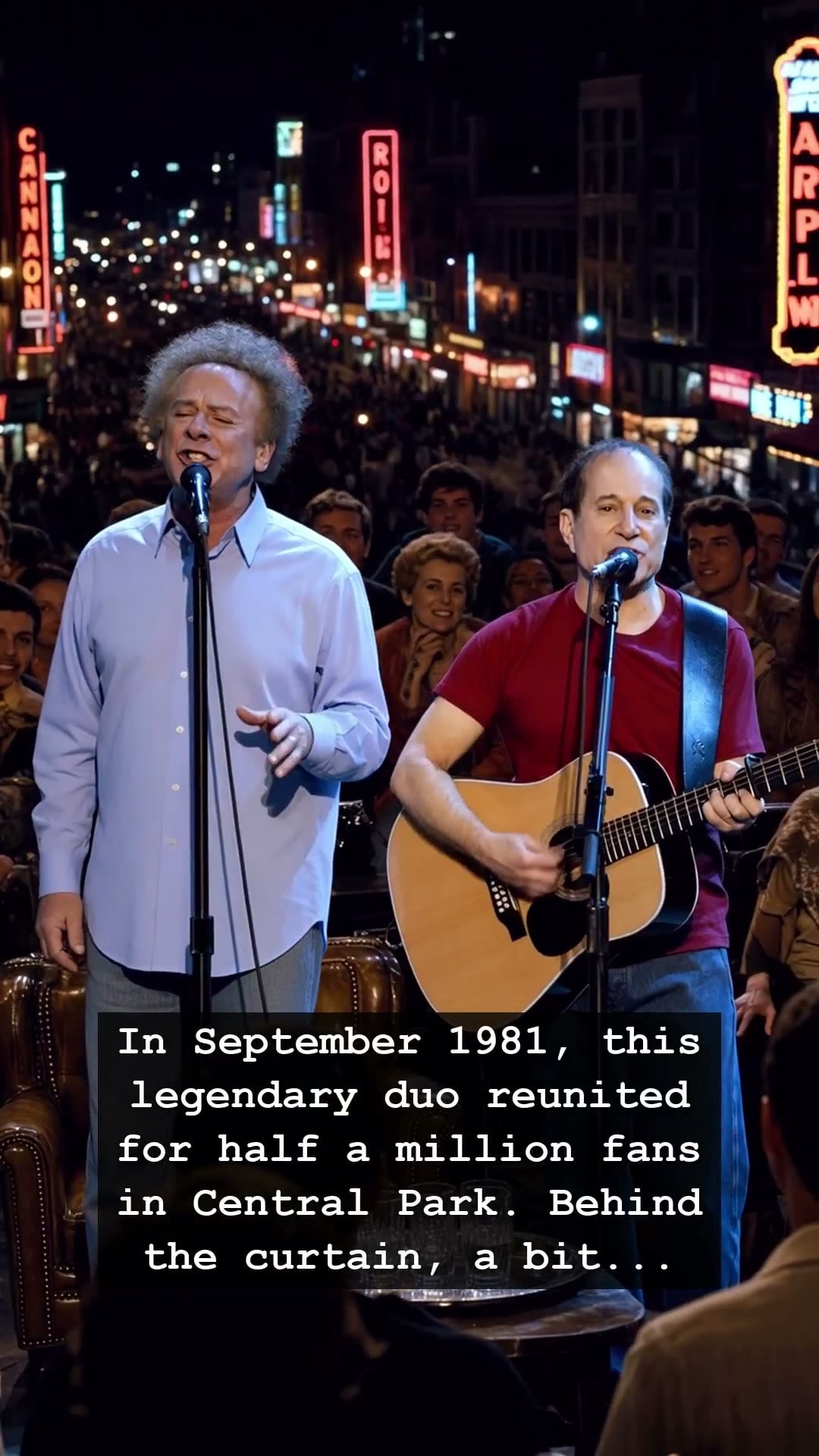
It was a crisp September evening in 1981, and the Great Lawn of Central Park was transformed into a sea of half a million souls. The air hummed with the electric anticipation of an era defined by vinyl records and the raw, acoustic intimacy of folk-rock. Paul Simon and Art Garfunkel, the iconic voices of a generation, were standing side by side once again. To the crowd, it was a moment of pure, transcendent harmony—a musical reconciliation that felt like a healing balm for the cultural wounds of the seventies. But beneath the soft glow of the stage lights, the reality was a far cry from the serene melodies of The Sound of Silence. The truth was that the reunion almost never happened, held hostage by years of resentment, unchecked egos, and a backstage atmosphere so toxic it felt like a powder keg ready to explode.
For those who grew up in the shadow of the Vietnam War and the idealism of the sixties, Simon and Garfunkel were more than just a duo; they were the soundtrack to a changing world. Yet, the friction between the two had been building long before they stepped into the park. By the time the seventies gave way to the neon-soaked excess of the MTV era, their partnership had curdled into a cold, transactional rivalry. Behind the curtains, the rehearsal process was a theater of war. They weren’t just arguing over track lists or stage cues; they were fighting a silent, bitter battle for dominance that had been festering since their 1970 breakup. Sources close to the production described screaming matches that silenced the crew, with Paul Simon and Art Garfunkel frequently on the verge of walking out for good.
The irony of the evening was palpable. As they belted out Bridge Over Troubled Water, the audience wept at the sheer beauty of their vocal blend, unaware that the men on stage were barely speaking to one another off-mic. The tension was an unwanted guest at their own party, casting a long, jagged shadow over their pristine harmonies. It was a classic case of the high-stakes pressure that defined the legendary arena rock era, where the public image of a band often stood in stark, tragic contrast to their internal reality. They were professionals, however, and for those ninety minutes, they locked their personal grievances away, delivering a performance that redefined the scale of a live concert.
Looking back, the Central Park concert stands as a monument to the endurance of music over the frailty of human relationships. It remains a polarizing chapter in their legacy—a night of immense triumph tainted by private misery. Even today, the story of Simon and Garfunkel serves as a poignant reminder that even the most beautiful art can be born from the most fractured circumstances. Their music has survived the decades, outlasting the drama, the egos, and the bitter arguments that nearly tore their final bow apart. We still listen because the songs speak a truth that the artists themselves often struggled to voice, proving that while musicians may drift away, the melodies they leave behind never truly leave us.