
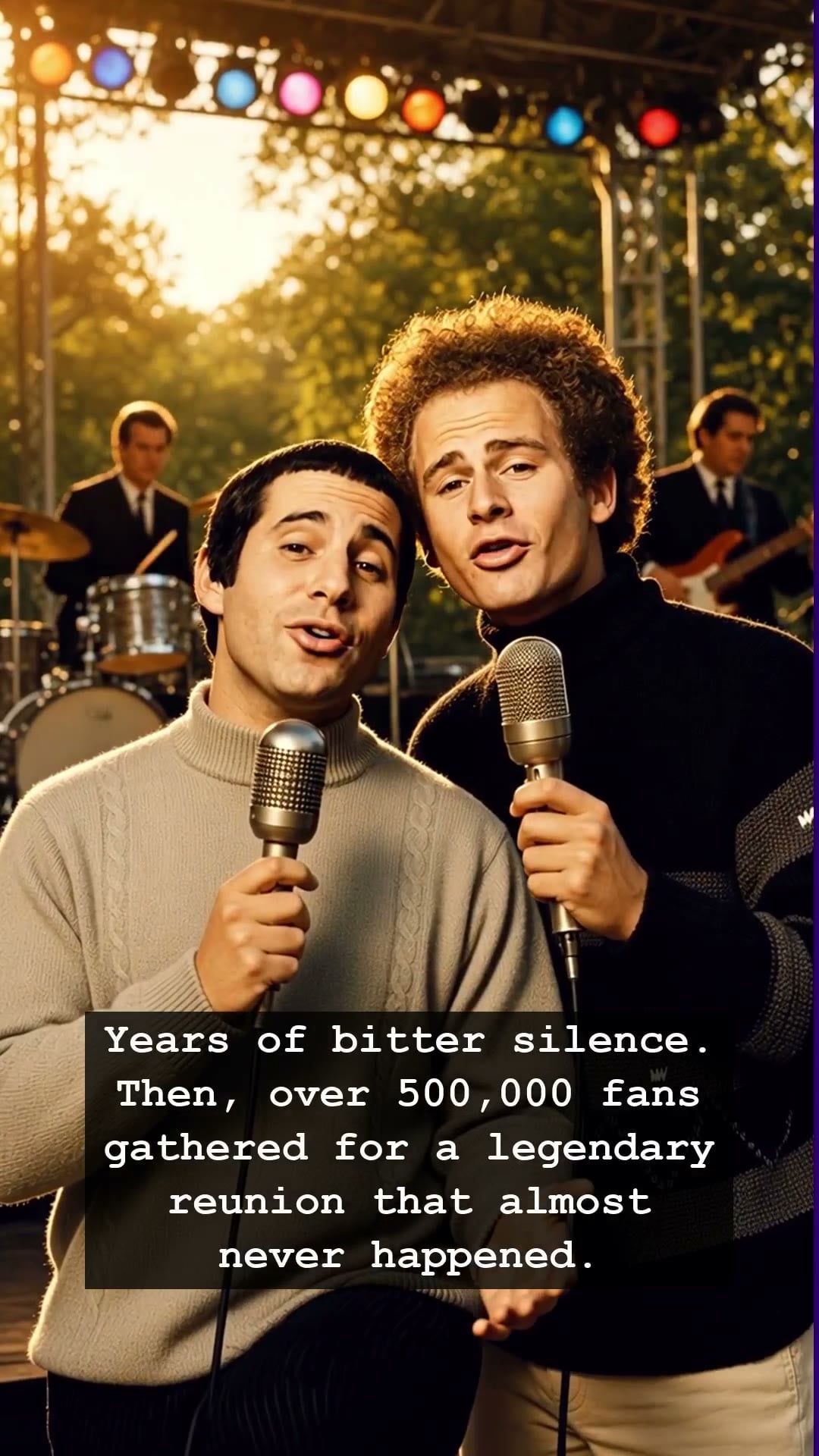
It was not just a concert; it was an act of public healing for a generation that had grown up with the golden harmonies of Simon and Garfunkel. On a crisp September evening in 1981, the air in New York City’s Central Park felt thick with anticipation. More than half a million people stood shoulder-to-shoulder, waiting for a miracle. They were not just there for the music; they were there to see if two men who had spent a decade in bitter, icy silence could actually look each other in the eye. When Paul Simon and Art Garfunkel finally stepped onto the stage, the sheer weight of their history felt heavy enough to stop time itself.
The fractures between the duo were not merely professional differences; they were deep-seated personal wounds. Since their split in 1970 at the height of their success, the once-inseparable childhood friends had drifted into separate orbits of ego, creative control, and unresolved resentment. For years, the silence between them was as loud as their biggest hits. Fans who had spent the 1970s listening to Bridge Over Troubled Water on their vinyl players and cassette decks felt the loss of that harmony personally. The era that had moved from the idealism of the sixties to the gritty, neon-soaked reality of the early eighties seemed to demand a return to something grounded, and who better to provide that anchor than the voices that defined a decade?
As the show began, the tension on stage was palpable. Paul Simon, the architectural songwriter, and Art Garfunkel, the angelic voice, moved with a tentative, almost nervous energy. There were moments during the performance where the cracks showed—a missed cue, a sharp look, the physical distance maintained between them. Yet, as the opening notes of The Sound of Silence drifted over the Great Lawn, something shifted. The massive crowd, a sea of faces illuminated by flickering lighters, created an atmosphere of collective catharsis. It was as if the half-million souls gathered there were willing the two men to mend the bond that had been severed so long ago.
The concert became a pivotal moment in American music history, capturing the zeitgeist of a world that desperately wanted to believe in reconciliation. For those of us who remember the era, the sight of Simon and Garfunkel standing together amidst the backdrop of a changing New York was a powerful reminder of how art can transcend the most stubborn of human egos. It was a fleeting, fragile truce that captured the fragility of fame and the enduring power of a song to hold a mirror to our own complicated lives.
Today, the legacy of that night remains a fascinating study in the cost of artistic genius. It reminds us that behind the most pristine harmonies often lies a landscape of conflict and pain. That evening in Central Park was more than a performance; it was a complex human drama set to music, proving that even the most fractured bonds might find a brief, haunting moment of grace under the lights. Do you still remember where you were when the harmonies finally returned?