
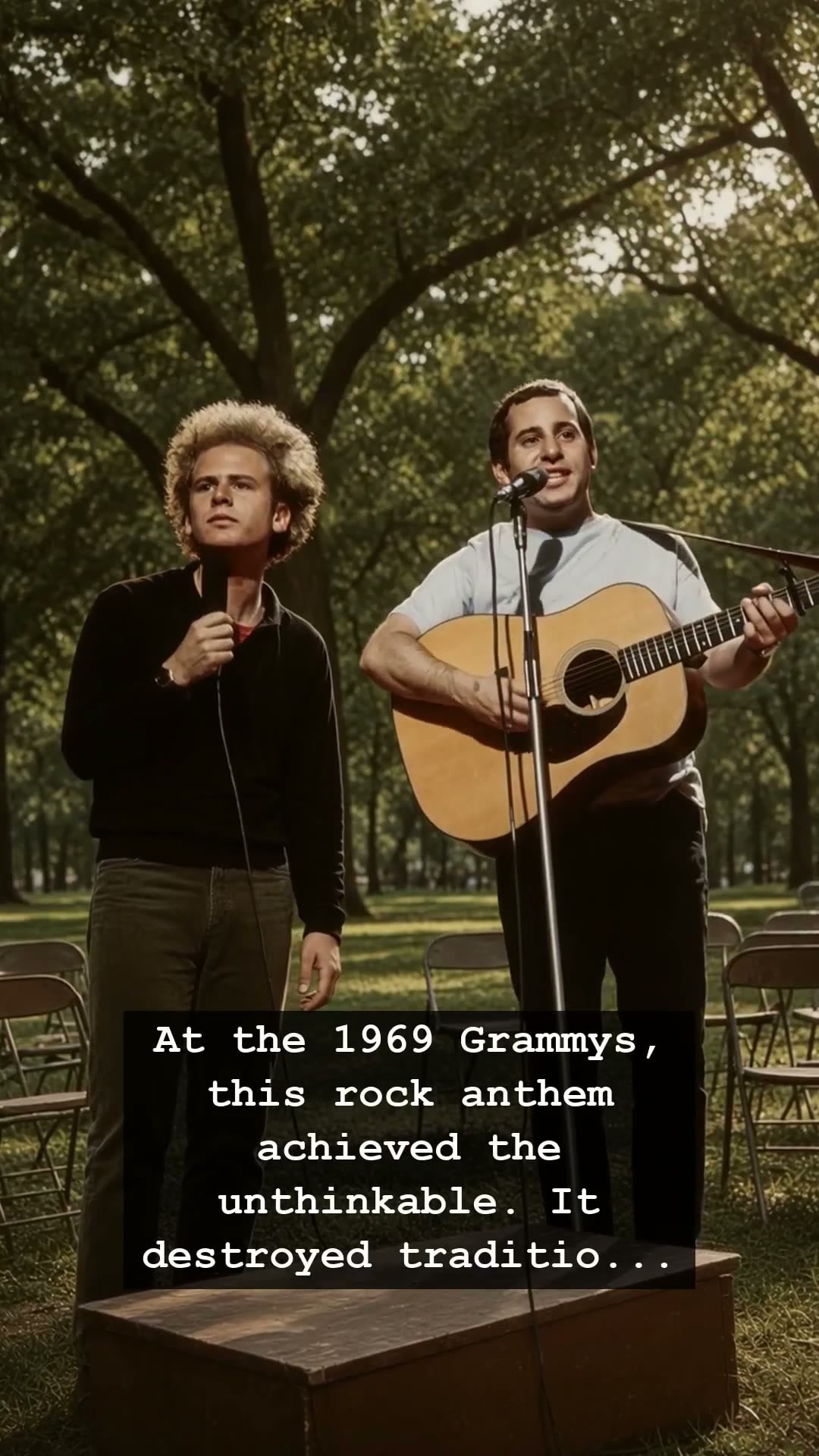
The year was 1969, and the air in the Shrine Auditorium felt heavy with the weight of change. For decades, the Grammy Awards had been a polite affair, favoring the polished crooners and traditional pop vocalists that defined the pre-rock era. Then, Simon and Garfunkel walked into the room. When the industry giants announced that Mrs. Robinson had won Record of the Year, the silence that followed was deafening. It was the first time in history a rock song had claimed the top honor, effectively signaling the death knell of the old guard and the dawn of a new, rebellious sonic landscape.
To understand the magnitude of this moment, one must look at the tension vibrating through America at the time. Paul Simon and Art Garfunkel were not your typical rock stars. They were poetic, intellectual, and deeply introspective, yet their sound was starting to dominate the jukeboxes in every greasy spoon diner from coast to coast. Mrs. Robinson was more than just a catchy melody from The Graduate; it was an anthem of suburban malaise and cultural shifting. While listeners were clutching their new Walkmans or tuning into the rising influence of FM radio, Simon and Garfunkel were busy weaving folk melodies into the fabric of mainstream American consciousness.
Yet, behind the shimmering harmonies and the gold records, the partnership between Simon and Garfunkel was famously fraught with friction. Their creative chemistry was electric, but their personal relationship was a battlefield of ego and artistic difference. Paul Simon, the meticulous architect of their sound, often clashed with the celestial voice of Art Garfunkel. This dichotomy—the struggle to maintain the delicate balance between two titans of songwriting and vocal performance—made their success feel fragile, almost ephemeral. The audience felt this raw, unpolished energy, which is precisely why their music resonated so deeply with a generation searching for authenticity in an increasingly plastic world.
Following that historic 1969 night, the industry couldn’t go back to the way things were before. The record labels, who had once dismissed rock as a passing fad, were forced to scramble as the counterculture movement took hold. Simon and Garfunkel had proven that rock music could be sophisticated, commercially viable, and culturally significant. The ripple effects of that victory reached far beyond the stage, influencing the trajectory of every songwriter who followed in their footsteps, from the arena rock giants of the seventies to the indie folk artists of today.
Decades later, the music of Simon and Garfunkel remains a time capsule for anyone who lived through the tumultuous late sixties. Their songs capture the specific bittersweet ache of a world moving too fast, a sentiment that feels just as relevant today as it did when they first took the stage to accept their trophy. Even now, listening to their layered, crystalline voices, you can almost hear the ghosts of the past, whispering stories of a revolution that wasn’t fought with weapons, but with the simple, devastating power of a perfect pop song. Whether you remember the era or just appreciate the legend, the story of their rise remains one of the most compelling dramas in the history of music.