
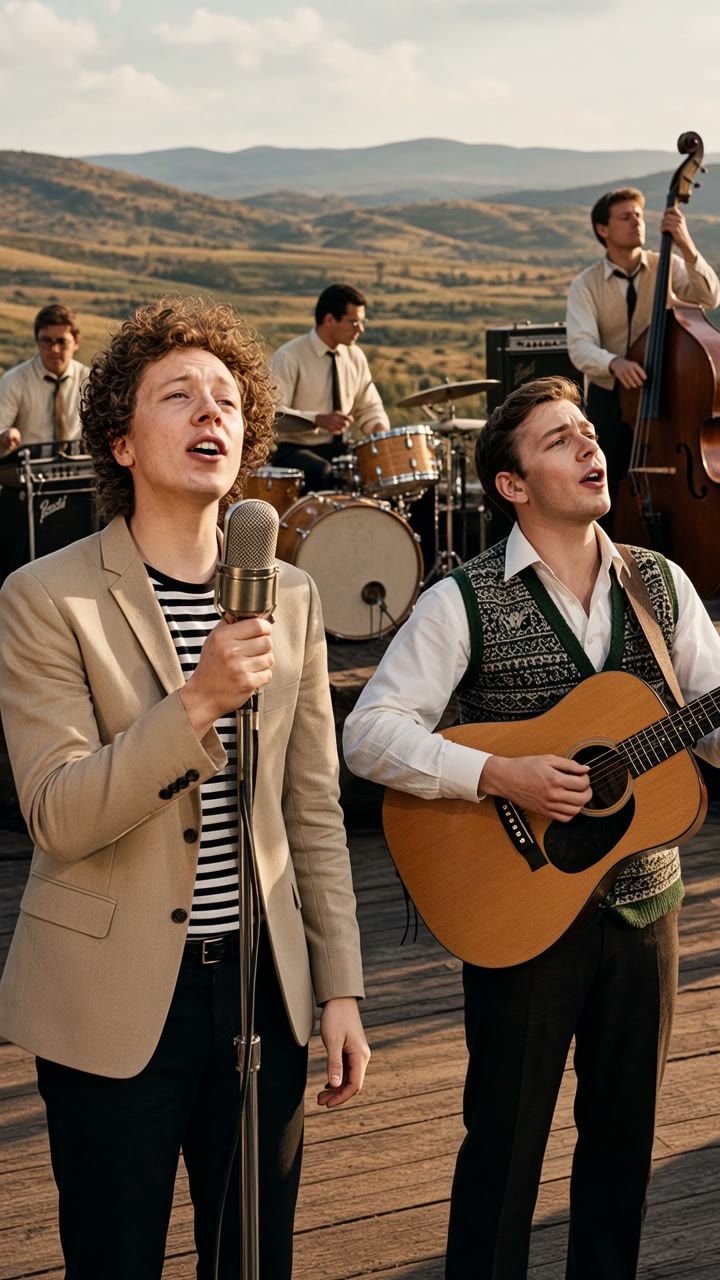
It was November 1963, a time when the color seemed to drain from the American landscape overnight. While the nation stood frozen in the wake of a tragedy that defied comprehension, a young, restless songwriter named Paul Simon found himself retreating into the shadows of his own bathroom. He turned off the lights, letting the total darkness of the small space serve as a canvas for his grief. It was there, in the silence of his own home, that he began to strum the opening chords of what would eventually become the definitive anthem of a disoriented generation: The Sound of Silence.
Paul Simon was not attempting to write a protest song or a political manifesto. He was simply trying to articulate the crushing weight of isolation he felt radiating through the streets of New York. As the radio crackled with somber reports and the collective pulse of the country stuttered, Simon tapped into a frequency of loneliness that felt universal. The lyrics about neon gods and people talking without speaking were not just poetic observations; they were the visceral reactions of a young artist processing a society that had suddenly lost its way. It was a haunting meditation on the inability of human beings to truly communicate in times of despair.
When the song was first released, it initially sank without a trace, leaving Paul Simon and his partner Art Garfunkel in the purgatory of relative obscurity. Yet, the song possessed a ghostly, persistent quality that refused to be forgotten. It lingered in the corners of record stores, waiting for the right moment to strike. When a folk-rock arrangement was added later, it surged to the top of the charts, becoming a defining cultural pillar of the mid-sixties. It echoed through the era of the Jukebox and eventually helped bridge the gap between the acoustic folk purity of the early decade and the burgeoning turbulence of the psychedelic years.
Looking back, the success of the track feels almost inevitable, though it was born from a moment of profound artistic vulnerability. Paul Simon managed to distill the essence of the sixties’ existential anxiety into a single, chilling melody. It captured the exact feeling of an America rendered speechless, standing at a crossroads between the innocence of the postwar era and the complex, chaotic reality that was unfolding on the television screens of every living room. The song became a sanctuary for those who felt overwhelmed by the rapid pace of change during that decade.
Even today, the reverberations of those opening lines hold an uncanny power. We live in a world more connected than ever, yet the theme of people talking without speaking remains painfully relevant. Paul Simon created something timeless, a mirror reflecting our own internal silence back at us. Whether you heard it for the first time on a crackling transistor radio or discovered it years later through the lens of history, the song remains a testament to the fact that sometimes, the most profound truths are found in the dark. Perhaps it is time to turn down the lights, press play, and listen once more to the sound of that silence.