
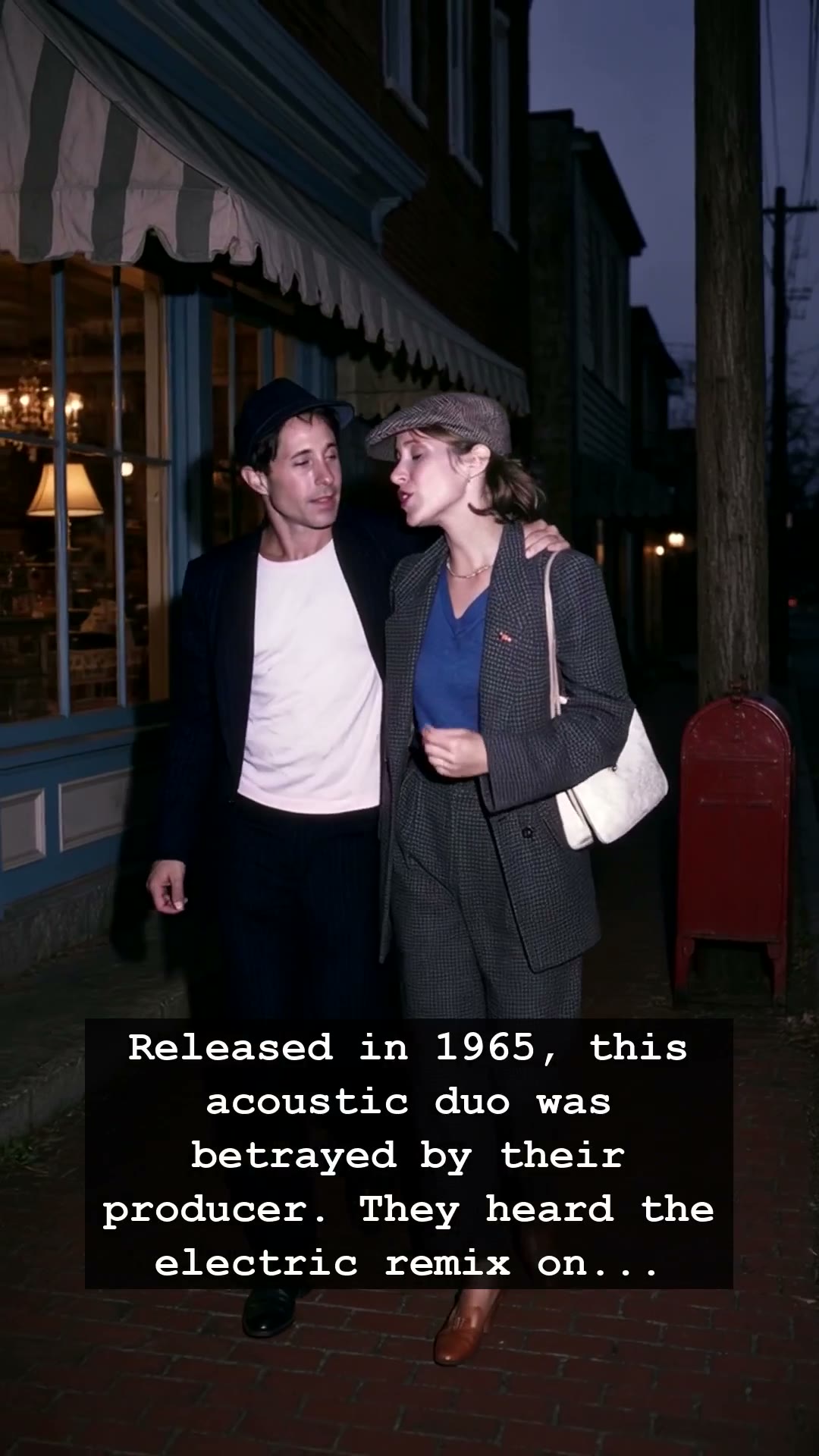
The year was 1965, and the folk revival was peaking in Greenwich Village. Simon and Garfunkel were two young, ambitious artists clinging to the purity of acoustic guitars and haunting vocal harmonies. They had poured their souls into the song The Sound of Silence, a contemplative, gentle masterpiece that felt like a quiet confession in a crowded room. However, their label, Columbia Records, had a different vision. In a move that would define the cynical side of the music industry, producer Tom Wilson decided the song wasn’t radio-friendly enough for the emerging teenage market. Without the duo’s knowledge or consent, he quietly brought in electric guitarists and a drummer to overdub the track, effectively burying the folk intimacy under a layer of electrified reverb.
Imagine the shock for Paul Simon and Art Garfunkel, who were in Europe at the time, when they first heard their own creation crackling over the airwaves. They were listening to a version of their song that they had never recorded, a remix that transformed their folk anthem into a folk-rock powerhouse. It was a moment of profound betrayal. They had been treated not as artists with a vision, but as raw materials to be molded into a commercial product for the burgeoning pop charts. That day, as the distorted electric rhythm filled the air, the naive purity of their early career vanished, replaced by the harsh reality of studio control and the relentless hunger of the music business.
This secret injection of electricity changed the trajectory of popular music. The public, blissfully unaware of the drama behind the scenes, embraced the new version with fervor. The song surged to the top of the charts, catapulting Simon and Garfunkel from underground folk darlings to global superstars. Yet, the victory was bittersweet for the pair. While it launched them into the stratosphere, it left them grappling with the loss of their artistic autonomy. It was an early lesson in the cost of fame—the realization that once a song leaves the studio, it no longer belongs solely to the songwriter.
Throughout the late 1960s, as the world moved from the quiet introspection of coffee houses to the loud, neon-soaked chaos of the rock era, Simon and Garfunkel remained a bridge between two worlds. They captured the restless spirit of a generation caught between the past and a rapidly changing future. Fans often point to this incident as the moment the innocence of 1960s folk died, giving way to the polished, produced sound of the coming decades.
Today, we look back at this moment as a fascinating intersection of artistry and industry. It serves as a reminder that behind every legendary track we hold dear, there are often hidden conflicts, bruised egos, and quiet rebellions. The story of Simon and Garfunkel is not just about the beautiful music they created, but about the fragile human experiences that shaped their legacy. Do you still hear that original, haunting echo in their work, or has the electric weight of the 1965 remix permanently colored your memory of these icons?