
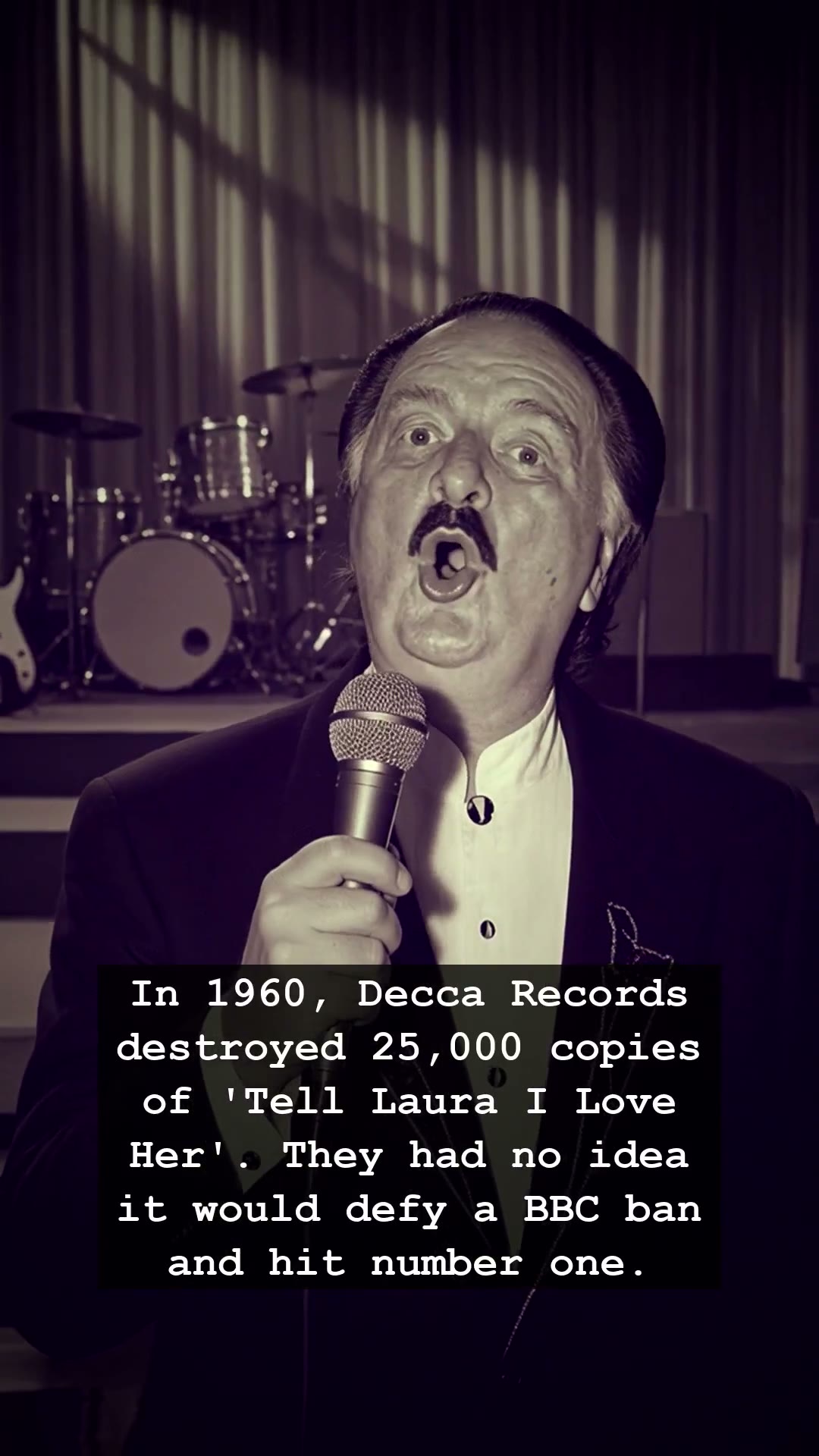
In the golden era of 1960s pop, music was meant to be catchy, optimistic, and entirely safe. But when Ray Peterson stepped into the studio to record the haunting ballad Tell Laura I Love Her, he didn’t just record a song; he sparked a cultural firestorm. The track, a tragic narrative about a boy who dies in a car crash while racing to earn money for his girlfriend’s wedding ring, was considered too morbid for the sanitized airwaves of the time. The brass at Decca Records was so terrified that the song would encourage fatalistic teen rebellion or even suicide that they took drastic, irreversible action. They ordered the destruction of twenty-five thousand physical copies of the record, effectively attempting to wipe the song from existence before it could reach the ears of a single teenager.
Yet, the power of a melody is not so easily silenced. While Decca scrambled to bury their own investment, a rival label saw the raw, emotional potential in the story of a doomed romance. Ray Peterson, with his distinct, powerful tenor voice, delivered a performance that felt painfully authentic. His portrayal of a young man caught between his love for Laura and the reckless ambition that led to his demise struck a chord with the youth of the early 1960s. Even as the BBC slapped the song with a ban, declaring it too insensitive for the sensitive ears of the postwar generation, the public’s appetite for the melodrama only grew. The more the establishment tried to crush it, the more the song seemed to resonate in the jukeboxes of local diners across the country.
Ray Peterson became an unlikely icon of this rebellion. He was not a protest singer in the traditional sense, but by simply telling a story that felt real—even if that reality was tragic—he broke the mold of the bubblegum pop stars who dominated the airwaves. This era was defined by the transition from the innocence of the 1950s to the more turbulent, questioning spirit of the coming decade. To listen to the track today is to be transported back to a time when a single vinyl record could threaten the moral fabric of society. The crisp, clean production typical of the era contrasts sharply with the grim subject matter, creating a tension that defined the song’s enduring appeal.
The survival of Tell Laura I Love Her remains a testament to the fact that authentic emotion will always find a way to break through corporate censorship. Ray Peterson eventually saw his song climb to the top of the charts, vindicating his vision against the suits who thought they knew what the public wanted. It reminds us that behind every classic hit lies a human story, often fraught with conflict, boardroom drama, and the sheer audacity to go against the status quo.
Decades later, the legend of that massive pile of destroyed records lives on as a symbol of music’s true power. Ray Peterson’s hit was more than just a passing chart-topper; it was a watershed moment that proved teenage angst could be taken seriously by the mainstream. As you listen to the sweeping strings and that desperate, soaring vocal today, try to imagine the quiet intensity of a studio in 1960, where a singer unknowingly changed the rules of the game forever. Some songs are made to be heard, and no amount of censorship can silence a story that speaks directly to the heart.