
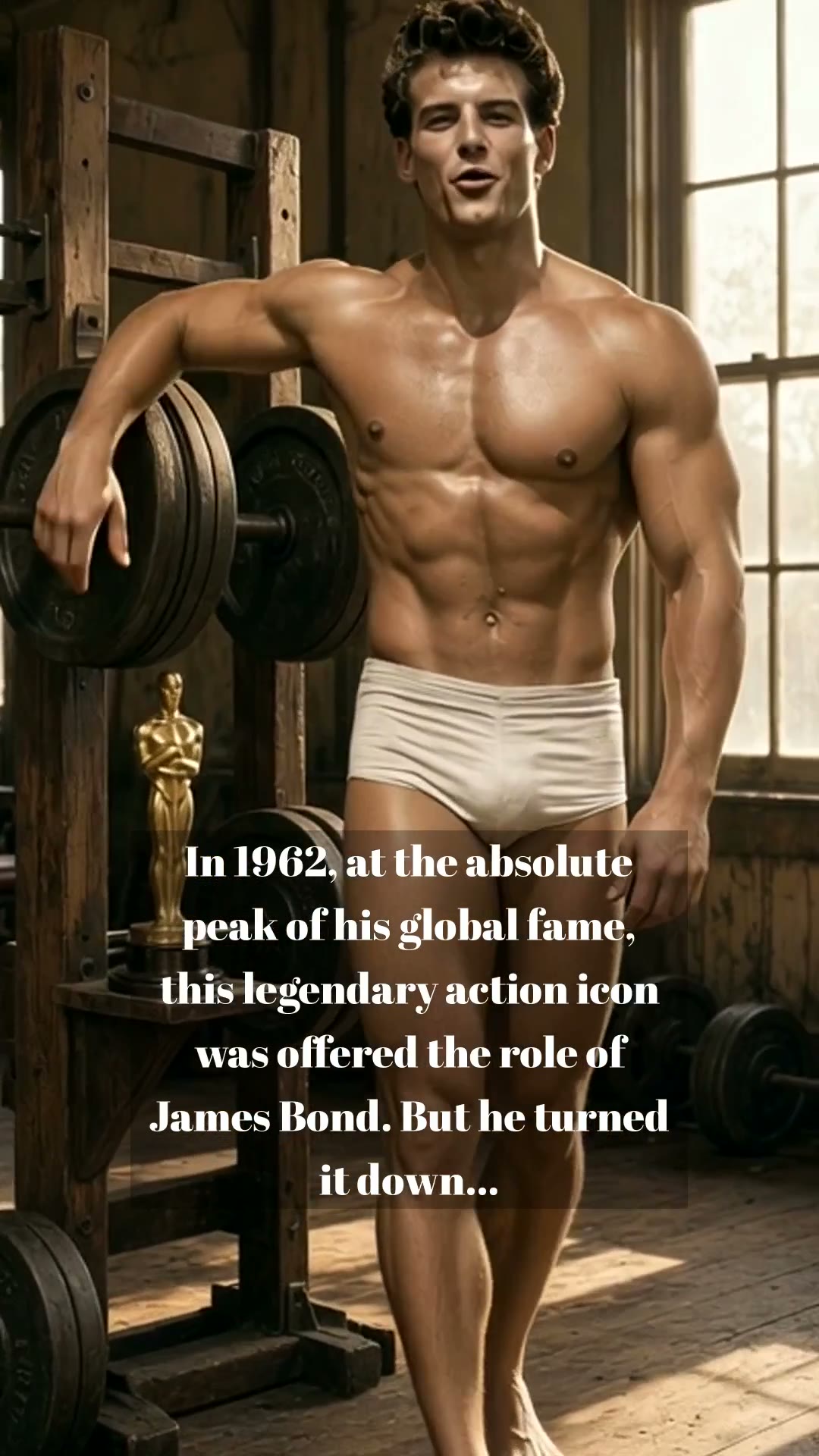
In the golden era of the 1950s and 1960s, before the age of digital spectacles and green screens, the silver screen was dominated by men of towering physique and genuine charisma. Among these icons stood Steve Reeves, a name that echoed through every gym and cinema hall across the globe. By 1962, Steve Reeves was not merely an actor; he was a global phenomenon, the undisputed king of the sword-and-sandal epics that defined the Saturday matinee experience. Audiences from New York to Rome were captivated by his portrayal of Hercules, a role that transformed the perception of action heroes forever. Yet, even at the absolute peak of his fame, Steve Reeves remained a man grounded in his own artistic journey, often making choices that surprised the rigid hierarchy of Hollywood studios.
It was during this specific moment of unparalleled success that the history of cinema nearly took a turn that would have altered the trajectory of spy thrillers forever. Legend has it that the producers behind the burgeoning James Bond franchise approached Steve Reeves to embody the suave, dangerous secret agent. With his magnetic screen presence and the undeniable physical stature that had already conquered the global box office, he seemed like a logical, perhaps even inevitable, choice. However, Steve Reeves declined. While the world watched another actor step into the tuxedo to build an empire, Steve Reeves followed his own path, prioritizing the projects and the vision that resonated with his personal values and his unique place in the history of cinema.
Looking back, this decision speaks volumes about the character of the man behind the muscles. In an era when stardom was often dictated by studio contracts and the relentless pursuit of the next blockbuster, Steve Reeves maintained a sense of autonomy that was rare for his generation. He was part of an elite circle of actors who understood that a legacy is not just built on the size of a paycheck or the franchise one leads, but on the authenticity of the performances left behind. For the millions who grew up collecting his filmography on VHS tapes, watching those flickering images on a Saturday night provided a sense of wonder that defined their formative years.
Today, we look back at the career of Steve Reeves with a profound sense of gratitude. He represented a time when Method Acting was beginning to change the landscape, yet he retained that classic, larger-than-life quality that made the Hollywood Golden Age so enchanting. His refusal to step into the role of 007 is not remembered as a regret, but as a testament to his unwavering dedication to his own identity. He reminds us that true legendary status comes from knowing exactly who you are, even when the world is clamoring for you to be something else.
As we revisit his films today, we are reminded of the charm, the effort, and the sheer humanity that Steve Reeves brought to every frame. He remains an enduring symbol of a bygone era, one that prioritized heart and grit over digital vanity. Though he never played the man with the license to kill, Steve Reeves captured something far more permanent: the timeless admiration of a generation that truly understood the art of the silver screen.