
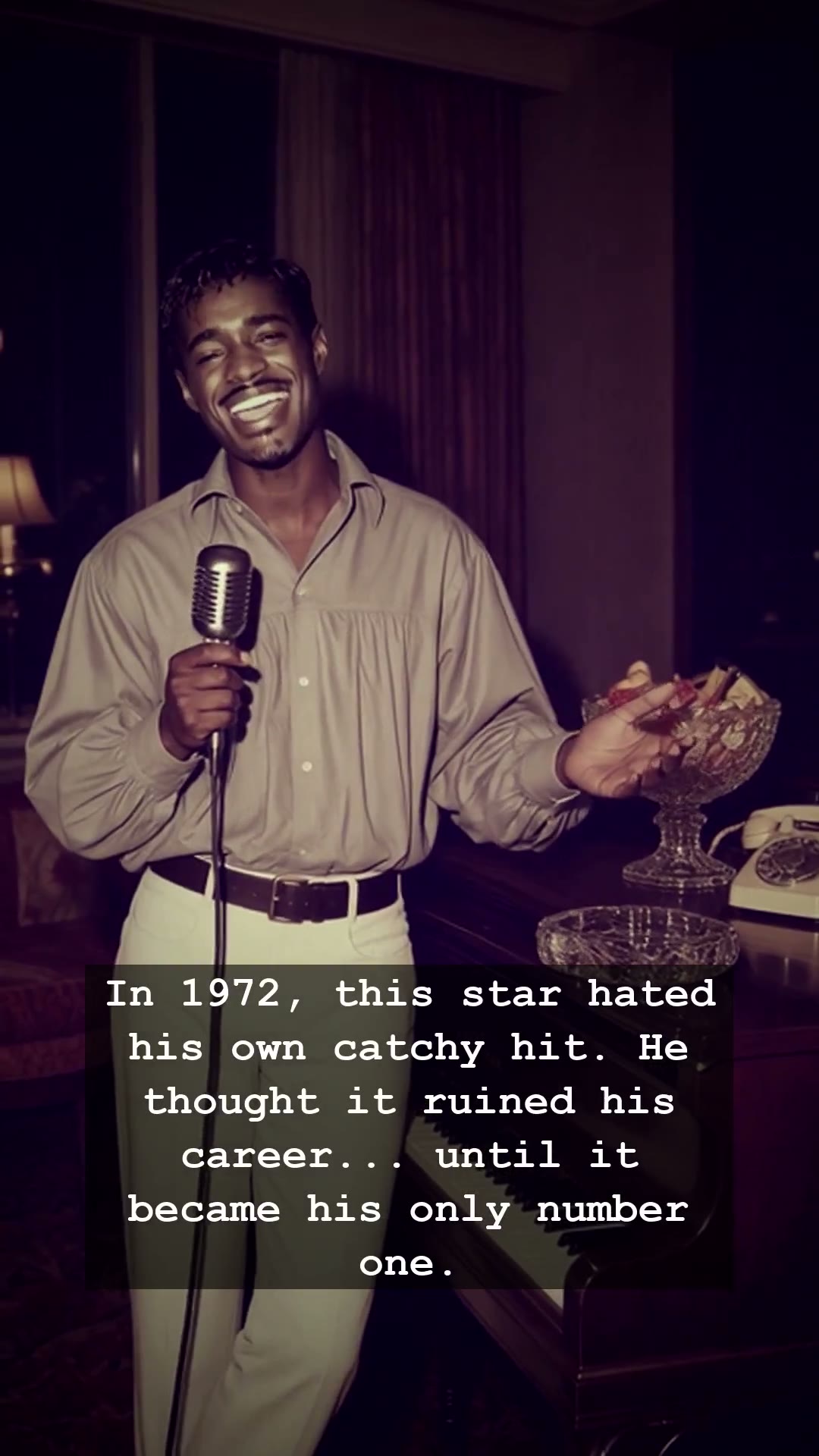
In the golden era of the early seventies, an artist was expected to carry a certain weight. For Sammy Davis Jr., the ultimate entertainer and a man who had navigated the complex landscape of Hollywood since childhood, image was everything. Yet, in 1972, he found himself trapped in a recording session with a song that made his skin crawl. The track was The Candy Man, a bubbly, saccharine tune that felt light-years away from the sophisticated jazz and big-band charisma that defined his legendary career. Sammy Davis Jr. openly loathed the song, fearing that its juvenile, candy-coated lyrics would dismantle the cool, suave persona he had meticulously crafted over decades.
At the time, the airwaves were dominated by the introspective soul of Motown and the emerging grit of arena rock. Sammy Davis Jr. worried that by singing about a candy-making man, he would be reduced to a caricature in the eyes of his peers. He famously expressed his disdain for the recording, viewing it as a desperate reach for a demographic that didn’t fit his orbit. To a man who had graced the stages of the most elite clubs, this track felt like an insult to his artistic integrity. He was convinced it would be the death knell of his relevance in an increasingly cynical musical landscape.
However, the irony of the 1972 music scene was as thick as the neon smoke in a dimly lit lounge. While Sammy Davis Jr. cringed at the thought of performing the track, the American public felt differently. The song caught fire on the radio, tapping into a peculiar, escapist longing that the era didn’t know it needed. It bypassed the critics and the high-brow jazz circles, climbing relentlessly until it sat comfortably at the number one spot on the Billboard Hot 100. It was the only time in his illustrious life that Sammy Davis Jr. would claim a solo chart-topper, and it came from the very song he had begged to bury.
Looking back, the success of The Candy Man serves as a fascinating window into the contradictions of the seventies. It was a time when the jingle of a jukebox could define a career more than the depth of a performance. For Sammy Davis Jr., the hit was a bitter pill to swallow, yet it cemented his status as a cross-generational icon. He learned that even when an artist tries to outrun their own material, the audience often finds a deeper, unintended meaning in the melody that the performer simply cannot see.
Today, we look back at the career of Sammy Davis Jr. with a profound sense of nostalgia. We remember the tuxedo, the dance moves, and the effortless charm that defined his legacy long after the glitter of the disco era faded. Whether he loved the song or not, it remains an indelible part of the soundtrack of a generation. It stands as a testament to the unpredictable nature of fame, proving that sometimes, the moments we try to run from are the ones that anchor us in history forever.