
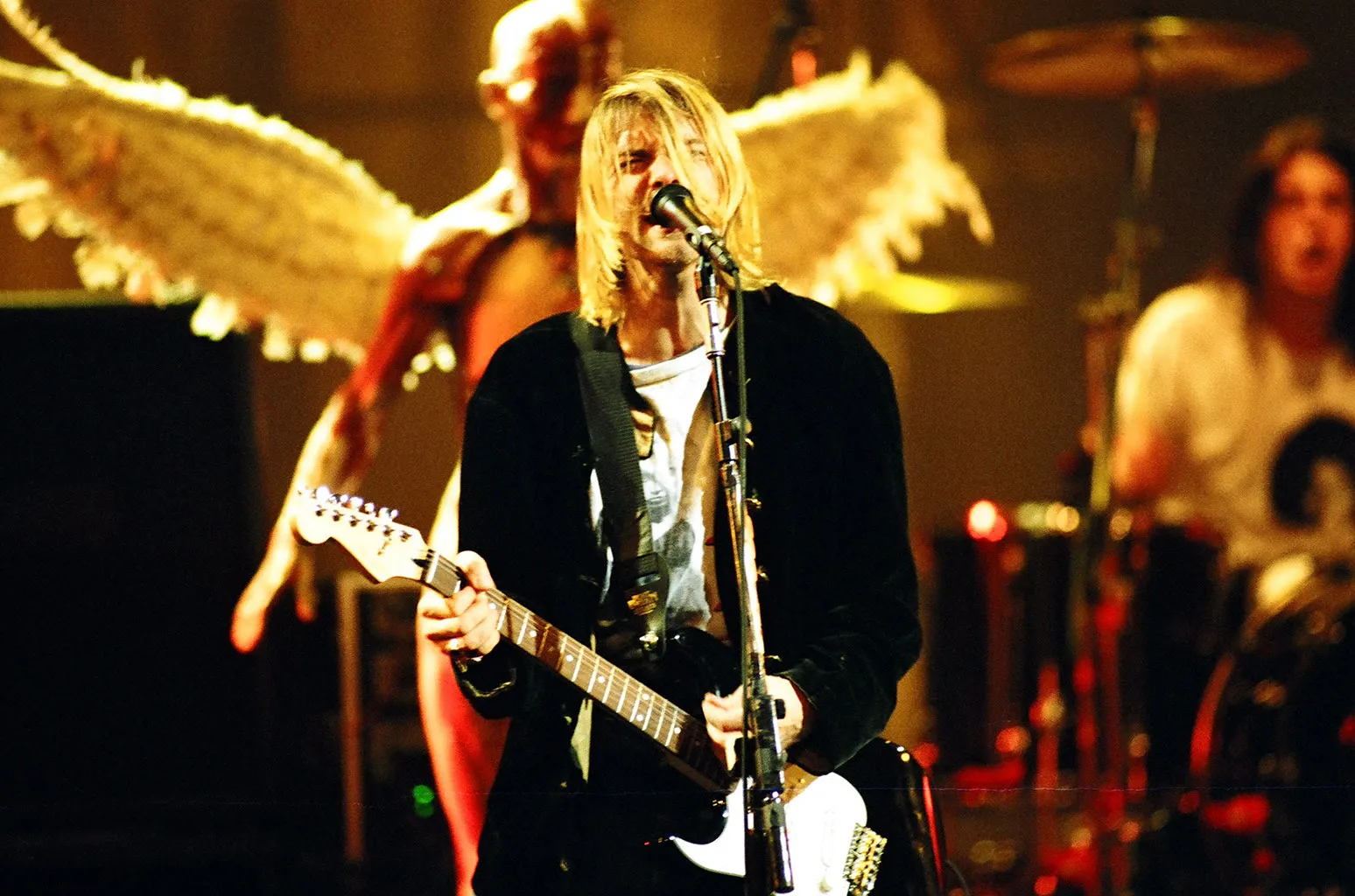
It was August 1992, and the music world felt like it was teetering on the edge of a precipice. The media had spent months painting Kurt Cobain as a man unraveling, a tortured soul drowning in the shallow waters of newfound celebrity. Every tabloid headline was screaming about his health, his struggles, and his inevitable collapse. When Nirvana took the stage at the Reading Festival that summer, the air was thick with the anxiety of a generation. The audience didn’t just want a show; they were braced for a tragedy. Then, in a moment that would cement itself in the annals of rock history, Kurt Cobain appeared pushed onto the stage in a wheelchair, draped in a hospital gown, mocking the very rumors that sought to define him.
As the guitar feedback began to wail, he struggled to his feet, collapsing in a performance that was equal parts haunting and defiant. It was a piece of theater that felt raw, desperate, and terrifyingly real. For those watching through the lens of a grainy camcorder or hearing the rumors ripple through the underground scene, it was a profound act of rebellion. Kurt Cobain was reclaiming his narrative. He was telling the music industry, the paparazzi, and the corporate vultures of the grunge era that he wasn’t just a puppet dancing to their tune of misery. He was mocking their voyeurism, turning their expectations into a grotesque, unforgettable spectacle of artistic irony.
This wasn’t just about a broken man; it was about the collision of authentic angst and the machinery of global stardom. The early 90s were an era defined by the rise of MTV and the relentless commodification of the flannel-clad counterculture. Yet, here was Kurt Cobain, staring back at the chaos he had inadvertently helped create. The Reading performance wasn’t a sign of weakness; it was a weaponized display of his contempt for a system that demanded he be a mess for their entertainment. He took the darkest corners of his public perception and turned them into a theatrical prop, proving that even at the height of his fame, he was the only one in control of his stage.
Looking back, this moment feels like a lightning rod for the entire decade. It captures the tension of a time when the Jukebox gave way to the CD player and the raw, unpolished sound of Seattle took over the world. The image of the wheelchair remains etched in the collective memory of every Gen X and Millennial fan who felt that same sense of societal alienation. It wasn’t just a prank; it was a desperate, brilliant assertion of humanity in an age that wanted to turn icons into tragic legends long before their time had actually come.
Today, we look back at the life of Kurt Cobain with a mixture of sadness and immense respect for his creative fire. That 1992 performance at Reading serves as a reminder that the line between the person and the persona is often a blurry, dangerous path. We still listen to those records, from Bleach to In Utero, and find pieces of ourselves in the distortion and the pain. As we revisit these relics of a bygone era, perhaps we can finally appreciate the man behind the myth—not as a symbol of brokenness, but as an artist who fought, in his own complicated way, to keep his soul intact while the world watched him from the front row.