
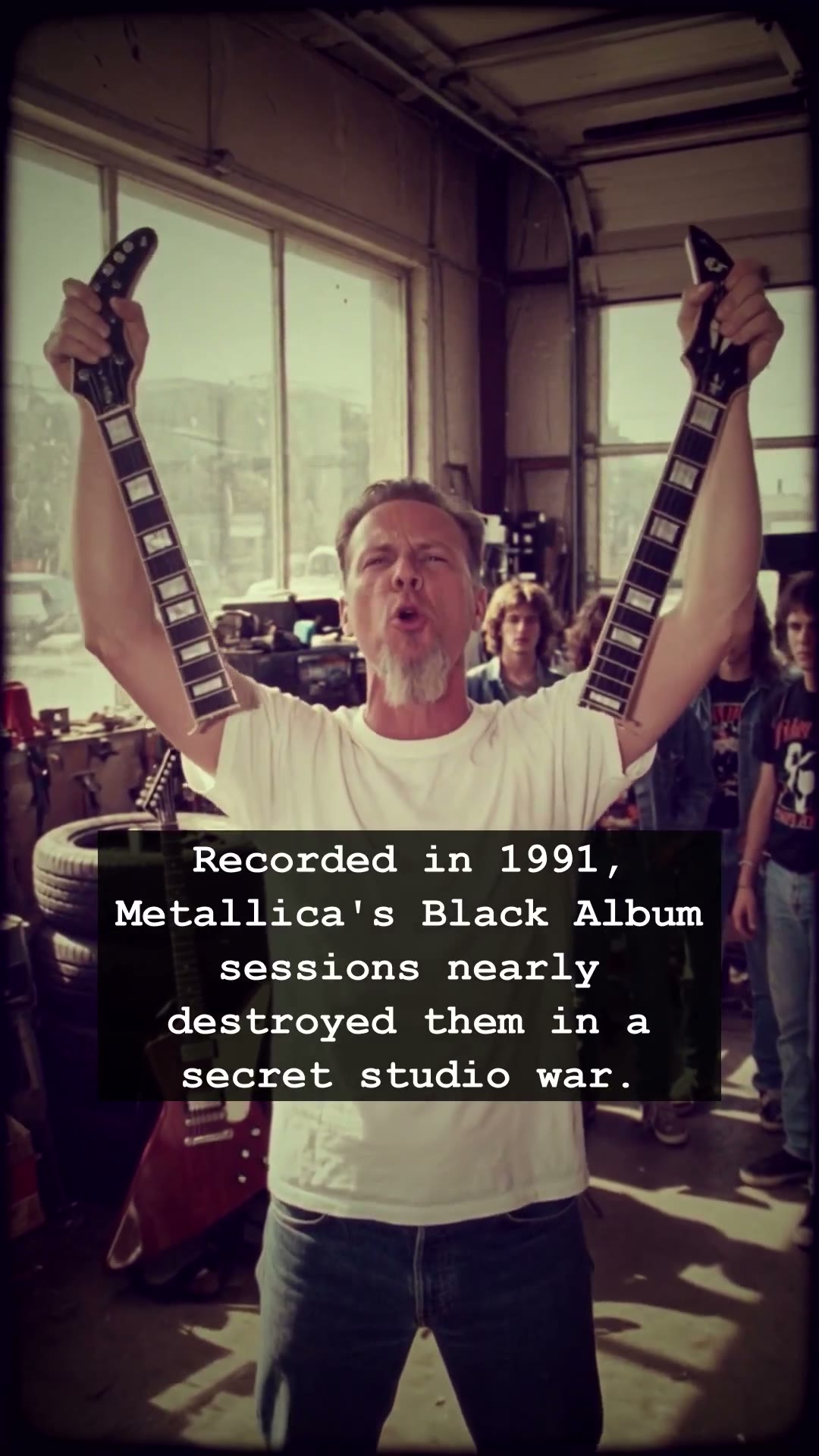
It was 1991, a year when the airwaves were shifting, and the world was bracing for a seismic change in rock music. Inside a dimly lit studio, four men were trapped in a pressure cooker of their own making. Metallica, already titans of the thrash metal scene, had retreated to the sanctuary of the recording booth to craft what would become their self-titled masterpiece, better known as the Black Album. But beneath the surface of the polished, radio-ready anthems lay a chaotic reality. The sessions were not a smooth creative process; they were a battleground. For Metallica, the pursuit of sonic perfection turned into a brutal test of nerves that nearly shattered the band beyond repair.
To understand the tension, one must look at the immense weight on their shoulders. After the complex, sprawling compositions of their previous albums, the band was desperate to strip away the excess. Enter producer Bob Rock, whose polished pop-sensibility clashed violently with the gritty, protective instincts of the band members. Every single guitar tone, every drum fill, and every lyrical nuance became a flashpoint for intense, screaming matches. The studio became a claustrophobic box where psychological warfare was the language of the day. Metallica was fighting not just for a hit, but for their very identity as the pioneers of the heavy metal genre.
James Hetfield and Lars Ulrich found themselves locked in a power struggle that permeated every hour of the recording process. The brotherhood that had built the band was frayed to the edge of snapping. There were moments of genuine hatred, where the sheer stress of the expectations placed upon them turned into outbursts that echoed off the cold studio walls. They were sleep-deprived, irritable, and constantly second-guessing every choice. It is ironic that a record which would eventually define a decade and move millions of copies began in an atmosphere of utter misery and mutual resentment.
Despite the hostility, or perhaps because of it, the product was transcendent. When tracks like Enter Sandman hit the speakers, the raw friction of those sessions translated into a sound that was tighter and more powerful than anything Metallica had ever produced. They survived the crucible of 1991 by channeling their discord into the music. The result was a cultural phenomenon that dominated MTV, filled stadiums, and bridged the gap between underground metal fans and the mainstream audience who were hungry for something heavier.
Looking back at that era, it is clear that the struggle defined the soul of the Black Album. Metallica proved that sometimes, the greatest art is born from the most volatile circumstances. The band emerged from the studio forever changed, their relationships scarred but their legacy cemented as global icons. Today, listening to those tracks on a crackling vinyl or through a modern stereo, you can still hear the tension buried in the bass lines. It serves as a haunting, electrifying reminder that for these legends, the road to glory was paved with nothing less than a war of attrition.