
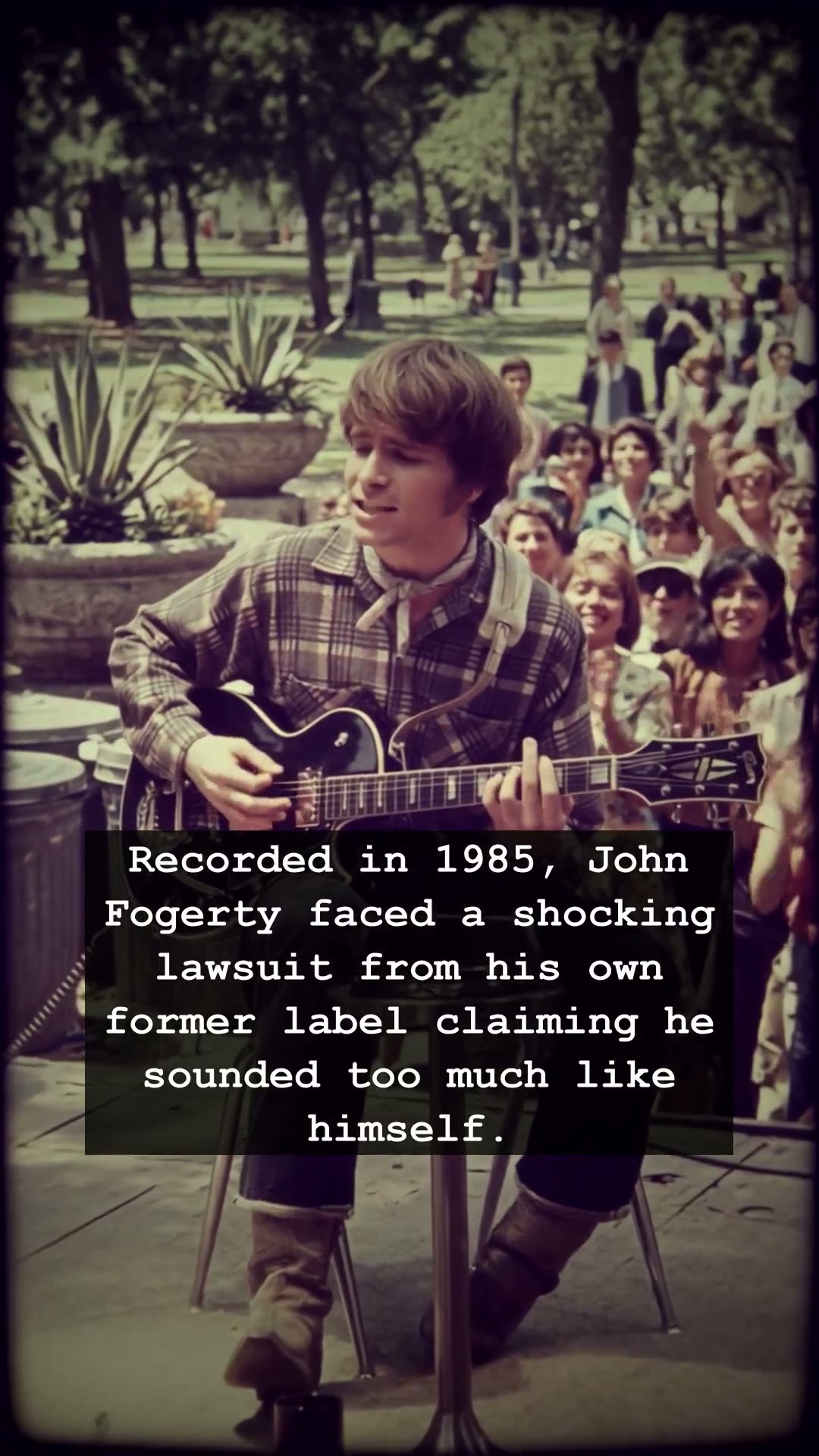
Imagine walking into a sterile, quiet courtroom in 1985, not with a briefcase of legal documents, but with a battered electric guitar slung over your shoulder. For most musicians, a lawsuit means disputes over royalties or broken contracts. But for John Fogerty, the legendary voice behind Creedence Clearwater Revival, the legal battle of the decade was far more surreal. He was being sued by his own former label, Fantasy Records, for a crime so absurd it sounds like a bad joke: they claimed he was guilty of plagiarizing his own signature style. It was a peak moment of industry madness, a time when the suits tried to own not just the recordings, but the very soul of the artist.
To understand the gravity of this moment, we have to look back at the swampy, rock-driven sound that defined the late sixties. John Fogerty had penned the anthems of a generation—songs like Proud Mary and Fortunate Son that echoed from every Jukebox in America. However, after the internal friction and the eventual collapse of Creedence Clearwater Revival, Fogerty was left in a web of legal nightmares. He had signed away his publishing rights in his youth, leaving him in a position where the label owned the rights to the very songs he had poured his blood and sweat into. By the mid-eighties, he was trying to reclaim his voice as a solo artist, but his former label boss, Saul Zaentz, was watching his every move with predatory intent.
When John Fogerty released his solo hit The Old Man Down the Road, Fantasy Records pounced. They filed a lawsuit claiming the song was too similar to Run Through the Jungle, a track they owned. The legal logic was twisted; they were essentially arguing that John Fogerty had illegally copied the songwriting style of John Fogerty. It was a brazen attempt to chain the artist to his past, effectively telling him that his creativity was no longer his own. The atmosphere in the music industry was already shifting toward the hyper-commercialization of the MTV era, but this case felt like an existential threat to the autonomy of every songwriter in rock history.
Inside that courtroom, the tension was thick enough to cut with a guitar pick. John Fogerty stood before the judge and jury, plugged in his instrument, and began to play. He deconstructed his own music, note by note, proving that while the style was unmistakably his, the compositions were unique. He played for them with the raw, gritty passion that had made him a hero of the Woodstock generation, turning the sterile legal setting into a makeshift stage. It was a cathartic performance that silenced the skeptics and ultimately led to a landmark victory. It wasn’t just a win for a man; it was a win for every artist who has ever struggled to keep their creative identity.
Today, the story of John Fogerty and his surreal courtroom battle serves as a cautionary tale of the dark side of fame and the corporate vultures that once hovered over the golden age of rock. It reminds us that behind every classic hit we spin on our turntables, there is often a struggle for survival. John Fogerty survived the greed, the lawsuits, and the bitterness to ensure his music remained his own. Next time you find yourself lost in the rhythm of his timeless riffs, remember the man who stood his ground and played his truth to a silent courtroom, proving that you can never truly copyright the sound of a genius.