
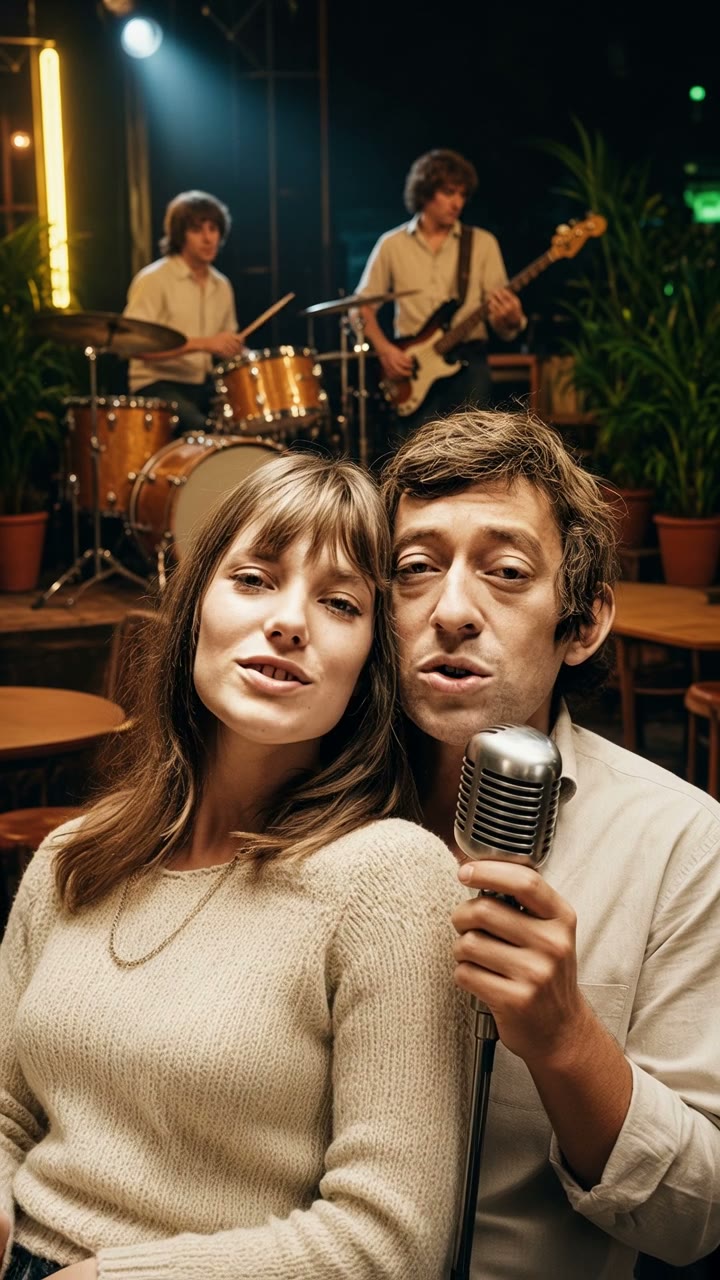
In the sweltering heat of a 1969 studio, a sound was captured that would ignite a firestorm across the conservative landscape of post-war Europe. It was not a political manifesto or a protest anthem, but a breathy, intimate, and unapologetically erotic duet. Serge Gainsbourg, the chain-smoking enigma of French pop, and his young muse, the ethereal Jane Birkin, had just recorded Je t’aime… moi non plus. As the needle dropped on the vinyl, the world was introduced to a new language of desire, one that the authorities of the era found impossible to ignore, let alone forgive. The track was swiftly banned by the BBC and censured by the Vatican, yet this very act of suppression turned a haunting melody into an unstoppable cultural wildfire.
The genesis of the song is steeped in the complex, often volatile chemistry between Serge Gainsbourg and Jane Birkin. Originally written for Brigitte Bardot, the song took on a darker, more fragile urgency when Birkin stepped into the booth. She was the quintessential British ‘it girl’ of the swinging sixties, while he was the cynical, brilliant Parisian provocateur. Their artistic collaboration was as much a battlefield as it was a romance. Listeners could feel the weight of their complicated private life woven into every sigh and whispered lyric. It was raw, authentic, and terrifyingly real, standing in stark contrast to the polished, manufactured pop melodies that saturated the radio airwaves of the late sixties.
While teenagers across the continent were hiding their copies of the record in the depths of their dresser drawers, the musical establishment was clutching its pearls. The scandal surrounding Je t’aime… moi non plus served as a defining moment of the late 1960s, a period where the boundaries of the Jukebox era were being forcibly pushed aside by the burgeoning sexual revolution. The BBC ban, intended to protect the public from what they deemed an obscene display of intimacy, only served to broadcast the song’s notoriety. It became the ultimate forbidden fruit, and for the youth of the generation, listening to it felt like an act of quiet rebellion against the rigid social norms of their parents.
Looking back from the vantage point of the present, the song remains a masterclass in atmospheric production. Serge Gainsbourg knew exactly how to use silence and suspense to keep the listener captive, layering organ swells under Birkin’s delicate, tremulous vocals. It was a production style that prioritized emotion over technical perfection, creating a cinematic experience that resonated far beyond the borders of France. The track proved that mystery and tension are often more potent than volume, a lesson that would echo through the development of later experimental and synth-pop artists who sought to push the limits of what a pop song could communicate.
Today, the legacy of this iconic duet continues to drift through the hallways of music history, serving as a reminder of a time when a single song could genuinely shock the world. Jane Birkin and Serge Gainsbourg were more than just performers; they were catalysts for a cultural shift that demanded the freedom to explore human complexity through art. As we look back on their story, we aren’t just remembering a controversial hit; we are honoring a moment in time when two souls dared to whisper their truth, changing the landscape of popular music forever. Perhaps, in an age of total exposure, there is still something to be learned from the power of a whisper.