
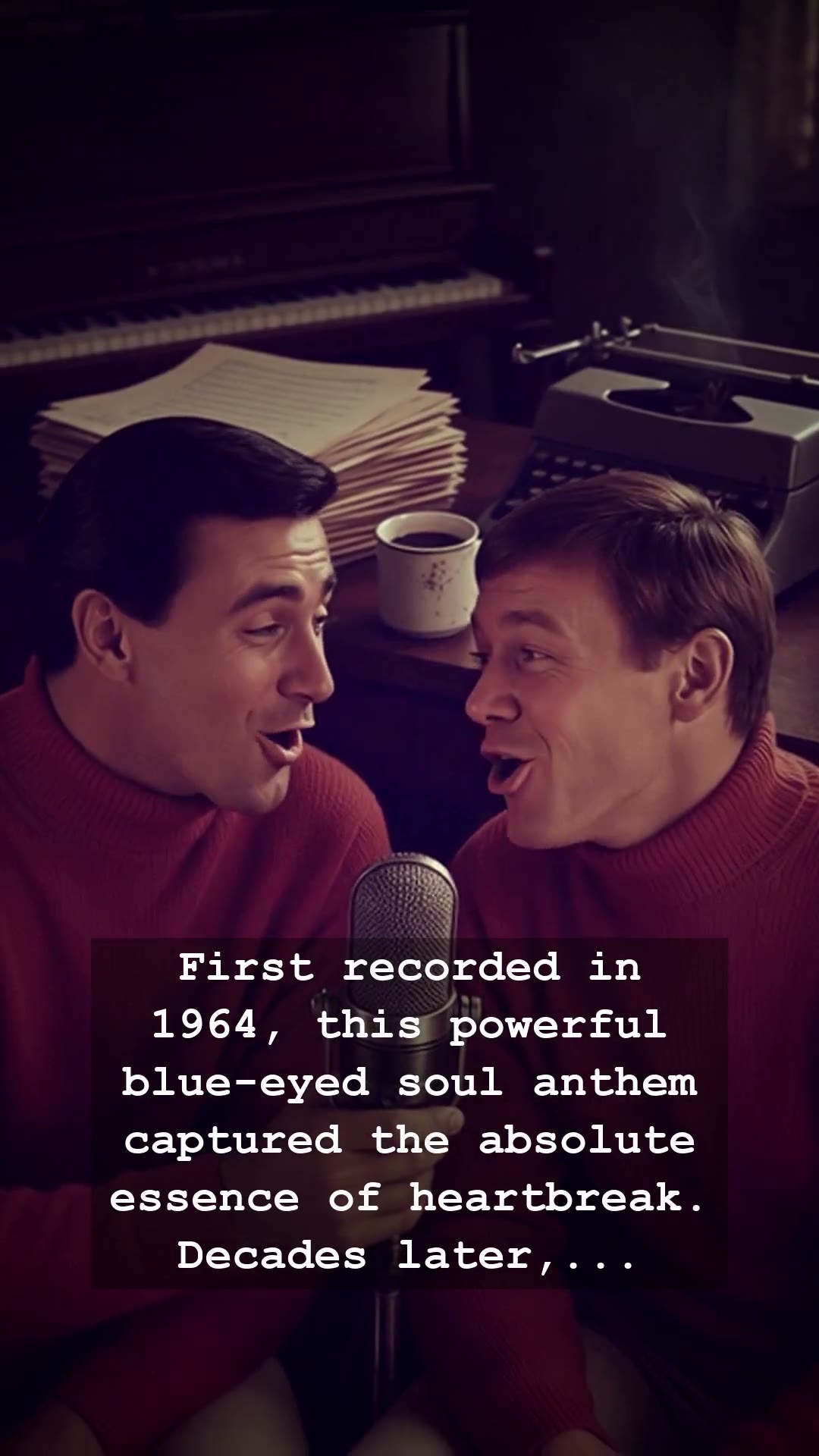
It was 1964, a year when the airwaves were dominated by the British Invasion, yet one song cut through the noise like a jagged blade of pure, blue-eyed soul. When you hear the opening notes of You’ve Lost That Lovin’ Feelin’, you are instantly transported back to a dimly lit room, perhaps sitting by a crackling jukebox or staring into the glow of a flickering television screen. The Righteous Brothers, Bill Medley and Bobby Hatfield, didn’t just record a song that year; they bottled the visceral essence of heartbreak and anchored it in history, creating a sonic monument that still resonates with anyone who has ever felt the cold sting of a love fading into the shadows.
Behind the seamless harmonies and that soaring, iconic baritone lay a complex reality. The Righteous Brothers were never brothers at all, and their partnership was a volatile dance of egos and artistic tension. Phil Spector, the legendary and notoriously erratic producer, saw the potential in their contrasting vocal styles—Medley’s deep, rumbling soul and Hatfield’s soaring, fragile tenor. Spector was obsessed with his Wall of Sound, demanding endless takes that pushed the singers to their absolute physical and emotional limits. He wanted the track to feel claustrophobic, intense, and impossible to ignore, forcing the duo to bleed their frustration into the microphone until the final product achieved its haunting, pressurized perfection.
At the time of its release, the music industry was undergoing a seismic shift. The innocence of the early fifties was vanishing, replaced by the darker, more introspective sounds of the mid-sixties. As you walked down the street with a bulky transistor radio or retreated into your own world with the music playing in the background, this song served as a poignant soundtrack for the existential loneliness that began to define the era. It captured the specific anxiety of a culture on the brink of profound change, where the dreams of the post-war generation were beginning to collide with the harsh reality of romantic and social disillusionment.
The genius of The Righteous Brothers was their ability to strip away the artifice of pop music to reveal something profoundly human. Even as they rose to stardom, the internal friction between the two men became a focal point of their legend. They were two disparate souls tied together by a hit that felt larger than their own complicated friendship. It was this authentic, unspoken struggle that seeped into the record, making the lyrics feel less like a performance and more like a confession. Decades later, that raw authenticity is precisely why the song remains a staple of our collective memory.
Today, when the opening bars play, you aren’t just listening to a hit from 1964; you are hearing the echoes of a lost time. You are reminded of the nights spent at the local diner, the weight of a Walkman, and the way music once felt like a secret lifeline. The Righteous Brothers left an indelible mark on the landscape of American soul, proving that the most enduring art often comes from the most difficult places. As the final notes fade into the distance, it is easy to see why we keep returning to this anthem—because, in the end, it still knows exactly how we feel.