
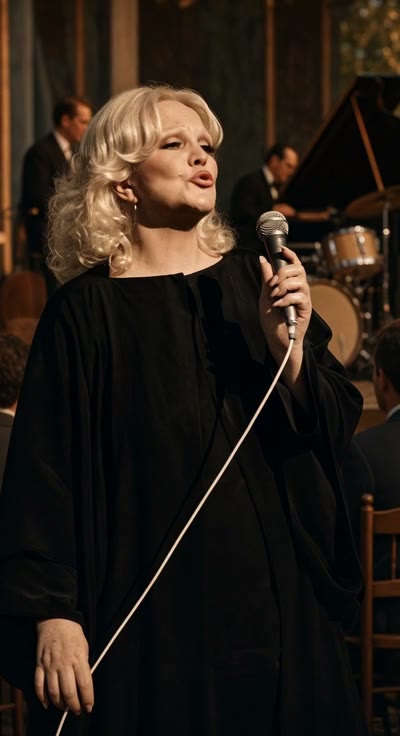
In the golden era of cabaret, the spotlight at the Copacabana was the ultimate litmus test for any performer. It was a world of sharp tuxedos, clinking cocktail glasses, and the heavy, velvet atmosphere of 1960s luxury. But in 1961, the stage witnessed a moment of pure, haunting defiance that defined the grit of an entire generation. Peggy Lee, the cool, collected icon of jazz, faced a nightmare that would have silenced anyone else. A severe spine injury left her temporarily paralyzed, yet she refused to let the music die. While the world outside was transitioning from the big bands of the past to the rising tide of rock and roll, Peggy Lee proved that true star power transcended physical limits.
Most artists would have retreated into the shadows of recovery, but Peggy Lee was not most artists. With her spinal injury rendering her unable to stand, she opted for a solution that bordered on the surreal. She transformed her medical emergency into a testament of iron will, performing her legendary residency from a stretcher tucked just out of sight. To the audience in the darkened showroom, her voice remained as smooth and evocative as ever, pouring out hits like Fever with that trademark sultry, whispered intensity. Only a privileged few backstage knew that the woman casting such a spell was fighting an invisible battle against her own broken body.
This incident captures the very soul of the 1950s and 60s entertainment culture, a time when the show must go on was more than just a tired industry cliché. It was a lifestyle fueled by a grit that today’s sanitized digital world rarely sees. For Peggy Lee, the microphone was not just a tool for her craft; it was her life support system. The contrast is chilling: the plush, opulent surroundings of the Copacabana and the stark, clinical reality of a stretcher. It serves as a reminder of the immense pressure performers faced during the mid-century era, where substance abuse and physical exhaustion were often the secret, silent partners of fame.
Looking back at this moment, it is easy to see why Peggy Lee remains a titan of music. She possessed a rare ability to command a room without movement, relying entirely on the magnetism of her phrasing and the deep, emotional intelligence of her delivery. Even when she could not physically face her audience, she could touch their hearts with surgical precision. Her resilience during that residency became a piece of whispered industry legend, a story shared among peers in smoky green rooms long after the curtain fell.
Today, we look back at the career of Peggy Lee as a blueprint for artistic endurance. She navigated the shift from the big band jazz era into the changing tides of popular music, never losing her signature elegance. That 1961 residency was not merely a concert; it was an act of defiance against the fragility of human existence. When you listen to her records now, let the music remind you that behind the smooth velvet voice was a woman who sang through the pain, proving that even a broken body could not stop the legend that was Peggy Lee.