
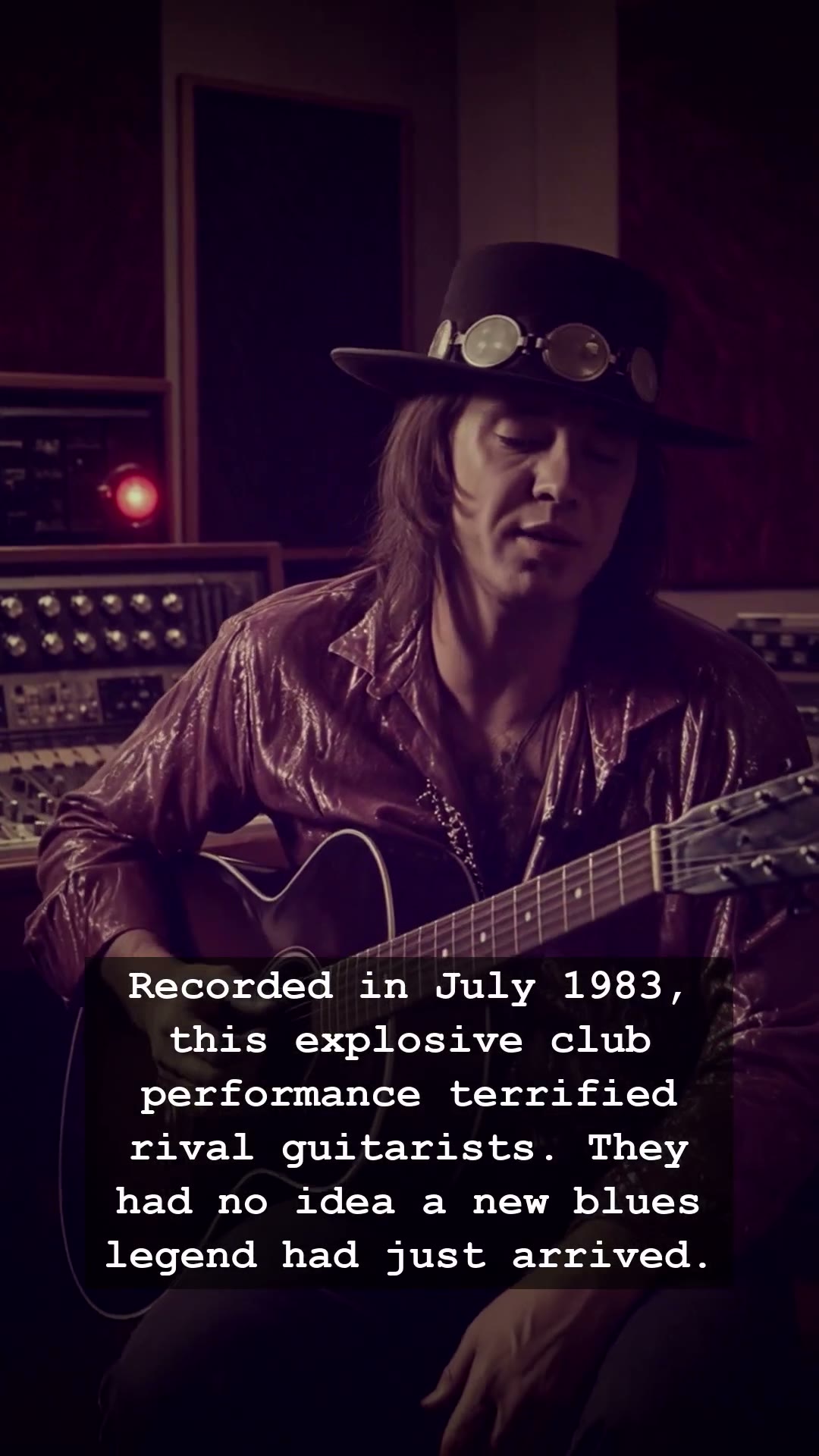
The year was 1983, and the air inside Toronto’s El Mocambo club was thick with the scent of stale beer, cigarette smoke, and a desperate, unspoken hunger for something real. While the rest of the world was obsessed with the emerging synth-pop gloss of the new MTV era, a man walked onto that cramped stage with a battered Fender Stratocaster and a look of singular, terrifying intensity. That man was Stevie Ray Vaughan. When he struck the first chord, he didn’t just play the blues; he resurrected them from the ashes of a decade that had largely forgotten their raw, visceral power. Rivals in the audience didn’t just feel impressed—they felt physically threatened by the sheer, unbridled force of his talent.
Stevie Ray Vaughan was an anomaly in the early eighties. While his peers were busy chasing the neon aesthetic of the New Wave movement, he remained tethered to the soul-scorching traditions of Albert King and Jimi Hendrix. That night at the El Mocambo, captured forever on film, showcased a musician who seemed to channel an entire century of pain and triumph through his fingertips. His playing was blistering, a chaotic yet perfectly controlled storm of Texas shuffle and frantic improvisation. For those lucky enough to be pressed against the stage, it was an epiphany. This was not merely a performance; it was a ritualistic cleansing of the music industry’s increasingly commercialized soul.
To understand the gravity of that night, one must remember the landscape of the era. The Jukebox was losing its dominance to the polished production of digital radio, and the grit of real, electrified blues was being pushed to the fringes. But Stevie Ray Vaughan shattered that silence. He played with a dangerous, drug-fueled intensity that left nothing on the table. His life, much like his guitar playing, was a high-wire act of excess and brilliance. The dark shadow of addiction often loomed over his legendary sessions, adding a frantic layer of desperation to his sound that made every bent note feel like a cry for salvation.
The impact of his rise was tectonic. Within months of that club show, he was no longer a regional secret but the new king of the blues. He took the heavy mantle of the electric guitar legends who came before him and ignited it, setting the stage for a resurgence that bridged the gap between old-school bluesmen and the restless youth of the eighties. His presence was a reminder that no matter how much technology changed the recording studio, nothing could ever replace the hum of a tube amp and the sweat of a man giving his life to the fretboard.
Today, we look back at the footage from that 1983 Toronto show as a cultural touchstone. It remains a stark reminder of the power of authenticity in an era of artifice. Stevie Ray Vaughan left us too soon, but his influence is woven into the very fabric of modern guitar culture. Whether you were there in the smoke-filled dark of the El Mocambo or you are discovering his genius decades later, his music still demands to be heard at full volume. It is a testament to the fact that while trends fade, true legends are immortal.