
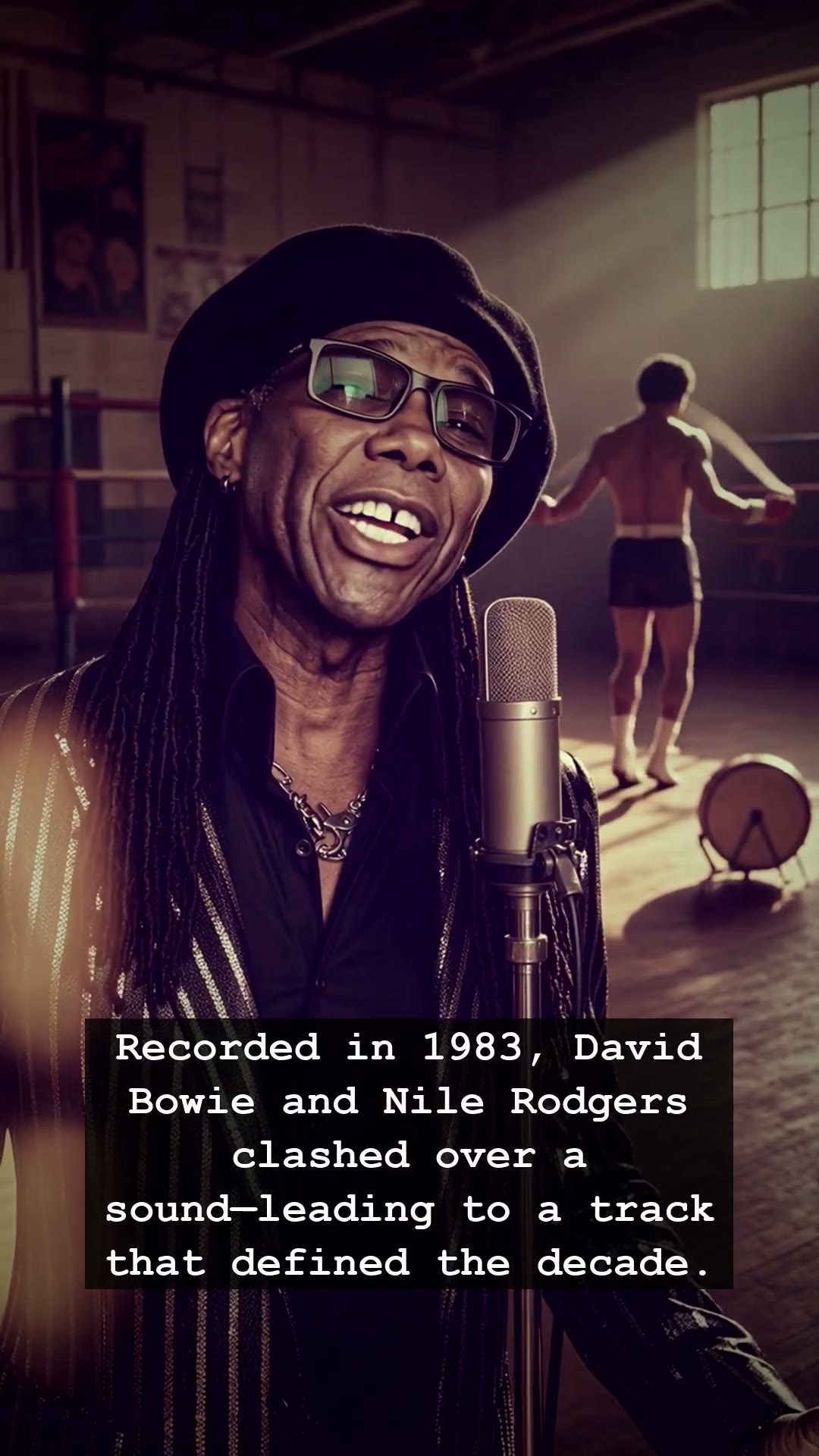
The year was 1983, and the air inside the Power Station recording studio in New York City was thick with electric tension. David Bowie, the chameleon of rock, was on a mission to shed his avant-garde skin and embrace the mainstream. Across the mixing desk stood Nile Rodgers, the architect of the disco sound, whose fingerprints were already all over the golden era of the late 70s. This was not just a meeting of two musical minds; it was a collision between the grit of post-punk and the polished, rhythmic pulse of the future. The track they were wrestling with, Let’s Dance, would soon become a global anthem, but in those fragile hours, it was a battleground.
Nile Rodgers remembers the friction vividly. Bowie wanted a sound that was stark, stripped-back, and lean. Rodgers, however, heard the ghost of a funk masterpiece hidden beneath the surface. The creative conflict was palpable. David Bowie wanted to distance himself from the commercial excesses of the era, yet Nile Rodgers pushed him toward a groove that would ultimately define the entire decade. It was a high-stakes standoff: the icon of artistic reinvention versus the master of the unstoppable dance floor. When they finally found their common ground, the result was a shimmering, kinetic sound that made the rest of the 1980s scramble to catch up.
During those sessions, the studio atmosphere felt like a pressure cooker. David Bowie was famously perfectionistic, often pacing the room while Nile Rodgers meticulously layered the instrumentation. The tension was not born of animosity, but of a desperate, mutual desire to create something immortal. It was the quintessential clash of artistic visions that captures why the music of that era feels so visceral to us today. We listen to the sharp, infectious guitar stabs on that record and we are immediately transported back to a time when MTV was the ultimate arbiter of taste and the Walkman was the soundtrack to every suburban teenager’s life.
This era was marked by the birth of the superstar machine, where the line between underground credibility and global chart domination was razor-thin. By channeling his creative frustration into such an infectious rhythm, David Bowie proved that he could dominate the airwaves without sacrificing his soul. Nile Rodgers acted as the catalyst, stripping away the pretension and leaving only the pure, rhythmic essence that could fill dance halls from London to Los Angeles. It was a beautiful, chaotic synthesis of styles that bridged the gap between the club scene and stadium rock.
Decades later, the legacy of that studio friction remains unmatched. The track transformed David Bowie into a modern pop idol while cementing Nile Rodgers as the most influential producer of his generation. Looking back, we can hear the exact moment the 80s changed course. It is a reminder that the best art often arises from the most heated disagreements. As you listen to the iconic opening riffs once again, remember the sweat, the egos, and the genius that collided in 1983 to create a groove that still refuses to fade away.