
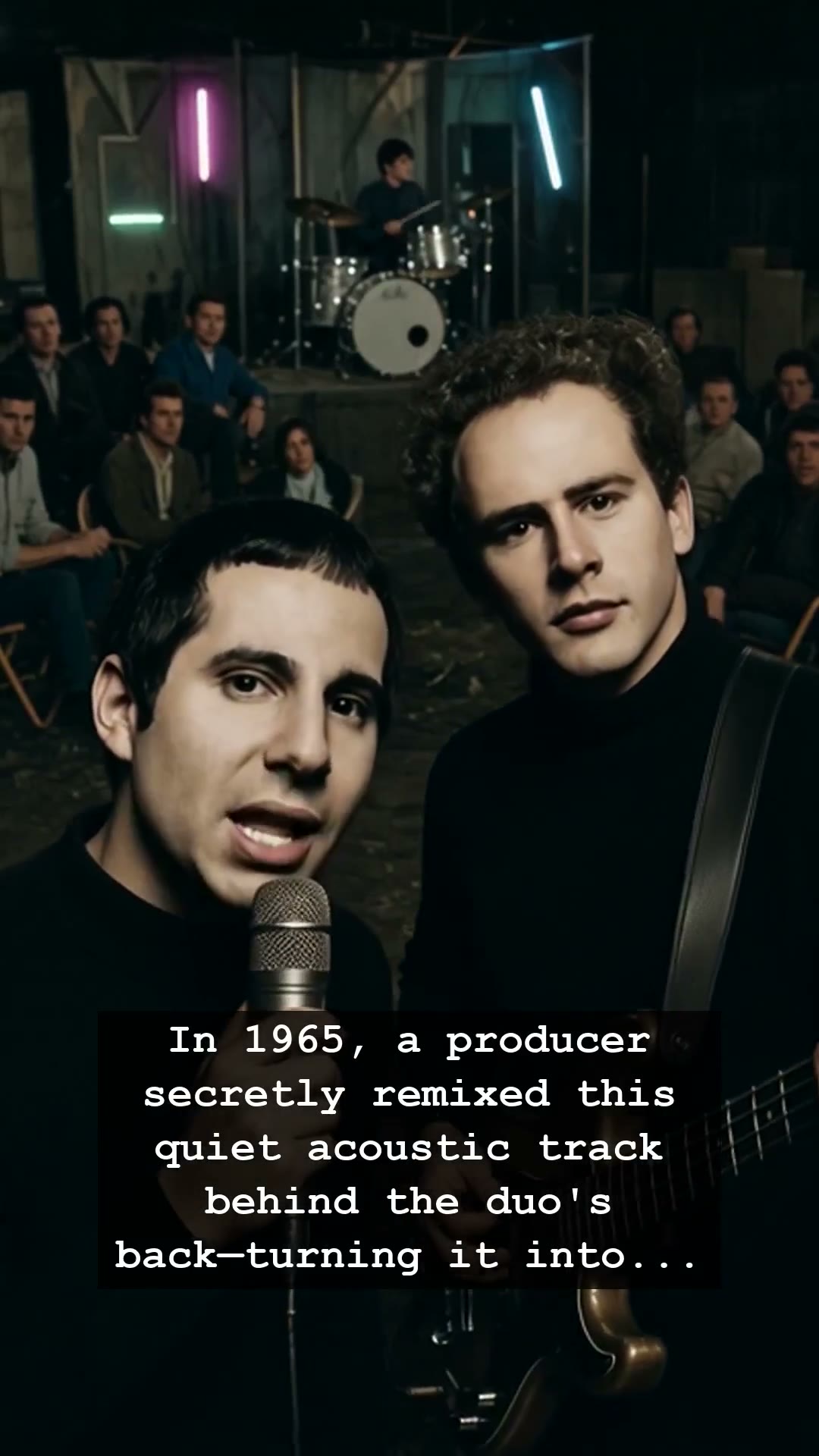
The year was 1965, and the sound of silence was truly deafening—not because of the song, but because of the silence coming from the public toward a struggling folk duo. Paul Simon and Art Garfunkel had already tasted the bitterness of failure. Their debut album was a commercial disaster, and the pair had parted ways, convinced that their melodic dreams were dead on arrival. Paul Simon was living in a damp apartment in England, feeling like a ghost, while Art Garfunkel had returned to his university studies. They were destined to be footnotes in the history of mid-sixties music until a secret betrayal turned into a stroke of genius.
In the humming, dimly lit corridors of Columbia Records, producer Tom Wilson heard something that the duo had completely dismissed: the song The Sound of Silence. It was an acoustic, introspective track that barely registered on the charts. Without telling a soul, Wilson took matters into his own hands. He quietly brought in session musicians to overdub electric guitars, bass, and drums onto the original recording. He effectively turned a quiet folk lament into the foundation of a folk-rock juggernaut. When the remixed track hit the airwaves, it caught fire, climbing the charts with a momentum that shocked the music industry and, most importantly, stunned the two creators themselves.
Imagine the bewilderment of Paul Simon when he walked into a record store and heard his own voice harmonizing with a backing band he never hired. The duo was catapulted from obscurity to the vanguard of the burgeoning folk-rock movement almost overnight. This was the era of the Jukebox and the rise of FM radio, and suddenly, Simon and Garfunkel were the voices of a generation. The success was bittersweet; it was built on an act of creative insubordination, yet it saved their careers and cemented their partnership for the next decade.
This secret remix stands as a testament to the unpredictable nature of fame in the 1960s. It represents that fragile boundary between an artist’s original vision and the commercial alchemy of a studio. Beyond the drama, the song itself captured the isolation felt by the youth of that era, echoing through the halls of suburban homes and college dorms alike. It was a haunting piece of poetry that felt electric, capturing the zeitgeist of a world transitioning from the innocence of the fifties to the turbulent, reflective soul of the late sixties.
Today, we look back at the story of Simon and Garfunkel as more than just a tale of musical success; it is a reminder that legends are often forged in the shadows of unexpected turns. The song remains a timeless anthem, a bridge between the quiet acoustic tradition and the rock revolution. Does the crackle of the record needle still transport you back to that moment? The Sound of Silence lives on, proving that sometimes, the greatest melodies are born from the secrets we never intended to tell.