
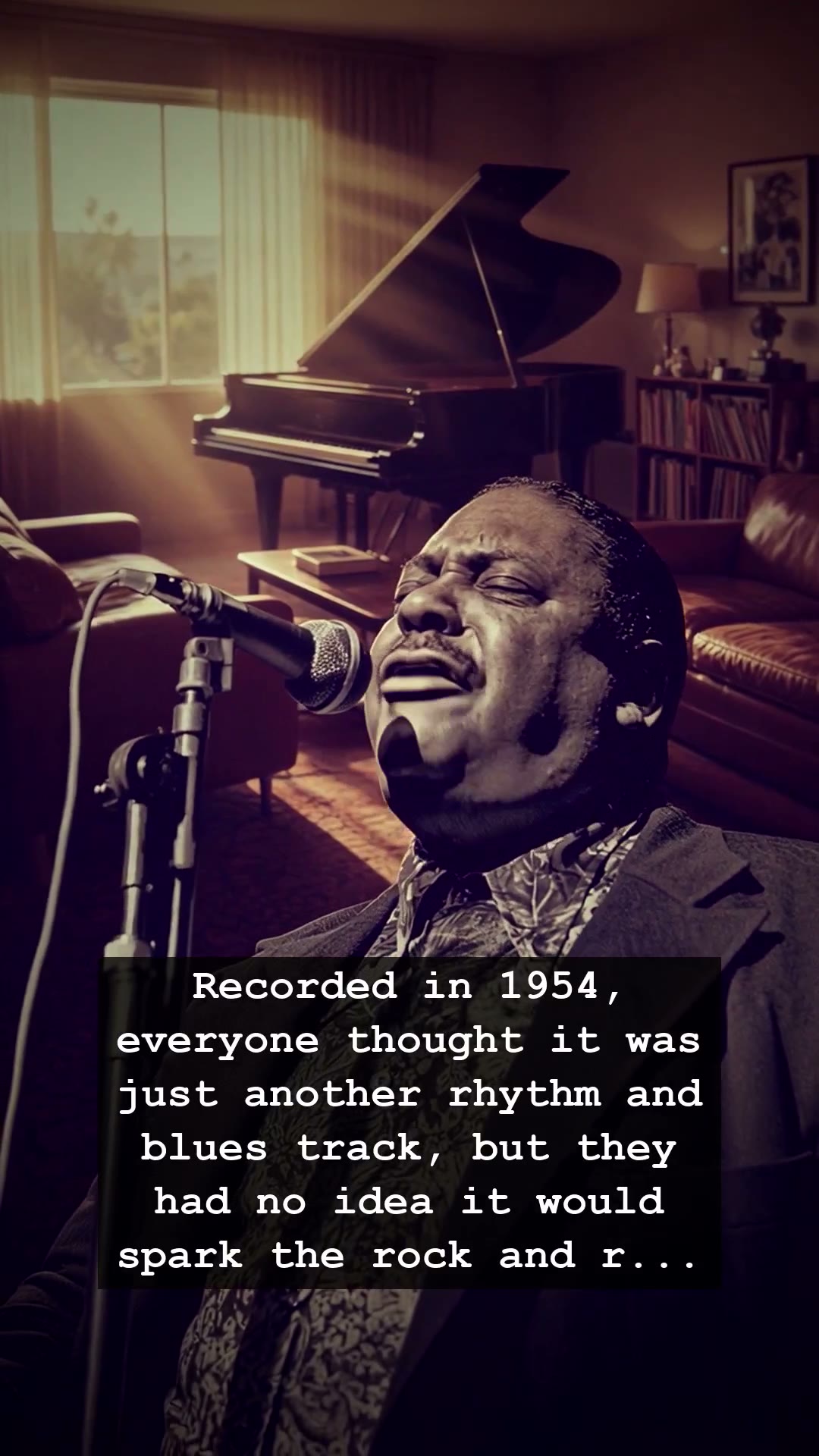
In 1954, a seismic shift occurred in the American musical landscape, though most listeners at the time had no idea they were witnessing the birth of a cultural explosion. Tucked away in a studio, the legendary Big Joe Turner stepped up to the microphone and delivered a vocal performance that would eventually shatter the glass ceiling of race-segregated radio. While history books often point to later icons as the pioneers of the sound, it was the raw, thunderous shout of Big Joe Turner that truly ignited the fuse of the rock and roll revolution. It was a moment of pure electricity, recorded when the jukebox was the heartbeat of every roadside diner across the country.
Before the term rock and roll became a household name, the airwaves were strictly divided, and rhythm and blues were relegated to the shadows of the mainstream. Big Joe Turner, a man of imposing presence and a voice that could rattle the windows of a smoke-filled club, brought the grit of Kansas City jazz and the sweat of jump blues to the masses. When he laid down his signature track that year, he wasn’t just singing a song; he was channeling a primal energy that had been waiting for the right moment to erupt. His delivery was aggressive, unfiltered, and deeply soulful, bridging a divide that the social norms of the mid-fifties were desperate to keep intact.
To understand the significance of Big Joe Turner, one must visualize the era. It was a time of sharp suits, chrome-plated Cadillacs, and the early rise of the televised musical landscape. The tension in the industry was palpable, as traditional labels struggled to contain the emerging wildfire of teenage rebellion. Big Joe Turner stood at the center of this transition, acting as the bridge between the old-school blues masters and the young guns who would soon dominate the charts. His influence was so profound that even those who claimed to invent the sound were, in truth, merely channeling the echoes of his original, powerful vocal roar.
Yet, the life of a pioneer was rarely easy. Behind the success of the music lay the harsh realities of touring the Jim Crow South and the constant pressure of a rapidly changing industry that often overlooked the true architects of its golden age. Big Joe Turner navigated this world with a stoic defiance, leaving a legacy that remains etched in the foundation of modern music. He didn’t just perform; he defined an era of unapologetic authenticity, proving that a single, well-placed shout could change the course of history forever.
Today, we look back at his contribution not as a relic of a bygone time, but as the essential heartbeat of the genre. Every time we hear the driving rhythm of a classic track, we are hearing the reverberations of Big Joe Turner and his undeniable impact on American culture. His story is a testament to the fact that revolutions are often started in the quiet corners of a recording studio by men who simply wanted to be heard. Next time you drop the needle on a record, remember the man who started the fire.