
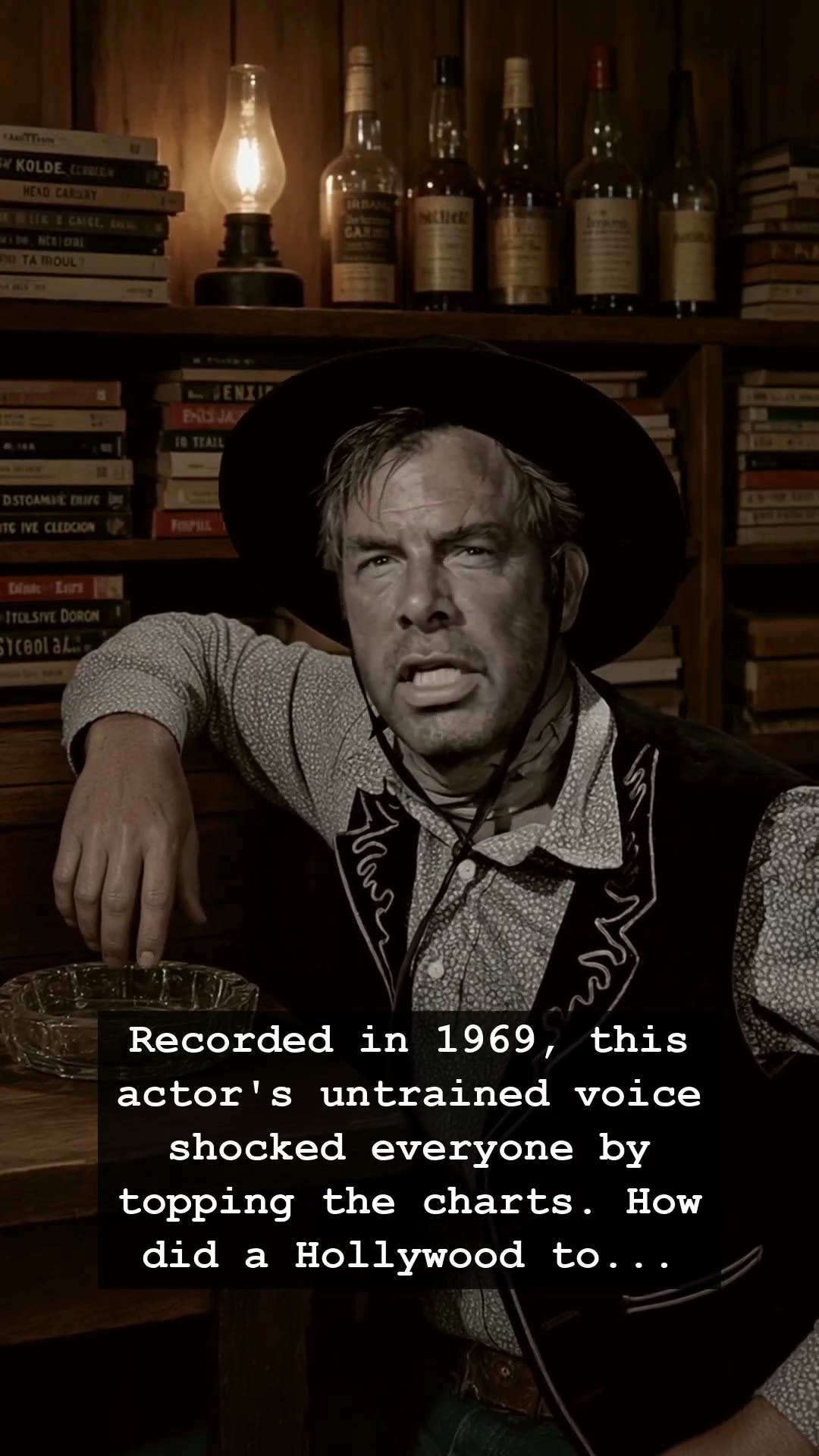
It was 1969, a year when the airwaves were dominated by the polished harmonies of the Motown sound and the psychedelic experimentation of a shifting cultural landscape. Amidst this sonic evolution, a gravelly, untrained voice emerged from the unlikeliest of places: the rugged, whiskey-soaked throat of Hollywood’s toughest leading man, Lee Marvin. While audiences were accustomed to seeing him play hardened soldiers and cold-blooded villains on the silver screen, they were entirely unprepared for his unexpected ascent to the top of the musical charts. The song was Wand’rin’ Star, a track from the film Paint Your Wagon, and it remains one of the most curious anomalies in the history of popular music.
Lee Marvin was never a singer. He was a man of grit, known for his imposing stature and a career defined by intense, masculine roles in films like The Dirty Dozen. Yet, when he stepped into the recording studio, he brought that same uncompromising intensity to the microphone. He didn’t rely on vocal training or pitch-perfect delivery; instead, he sang with a weary, cigarette-stained honesty that resonated deeply with a public tired of over-produced polish. It was a performance that sounded like a conversation held in a dimly lit bar, a raw reflection of a soul that had seen too much. This vulnerability captured the imagination of the late sixties, turning a cinematic soundtrack into a massive commercial sensation.
This success was a true shock to the industry. In an era where professional vocalists spent hours perfecting every note in sophisticated studios, Lee Marvin proved that authenticity could outperform technical perfection. The track defied the expectations of record labels and critics alike, climbing the charts with a momentum that few professional artists could match. It was a moment of beautiful irony: a man who made his living portraying fictional tough guys became an overnight musical sensation simply by being undeniably, gruffly himself. For those who grew up listening to the Jukebox classics of that era, that voice became an indelible part of the soundtrack of their lives.
Looking back, the success of Lee Marvin in 1969 represents a unique chapter in the golden age of American entertainment. It was a time when the lines between genres were thin, and the public was hungry for something that felt real, even if it came from an unexpected source. The production of the song, stripped back and atmospheric, allowed his voice to take center stage, creating a haunting mood that lingers long after the final note fades. It is a testament to the power of a genuine personality, a reminder of a period where charisma could conquer talent in the most delightful way possible.
Today, Wand’rin’ Star stands as a nostalgic monument to that strange, wonderful era of transition. It reminds us of a time when you could walk into a theater, watch a gritty western, and walk out with a chart-topping melody stuck in your head for decades. Lee Marvin might have been a reluctant singer, but his musical legacy is as permanent as his celluloid one. As we look back at the giants of that generation, we find that sometimes, the most memorable voices are the ones that were never meant to sing at all.