
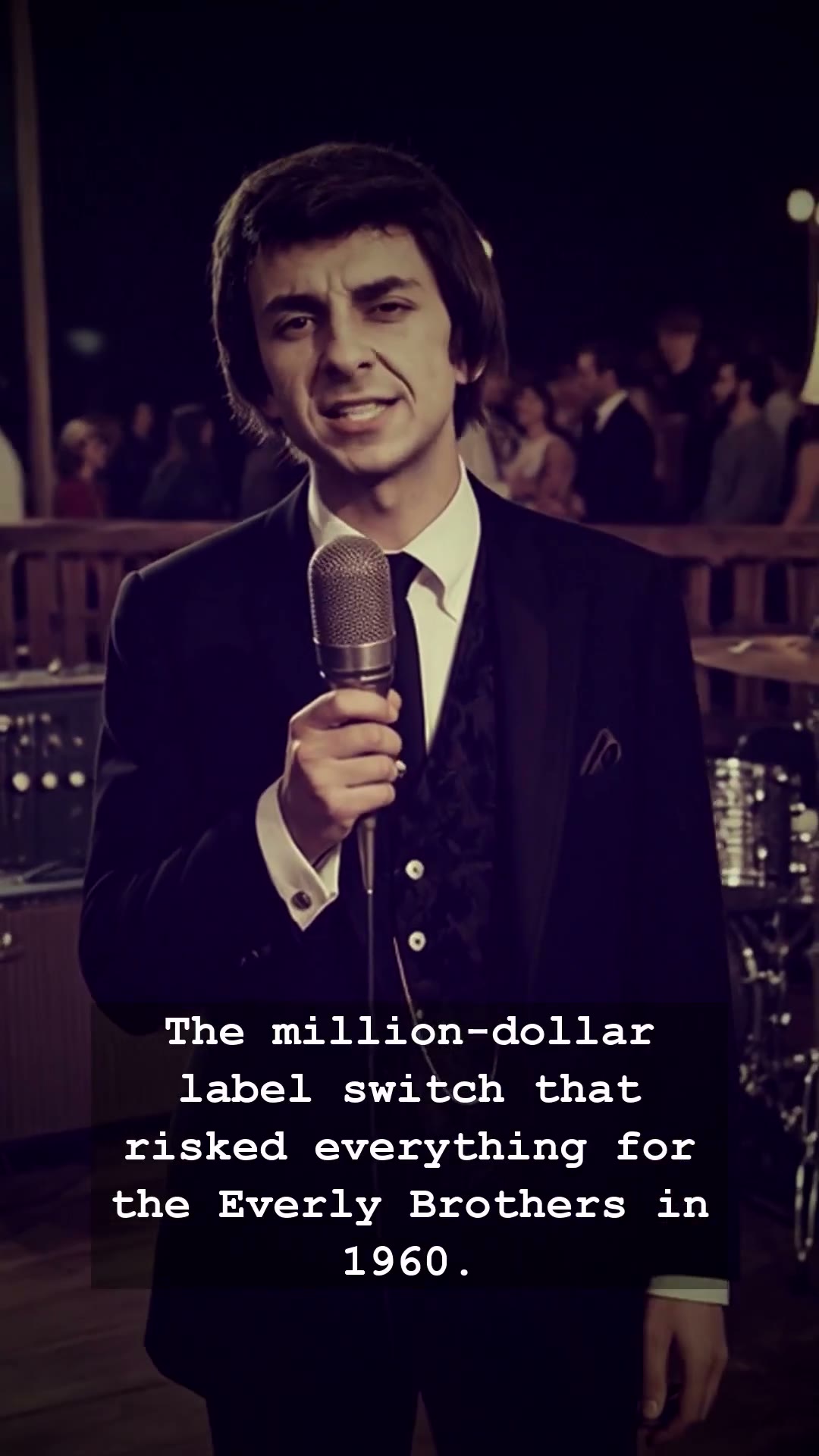
It was 1960, and the world was spinning faster than a vinyl record on a high-fidelity turntable. The Everly Brothers were the undisputed kings of close-harmony singing, their voices blending with a haunting precision that felt almost supernatural. Yet, behind the pristine image of those sweet, fraternal melodies, a high-stakes power struggle was brewing that could have silenced their career overnight. At the height of their fame, the duo decided to walk away from their label home to ink a million-dollar deal with Warner Bros. In an era when most artists were mere puppets of their record labels, this move was not just a business decision; it was a defiant, reckless gamble that shook the foundations of the music industry.
To understand the magnitude of this shift, you have to remember the landscape of the late fifties. The Everly Brothers were Jukebox royalty. Songs like Bye Bye Love and Wake Up Little Susie had defined the teenage experience, playing in diners and drive-ins across America. But the industry was becoming a shark tank. By leaving Cadence Records, Don and Phil Everly were effectively betting their entire legacy on their own autonomy. It was a move that felt as bold as the rise of the MTV generation that would follow decades later. They were stepping into the unknown, risking their chart dominance for the freedom to shape their own sound, proving that their blood-tight harmonies were worth more than any corporate contract.
The drama wasn’t just in the boardroom; it was embedded in the tension of their creative process. The Everly Brothers were known for a vocal intimacy that felt intensely personal, almost telepathic. However, the internal strain of being both brothers and business partners was beginning to show. As they navigated this transition, the pressure of fame—fueled by grueling tours and the constant glare of the media—began to take its toll. Yet, even as the walls closed in, they delivered some of their most poignant work during this pivot, channeling their anxiety into the crystalline, melancholy notes that would eventually influence everyone from The Beatles to Simon & Garfunkel.
Looking back, this 1960 gamble serves as a testament to the fragile nature of rock and roll stardom. It wasn’t just about the money; it was about the identity of the artist in an age where the singer was often secondary to the song. The Everly Brothers dared to assert their worth when the industry preferred them quiet and compliant. Their ability to weather that storm, to switch labels and emerge with their signature sound intact, remains a masterclass in artistic survival.
Today, when we hear those familiar, bittersweet harmonies, we aren’t just listening to a pop record. We are listening to a piece of history that survived the chaos of fame and the cold machinery of business. The Everly Brothers didn’t just sing; they navigated the dark underbelly of the music industry and emerged as legends. Their story is a reminder that the most beautiful melodies often arise from the most turbulent storms. Does their music still stir that deep, nostalgic ache in your soul every time you hear them?